How to Ensure Your Car Trailer Loading is Safe

car trailer
Loading a car onto a trailer looks straightforward from the outside, but anyone who has actually done it knows the process requires more than simply driving a car up a pair of ramps. When car trailer loading is not handled with care, mistakes can lead to damage, towing instability, or even dangerous situations on the road. Whether you are transporting a car you recently purchased, hauling a project car, or preparing for safe car transport during a long move, understanding how to load a car onto a trailer correctly is essential. This guide brings practical knowledge, real-world experience, and expert insight together to help you create a safe and predictable loading routine for any towing situation.

Why Safe Car Trailer Loading Matters

Understanding why safe car trailer loading matters is the foundation of every successful towing experience. Many drivers assume loading a car is a simple task, but the truth is that improper loading contributes to a significant portion of towing-related incidents every year. When a car is placed incorrectly on a trailer, the risks escalate quickly, affecting not only the car and trailer but also everyone sharing the road. A closer look at accident data, the consequences of improper loading, and the most common mistakes shows why careful loading is essential for safe car transport.

Accident Statistics from NHTSA and State DOT Reports

Official transportation data reinforces the importance of loading a car correctly. Reports from the National Highway Traffic Safety Administration (NHTSA) show that towing-related crashes are frequently linked to issues such as trailer sway, loss of control, and equipment failure. Many of these incidents are directly tied to improper trailer weight distribution or insufficient car restraint. Several state Departments of Transportation also report that a noticeable percentage of trailer crashes involve unstable loads or cars that were not secured according to safety standards.

car tow trailer

These statistics highlight a consistent trend: many accidents could have been prevented with proper loading practices. Understanding how weight affects trailer behavior helps reduce the likelihood of sway events, jackknifing, or unintentional lane drifting. Proper loading also reduces the strain placed on the trailer structure, the axles, and the hitch connection.

Consequences of Improper Loading

Improper car trailer loading creates a chain of risks that can escalate rapidly once the car begins moving. One of the most immediate dangers is loss of control. When the center of mass shifts too far forward or backward, the trailer may become unstable, especially at higher speeds. A load that sits too far back encourages trailer sway, a movement that intensifies with wind, road curvature, and sudden steering inputs.

utility trailer

Improper loading also increases braking distance. When the weight is not distributed correctly, the towing car's braking system works harder than intended, leading to longer stopping distances and a higher chance of rear-end collisions. Sudden shifts within the trailer can create unpredictable handling moments that catch even experienced drivers off guard.

Another consequence is car damage. A car that is not tightly secured can move several inches during transit, scraping against the trailer, stressing suspension parts, or damaging the underbody. In severe cases, the car may detach or roll off the trailer entirely, causing catastrophic damage to both the car and the trailer.

Common Loading Errors That Lead to Accidents

Many loading mistakes share the same root cause: misunderstanding how weight affects stability. One of the most common errors is uneven load distribution. When too much weight sits behind the trailer axle, sway becomes nearly unavoidable. When too much weight sits in front, the towing car struggles with poor steering response and reduced braking control.
car trailer tie

Another frequent error is incorrect tongue weight. Safe towing requires the tongue weight to fall within ten to fifteen percent of the total trailer weight. If the tongue weight is too light, the trailer tends to wander or fishtail. If it is too heavy, the front axle of the tow car may lose enough grip to affect steering and braking.
Finally, many accidents occur because the car was not properly secured. Failing to tighten straps evenly, using worn tie-downs, connecting straps to weak points on the car, or skipping the safety walk-around all increase the risk of the car shifting or detaching during travel.

These errors are avoidable with careful attention and a clear understanding of how proper car trailer loading protects your car, your trailer, and every driver sharing the road with you.

Understanding Trailer Weight Distribution

Before moving into the practical steps, it helps to understand how trailer weight distribution works. The goal is to place the car so its weight presses downward on the trailer tongue at the correct percentage. Most towing experts recommend keeping ten to fifteen percent of the total loaded trailer weight on the tongue.
smart car trailer

This stabilizes the connection point between the towing car and the trailer. Too much weight on the tongue causes the back of the tow car to sag, while too little weight increases the likelihood of trailer sway. The commonly referenced guideline is to place roughly sixty percent of the car's weight toward the front half of the trailer deck. This placement keeps the center of gravity low and reduces the side-to-side oscillation that happens when the load sits too far back.

Understanding these principles helps you make informed decisions about where the car should sit and how to account for unique factors such as engine placement, weight distribution variations between car types, and additional items placed on the trailer.

Preparing for the Loading Process

Every safe car transport experience begins with preparation. Spending a few minutes on pre-loading checks saves hours of potential trouble later and ensures the trailer, towing car, and car are all in proper condition for the task.

Inspecting the Trailer

A trailer must be structurally sound to carry the weight of a car. Start by checking the frame for cracks or bends. Even minor structural imperfections can worsen under heavy load. Examine the decking for loose boards or worn surfaces that may cause the tires to slip. Inspect all tie-down points, as these anchor locations must be strong enough to withstand the tension from straps during braking and turning.
car hauler trailer parts

Look closely at the tires. Trailer tires age more quickly than many people expect, especially when exposed to heat and ultraviolet light. A tire can appear to have good tread but still be unsafe due to dry rot. Inflation pressure should match the manufacturer's recommendation for a loaded trailer, and both tires should be inflated evenly.

The towing system also needs attention. Confirm that the hitch is compatible with the weight of the loaded trailer and that the coupler locks firmly onto the ball. The safety chains must be intact, crossed under the coupler, and long enough to allow turning without dragging on the ground. Inspect the wiring harness and test the brake lights, running lights, and turn signals.

Inspecting the Trailer

Knowing key measurements makes it easier to determine the proper placement on the trailer. The overall weight helps you verify that the trailer and towing car are capable of carrying the load. The width of the car indicates whether you need to adjust fenders, open ramps at the correct positions, or use wider tie-down angles. The height is especially important with taller cars, as wind resistance increases the risk of sway. Knowing where the engine sits helps identify the heavier end of the car, which affects trailer weight distribution when positioning the car.

Choosing the Right Equipment

The equipment you use should match the weight and value of the car you are transporting. Ratchet straps provide the most secure car tie down methods because they minimize slack. Axle straps, if used, must be rated for much more weight than the car itself. Wheel nets offer additional grip around the tires and help keep the car firmly centered.
trailer tie

High-quality ramps are essential. They must be rated for the car weight and long enough to create a manageable incline angle. A steep angle increases the risk of scraping and reduces control while driving onto the trailer.
Many experienced towers also keep chocks, gloves, a torque wrench, and a flashlight on hand. These small items play a surprisingly large role in making how to load a car onto a trailer smooth and safe.

Preparing the car

Before loading the car, remove loose items from the interior and trunk. Anything that can roll or shift might damage upholstery, break glass, or add unnecessary stress to suspension components. Reducing the fuel level to about a quarter tank decreases weight without affecting the ability to unload or reposition the car later. Check the tire pressure on the car as well. Underinflated tires reduce steering control during loading, while overinflated tires may increase bouncing.

How to Load a Car onto a Trailer

Once the preparation work is complete, you can begin the loading process. A controlled and steady approach makes the experience safer for you and for the car.

Position the trailer on level ground before you begin. A flat surface helps prevent the car from rolling unexpectedly. Lower the ramps securely and check that they are fully locked into place. Alignment is crucial because even slight misalignment can cause the car to slip off the side or approach the ramp unevenly.

car trailer with car

Drive the car slowly toward the ramp, using gentle acceleration to maintain control. When the front wheels reach the trailer deck, continue easing forward until the entire car is positioned according to the sixty-forty weight principle. It may help to have a second person guide from outside the car. Even with clear mirrors, an extra pair of eyes improves the chances of perfect placement.

Once the car is in position, put it in park or in gear for manual transmissions and apply the parking brake. Switch off the engine before proceeding with tie-down steps.

Securing the car with Proper Tie-Down Methods

Proper tie-down techniques protect the car from shifting during safe car transport. The most secure car tie down methods involve using four independent anchor points. Tie-downs should not attach to bumpers, exhaust components, or suspension parts that move. Instead, attach straps to certified anchor locations or use wheel nets that capture the tire securely.
Secure Your Car on a Trailer

When using ratchet straps, take time to ensure each strap is threaded correctly and tightened evenly. Uneven tension can cause the car to drift or twist slightly during the journey. After tightening the straps, shake the car firmly to test whether it moves. If you notice any shifting, tighten the straps again until the car feels firmly planted.
Wheel chocks add an extra layer of protection. Even though straps do most of the work, chocks prevent small movements during stops or when the trailer transitions over uneven ground.

Checking Weight Balance and Final Adjustments

Before leaving, step back and examine the trailer from several angles. The car should appear centered, with the trailer tongue sitting at a stable height that does not sag excessively. If the trailer looks nose-high or nose-low, adjust the car’s position. A consistent and level towing stance improves steering control and braking response. Double-checking the load prevents issues further down the road.

Post-Loading Safety Review

A final walk-around is one of the simplest but most effective habits in how to load a car onto a trailer safely. Look at the straps again to ensure none are twisted, frayed, or loose. Inspect the hitch one more time to confirm that the latch is secured and the safety pin is in place. Check the lighting system with the help of another person, making sure brake lights and turn signals function correctly with the trailer wiring.
custom car trailer

Trailer stability is crucial before beginning the trip. A stable trailer tracks straight behind the towing car without swaying. If you see signs of instability while driving, such as the trailer oscillating in the mirrors, slow down gradually, avoid sudden braking, and pull over at a safe location to reassess the load.

Expert Advice

Experienced towing professionals consistently emphasize the value of using high-quality straps designed for the car's weight. They stress the importance of securing the car at four points and using wheel chocks whenever possible. Many experts recommend working with another person for guidance during loading because the second set of eyes helps ensure proper alignment, accurate weight distribution, and correct attachment of tie-downs.

Case Study

A real case from a towing company in Michigan illustrates why correct car trailer loading matters. In this event, a car was loaded with most of its weight behind the trailer axle. The imbalance caused severe sway on the highway. The driver lost control, and although no one was hurt, both the trailer and the car sustained significant damage. The company later explained that proper trailer weight distribution would have prevented the incident and highlighted the necessity of following standardized loading techniques for safe car transport.

Conclusion

Safe car transport begins long before the trailer reaches the road. Proper inspection, careful positioning, thoughtful application of secure car tie down methods, and a clear understanding of trailer weight distribution ensure a confident towing experience. When you know how to load a car onto a trailer with precision, you protect the car, preserve the trailer, and reduce the risk of dangerous situations. Investing time in correct preparation saves money, avoids damage, and ensures every trip is predictable from beginning to end.

FAQ

You can confirm this by comparing the combined weight of the trailer and car to the maximum allowable weight listed on the trailer identification plate. An overloaded trailer may sit lower on its suspension, especially near the axle. You might also notice reduced braking power or unusual flexing of the frame.
The most reliable methods involve using rated ratchet straps on four independent points or wheel nets that anchor around the tires. Quality straps provide firm tension and resist loosening during the trip.
It is possible, but for safety and convenience, most professionals recommend having a second person assist. Another person can guide alignment, monitor strap placement, and help verify that all components are correctly secured.
Signs of imbalance include trailer sway, uneven tire loading, and difficulty maintaining a straight line behind the towing car. If you notice these issues, stop safely and reposition the car according to trailer weight distribution guidelines.


Pull over safely and inspect all tie-down straps. Loosen and retighten each strap to ensure equal tension. If necessary, reposition the car slightly to improve balance before resuming your trip.

Share This Post

7fb5089b2bed43458a0dd47da3133cc412838ad1d99256acf731c276c5571f58?s=96&d=mm&r=g

Lalune Teng

Lalune Teng is a seasoned expert in the trailer field with a passion for the trailer manufacturing industry, Lalune specializes in making the connection between innovative trailer solutions and the needs of the customer to help them find the perfect trailer to meet their needs, with over 5 years of professional experience. Lalune is responsible for creating educational and promotional content on car trailers, utility trailers, dump trailers and more. Her work highlights the company's dedication to quality and customization,. Contact Lalune through our latest articles where she shares knowledge, tips and updates on modern trailer solutions!
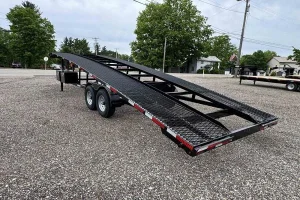
Table of Contents
Custom Your Trailers

Don’t hesitate to get in touch with us to explore our trailer and discuss how we can meet your unique requirements.

Find Your Trailer

Whether you've purchased a trailer before or are learning about trailers for the first time, we can help you find the right trailer for you.

Recently Posts

Leave a Comment

Your email address will not be published. Required fields are marked *

Scroll to Top
Three Horses Trailer

Find Your Trailer

Whether you've purchased a trailer before or are learning about trailers for the first time, we can help you find the right trailer for you.