When do trailers need brakes?

trailers brakes

Understanding when trailers legally and practically require brakes is essential for anyone towing a vehicle, equipment, or heavy load. Whether you use a basic utility trailer or a dedicated car hauler, having the right braking system can dramatically improve stability, shorten stopping distance, and prevent dangerous sway. In recent years, authorities have strengthened trailer brake laws in many regions due to increased traffic speeds, heavier vehicles, and more frequent towing accidents.

When do trailers need brakes?

car trailer brakes

For owners and operators of car trailers specifically, knowing when brakes are required is even more important because the weight of a vehicle being transported can easily exceed legal thresholds. This article examines the rules, safety considerations, and technical aspects of trailer brakes, offering clear guidance to help you stay compliant and safe—especially when dealing with car trailer brakes, electric trailer brakes, or any other type of trailer brake system.

Why Trailer Brakes Are Essential

Towing a trailer changes how your vehicle handles. Even a relatively light trailer can affect your braking distance, steering response, and rear-axle stability. Trailer brakes aren’t just a legal requirement in many regions—they are an essential safety component.

How brakes influence towing safety

Adding a trailer increases the total mass your vehicle must slow down or stop. Without trailer brakes, your tow vehicle absorbs almost all the braking load.

brakes

This dramatically increases stopping distance, especially in emergency braking situations. A properly functioning trailer brake system spreads the braking force across multiple axles, making stopping more controlled and predictable. For car hauler users, this matters greatly because a loaded trailer may weigh more than the tow vehicle itself.

When choosing a trailer, prioritize size, weight capacity, and durability. Safety features such as dependable brakes, solid hitches, and robust materials are essential. Additionally, evaluate the trailer’s storage options, insulation, and ventilation—particularly if you anticipate traveling in extreme weather conditions.

The role of stopping distance, sway control, and stability

Stopping distance increases significantly when towing. Even an empty car trailer adds several hundred pounds of extra mass. Once loaded, the total weight can exceed 6,000–10,000 lbs.Trailer brakes reduce this risk by helping stabilize the entire setup. When a trailer lacks brakes, it tends to push the tow vehicle forward, especially on slopes. This “pushing effect” increases the risk of swaying, jackknifing, or rear-end collisions. Many modern electric trailer brakes help prevent sway by activating in proportion to the towing vehicle’s brake pressure.

Why car trailers are more affected by weight and momentum

Transporting a car means carrying a dense, compact load. Unlike cargo that can be evenly distributed, a vehicle concentrates weight on the trailer axles. As a result, momentum builds quickly when driving downhill or at highway speed.This is why nearly all car hauler trailers incorporate a professionally engineered trailer brake system, and why regulations in most regions treat them differently from smaller utility trailers. The combination of weight, axle configuration, and speed means that car trailer brakes provide a crucial layer of protection for drivers and other motorists on the road.

Legal Requirements for Trailer Brakes

How Brake Laws Normally Work

GVWR (Gross Vehicle Weight Rating) thresholds
GVWR determines whether trailer brakes are necessary. This rating represents the maximum weight of the trailer plus cargo. It is assigned by the manufacturer and is printed on a plate affixed to the frame.Most states and countries specify a GVWR threshold, often between 1,500 and 3,000 lbs, beyond which trailer brakes are legally required. Because most car haulers have a GVWR far above these limits, they typically fall automatically under mandatory brake rules.

How most regions determine when brakes are mandatory
While rules differ, regulators mainly consider:
● Trailer GVWR
● Loaded trailer weight
● Towing speed
● Terrain (mountain, flatland, etc.)
● Number of axles
Regions with hilly or mountainous terrain, such as Colorado or British Columbia, often have stricter trailer brake laws to reduce downhill accidents.

U.S. State-Specific Weight Thresholds

Common range (1,500–3,000 lbs)
In the United States, the most common requirement is that any trailer above 1,500–3,000 lbs must have brakes installed on at least one axle. Some states mandate brakes once a trailer hits 1,500 lbs, while others use the 3,000-lb threshold.

Examples of states with stricter brake rules
Several states enforce tougher regulations:
● California requires brakes at 1,500 lbs.
● Oregon mandates brakes when the trailer weighs more than 1,800 lbs.
● New York requires brakes when the trailer exceeds 1,000 lbs.
These rules impact car trailer owners significantly, since even a lightweight sports car combined with a steel trailer will exceed these limits.

States requiring brakes on all axles once above threshold
Some states require brake presence on every axle, not just one. Examples include:
● Alaska
● Nevada
● Washington
● Utah
For tandem-axle car trailers, that means two or even four wheels must include brake drums or disc brake assemblies.Knowing the local version of trailer brake laws is essential for avoiding tickets or towing-related accidents.

Trailer Brakes Legal

Legal requirements for trailer brakes vary widely by region, but the fundamental principle is consistent: once a trailer exceeds a specific weight threshold, brakes are mandatory. Failure to follow trailer brake laws can lead to fines, insurance issues, or liability in the event of an accident.

International Regulations

Beyond the U.S., other regions implement their own strict rules governing trailer brakes.
Canada (~3,000 lbs limit)
Most Canadian provinces require brakes at 1,360 kg (almost 3,000 lbs). Mountain regions such as British Columbia enforce aggressive braking standards to reduce downhill accidents.
Europe (750 kg limit)
European countries have some of the most stringent requirements in the world. Any trailer above 750 kg (1,653 lbs) must be equipped with brakes. This affects even small utility trailers, and car trailers always exceed this limit.
Australia (750 kg for mandatory brakes, 2,000 kg for electric brakes)
Australian rules require:
● Any trailer over 750 kg must have brakes.
● Any trailer over 2,000 kg must use automatic or electric trailer brakes.
Since most car trailers weigh between 1,500–3,500 kg when loaded, they must legally include brakes.

Region / Country
Typical Brake Requirement Threshold
Notes
United States
1,500–3,000 lbs (varies by state)
Some states require brakes on all axles above threshold
Canada
~3,000 lbs (1,360 kg)
Mountain provinces enforce stricter compliance
European Union
750 kg (1,653 lbs)
One of the strictest limits globally
Australia
750 kg for mandatory brakes; 2,000 kg+ requires electric brakes
Heavy trailers must use electric or EOH systems
New Zealand
2,000 kg
Must also have breakaway activation system
UK
750 kg
Brakes required on all wheels above threshold

Trailer Types That Commonly Require Brakes

Not all trailers operate under the same conditions. Some types frequently fall under legal thresholds, while others almost always require braking systems.

Open Car Hauler Trailers

Open Car Hauler Trailers

Typical empty weight and GVWR
An open car hauler typically weighs 1,500–2,200 lbs empty, depending on construction materials. Once loaded with a vehicle, the total weight jumps to 5,000–7,000 lbs or more. This far exceeds the brake thresholds in nearly every country.

Why most car haulers exceed brake thresholds
Because of their weight capacity and GVWR, these trailers almost always require brakes by law. The stopping distance needed to slow a trailer carrying a 3,500-lb car increases dramatically without properly installed car trailer brakes.

Enclosed Car Trailers

Enclosed Car Trailers

Heavier structure and higher aerodynamic load
Enclosed trailers weigh anywhere from 2,500 to 4,000 lbs before loading. The enclosed design adds wind resistance at highway speeds, increasing the strain on the tow vehicle.Braking requirements are stricter for enclosed trailers because their load is heavier, and they generate more sway during lane changes or crosswinds. Nearly all enclosed car haulers must use some form of trailer brake system, often including electric trailer brakes for optimal control.

Tilt Deck & Equipment-Type Carriers

Tilt Deck Equipment-Type Carriers

Often built for heavier vehicles or machinery
Tilt-deck trailers are commonly used to transport forklifts, tractors, and large machinery. These loads exceed brake thresholds without question.Many tilt-deck models incorporate progressive trailer brakes on both axles to help maintain stability during loading and unloading, especially when operating on slopes.

Types of Trailer Brake Systems

Once you understand when trailer brakes are required, it is equally important to understand which braking systems are used on different types of trailers. Car haulers, utility trailers, and equipment carriers may use different technologies based on weight capacity, terrain, and towing frequency. The most common systems—electric trailer brakes, surge brakes, and electric-over-hydraulic brakes—offer varying levels of performance, responsiveness, and maintenance needs. All three types are governed in many regions by strict trailer brake laws, especially when they are installed on heavy-duty or multi-axle trailers.

Electric Trailer Brakes

Most common on car trailers
Electric trailer brakes are by far the most widely used braking solution on car haulers and medium-to-heavy trailers. Their popularity comes from their balance of affordability, control, and reliability. Electric brakes function by using electromagnets inside the brake drum to engage the brake shoes. They respond instantly to the signal sent by the tow vehicle’s brake controller. Because of their precise control, they are ideal for transporting sensitive cargo such as passenger vehicles, SUVs, or classic cars.For drivers pulling an enclosed or open car hauler, electric trailer brakes provide smoother deceleration and more predictable braking performance. This makes them an excellent match for trailers that exceed 3,000 lbs—well within the range of typical trailer brake laws.

Require an in-vehicle brake controller
A brake controller is mounted inside the tow vehicle and determines how the electric brakes respond to pedal input. A high-quality controller improves towing safety by allowing you to adjust:
● initial brake gain
● braking sensitivity
● brake boost for heavier loads
● proportional vs. time-delayed braking
This flexibility is one of the main reasons car trailer brakes frequently use electric systems. Proportional brake controllers, in particular, match the brake force to the tow vehicle’s deceleration rate, ensuring smooth and balanced braking across all axles.

Surge (Hydraulic) Brakes

Self-contained braking
Surge brakes rely on hydraulic pressure rather than electrical components. When the tow vehicle slows down, the forward momentum of the trailer compresses a hydraulic actuator located in the coupler. This pressure forces brake fluid through hydraulic lines to activate the drum or disc brakes on the wheels.Because this system is fully mechanical and does not require wiring into the tow vehicle, surge brakes are easy to install and are often used on rental trailers or trailers without dedicated tow vehicles.

More common on boat trailers but sometimes used on light car trailers
Although surge brakes appear most commonly on boat trailers due to their reliability around water, they can also be found on lightweight open-deck car haulers. However, they are less ideal for heavier loads. Surge braking cannot be manually adjusted from the driver’s seat, and the brake response can vary depending on trailer weight distribution.Thus, while surge brakes may satisfy trailer brake laws for certain lighter trailers, they are generally not recommended for full-size car haulers or heavy equipment carriers.

Electric-Over-Hydraulic Brakes

Better braking power
Electric-over-hydraulic (EOH) systems combine the responsiveness of electric signals with the raw stopping force of hydraulic disc brakes. An electrically controlled hydraulic pump delivers pressure to the brake calipers, providing stronger and more consistent braking.This makes EOH systems ideal for heavy-duty equipment trailers, enclosed car haulers, and high-value vehicle transporters where braking performance must be reliable under all conditions.

Used on heavy-duty car haulers
Many heavy-duty car trailers and tilt-deck haulers use EOH brakes because they offer better fade resistance during long downhill descents and match well with modern proportional brake controllers. Because trailer brake laws often require high-performance braking for trailers exceeding certain weight thresholds, EOH systems help owners remain compliant while improving safety.

Situations When Trailer Brakes Are Required

Even outside legal regulations, there are many practical situations where trailer brakes are absolutely necessary. Whether you are towing a small sports car or a full-sized pickup truck, understanding these conditions helps you avoid accidents and maintain full control of your towing setup.

Electric-Over-Hydraulic Brakes

Typical car + trailer combined weight examples
A loaded car trailer combination often looks like this:
● Trailer (open deck): 1,800–2,200 lbs
● Car being transported: 3,000–4,500 lbs
● Total loaded weight: 4,800–6,700+ lbs
Because almost every region requires brakes above 1,500–3,000 lbs, this means nearly all car haulers must have a properly functioning trailer brake system. Even light-duty car transport setups surpass the most lenient legal thresholds.

Mountain or Steep-Grade Towing

Increased risk of brake fade and trailer push
Driving downhill introduces major risks if your trailer does not have brakes. Without a braking system, the trailer pushes the tow vehicle downhill, increasing the load on the vehicle’s rear axle and causing instability.Brake fade—caused by overheated friction components—can affect even premium tow vehicles. When combined with a heavy trailer, this can result in runaway conditions. Electric trailer brakes are especially beneficial in this scenario because proportional controllers help maintain smooth braking.

Highway-Speed Towing

Longer stopping distance and stability concerns
At highway speeds, aerodynamic forces and momentum significantly impact towing stability. A trailer without brakes requires much longer stopping distances and may begin to sway during lane changes or emergency maneuvers. This is especially problematic for enclosed car trailers because of their increased wind resistance.Trailer brake laws in many states reflect these realities by enforcing brake requirements at higher speeds.

Towing Heavy Vehicles (SUVs, Trucks, or EVs)

Heavier vehicle loading increases braking demand
Electric vehicles (EVs), SUVs, and full-sized trucks weigh considerably more than compact cars. Transporting them increases the total load dramatically, making car trailer brakes an essential safety tool. Without brakes, the trailer can destabilize the tow vehicle and make emergency stopping nearly impossible.

Tandem-Axle Trailer Use

Why dual-axle trailers almost always require brakes
Tandem-axle trailers are designed to carry heavier loads, making brakes legally mandatory in almost every jurisdiction. Many states require brakes on every axle, especially for trailers used to transport cars, heavy machinery, or construction equipment.Even when trailer brake laws do not explicitly require brakes on both axles, installing them on each axle improves braking balance and reduces tire wear.

How to Determine If Your Trailer Needs Brakes

Understanding whether your trailer legally requires brakes is straightforward, but many owners overlook important factors such as loaded weight, GVWR, and real-world driving conditions.

Check the Trailer GVWR Tag

Reading the manufacturer plate
Every trailer includes a metal plate indicating its GVWR. This simple number is the foundation of trailer brake laws, and exceeding it almost always requires brakes.

Identifying brake-equipped axles

Many trailers include visible brake assemblies on one or more axles. Drum brakes, wiring, and hubs can help you verify whether brakes are installed. If the trailer lacks brakes but exceeds the GVWR threshold, it must be retrofitted with a compliant braking system.

Surge Brakes

When they are acceptable and their limitations

Surge brakes may be a practical solution for operators who primarily tow lightweight or mid-weight cargo at lower speeds. They are simple, require minimal wiring, and function consistently without driver input.

However, their limitations become apparent with heavy cargo. Surge brakes cannot be manually activated or adjusted from the tow vehicle, making them unsuitable for emergency braking situations. They also perform inconsistently during reverse maneuvers or on steep inclines.For smaller car trailers, surge brakes may meet the minimum requirements imposed by trailer brake laws, but they rarely match the performance, control, or reliability of electric trailer brakes. For this reason, they are seldom used by professional car haulers or long-distance transport services.

Brake Maintenance and Inspection

Owning a trailer isn’t just about meeting legal requirements—it is also about maintaining equipment that directly affects road safety. Whether you rely on electric trailer brakes, surge brakes, or an electric-over-hydraulic system, proper maintenance ensures consistent performance and reduces the risk of accidents.

Electric Brake Maintenance

Pads, wiring, and magnet wear
Electric brakes require routine inspection of brake shoes, magnets, wires, and drums. Loose wiring can cause intermittent braking, while worn magnets reduce the effectiveness of the entire brake system.Owners should inspect:
● brake shoe thickness
● magnet face condition
● brake drum surface
● wiring harness integrity
● proper ground connectionFailure to maintain these components compromises the performance of car trailer brakes and can cause uneven braking across multiple axles.

Surge Brake Maintenance

Hydraulic fluid and actuator checks
Surge systems depend on clean hydraulic fluid and a leak-free actuator. Any air trapped in the hydraulic lines will reduce braking pressure, making the system unreliable.Surge brake maintenance checklist:
● Check master cylinder fluid level
● Inspect all hydraulic lines for leaks
● Clean and lubricate the actuator slide
● Bleed the brake system regularlyBecause surge brakes are mechanical-hydraulic units, their performance declines without routine care. This reinforces why many car hauler owners prefer electric trailer brakes instead.

Warning Signs of Poor Brake Performance

Drivers should be alert to the following symptoms when towing:
● Increased stopping distance
● Trailer pulling to one side during braking
● Grinding or scraping noises
● Reduced brake controller feedback
● Excessive wheel heat
● Noticeable push from the trailer when stopping
These warning signs indicate that your trailer brake system requires immediate maintenance. Ignoring them could result in brake failure, legal fines, or a serious accident. Given the strict nature of trailer brake laws in many regions, keeping your brakes in top condition is essential.

Conclusion

Understanding when trailers require brakes is crucial for both safety and compliance. Trailer brake laws vary from region to region, but the core principle remains consistent: once a trailer reaches a certain weight, braking systems are mandatory.For car haulers in particular, the added weight of the vehicle being transported means that car trailer brakes are not simply optional—they are essential. Whether your trailer uses a basic surge setup, an advanced electric trailer brake system, or a high-performance electric-over-hydraulic configuration, the key is ensuring that your brakes are matched to your load, terrain, and towing conditions.

Reliable trailer brakes protect your equipment, reduce the risk of accidents, and provide peace of mind during every towing journey. Regular inspection, proper maintenance, and adherence to legal requirements ensure that your towing setup performs safely and efficiently under all circumstances. Ultimately, investing in a high-quality brake system is one of the most important steps a trailer owner can take to guarantee road safety for themselves and others.

FAQ

In nearly all cases, yes. Most car trailers exceed 3,500–7,000 lbs when loaded, surpassing brake thresholds in every region. Even a small sedan combined with a lightweight trailer normally exceeds the legal requirement. Additionally, car trailer brakes provide important stability and stopping power that protect both the driver and the vehicle being transported.

The answer depends on local trailer brake laws. Many U.S. states require brakes for trailers exceeding 1,500–3,000 lbs. Canada typically sets the limit around 3,000 lbs, while Europe uses a much lower threshold of 750 kg. Since most car haulers exceed these numbers, brakes are mandatory almost everywhere.

Nearly always. Tandem-axle trailers are built for heavier loads and therefore fall under brake regulations in virtually every jurisdiction. Many states require brakes on both axles once a trailer exceeds a specific weight limit. Installing brakes on both axles also improves stability and extends the life of your braking components.

Only if your trailer uses surge brakes. For trailers equipped with electric trailer brakes, a brake controller is required by law and essential for safe operation. Without a controller, electric brakes cannot activate, making the setup dangerous and illegal in most regions.

Yes, but with limitations. Surge brakes are legal for certain light-duty car trailers, but they may not satisfy trailer brake laws for heavier loads. They lack manual brake activation and cannot be adjusted from inside the tow vehicle, making them less suitable for emergency braking or mountainous terrain.

Share This Post

5cc5d9a85cffb39cd9eb1785396fa0b034c67ba01b43e6f157769131e954dff2?s=96&d=mm&r=g

Shyla Xi

Hi, I'm the editor and sales director from Three Horses. I'm also an ordinary person who loves life and enjoys work. My name is Shyla. As a member of Three Horses, I'm proud of our products and team. From the design to the production to the sales of trailers, we are committed to the perfection of every detail, just to make customers feel at ease and assured. My job is not only to sell products, but also to create value for customers and inject more warmth into the company's brand. If you have any questions or want to know more about our products, please feel free to contact me! Looking forward to communicating and cooperating with you!
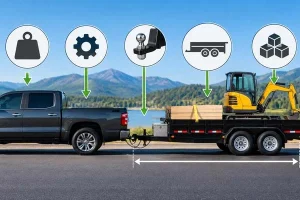
Table of Contents
Custom Your Trailers

Don’t hesitate to get in touch with us to explore our trailer and discuss how we can meet your unique requirements.

Find Your Trailer

Whether you've purchased a trailer before or are learning about trailers for the first time, we can help you find the right trailer for you.

Recently Posts

Leave a Comment

Your email address will not be published. Required fields are marked *

Scroll to Top
Three Horses Trailer

Find Your Trailer

Whether you've purchased a trailer before or are learning about trailers for the first time, we can help you find the right trailer for you.