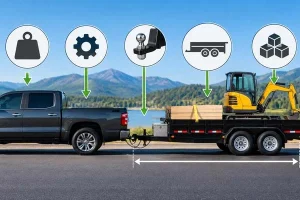
The right winch for a car trailer should pull the heaviest vehicle in your normal workload without placing unnecessary strain on the motor, rope, trailer frame, or operator. That sounds straightforward, but vehicle weight alone does not determine the correct winch size. Ramp angle, tire condition, surface resistance, cable layers, battery performance, mounting strength, and the condition of the vehicle all affect how much pulling force the winch must produce. For transport companies, recovery operators, race teams, equipment dealers, and fleet managers, sizing the winch around the hardest realistic loading job is more dependable than choosing one from a vehicle-weight chart alone.

A suitable winch makes loading more controlled when a vehicle cannot drive onto the deck under its own power. It can pull damaged cars, project vehicles, race cars, auction vehicles, and non-running equipment onto the trailer while allowing the operator to stay clear of the vehicle's path. A poorly selected system can be slow, overheat during repeated pulls, drain the battery, damage the mounting plate, or fail when the vehicle is halfway up the ramps. The complete installation therefore matters just as much as the winch rating printed on the product label.
A car trailer winch is designed to pull a vehicle horizontally or up an inclined loading surface. It is not normally required to lift the full vehicle weight vertically. When the tires roll freely, the required pulling force may be much lower than the vehicle's total mass. However, that force rises quickly when the slope becomes steeper, the tires are flat, the wheels are locked, or the vehicle must move across damaged ramps and uneven ground.
This is why two businesses hauling cars of similar weight may need different winches. A dealer loading operational cars on a low-angle tilt trailer has a different requirement from a recovery operator pulling collision-damaged vehicles onto steep ramps. A race team loading low-clearance cars may prioritize precise control and smooth rope speed, while an equipment auction may need a winch that can handle frequent loading throughout the day.
The winch also needs to fit the trailer's daily workflow. Occasional private use may place limited demand on the motor and electrical system. A commercial transporter may make several pulls per shift, which increases heat, battery usage, component wear, and the need for dependable controls. Duty cycle and serviceability should therefore be discussed before comparing purchase prices.
A vehicle with inflated tires, free-turning wheels, and a working steering system creates the lowest pulling demand. Once the tires begin moving, the winch mainly needs to overcome rolling resistance and the incline of the loading ramps. A correctly aligned vehicle will usually travel smoothly as long as the ramps, deck, and tires are clean and stable.
Even in this easier situation, the operator should not assume the pull will remain constant. The angle changes as the front wheels move from the ground to the ramps and then onto the trailer deck. Low vehicles may contact the ramp transition, creating extra drag. Steering that is not centered can cause a tire to rub against a ramp edge or side rail. These small problems can increase winch load and make the vehicle move unpredictably.
Commercial buyers should consider the heaviest rolling vehicle they expect to transport, but they should also allow for normal operating problems. A car may arrive with a weak battery, damaged suspension, low tire pressure, or an inaccessible cabin. The winch should still provide a controlled loading process without requiring the operator to use the tow vehicle to push or pull the car into position.
A steeper ramp requires more pulling force because a larger part of the vehicle's weight acts against the direction of travel. A low deck, long ramp, or tilt-bed design can reduce this demand by creating a flatter approach. This is one reason the same winch may perform comfortably on one trailer but struggle on another.
Vehicle condition can have an even greater effect. Flat tires increase rolling resistance. Locked brakes may force the tires to slide instead of roll. Damaged wheels, collapsed suspension parts, or a bent axle can drag against the ground. In severe cases, the operator may need wheel skates, dollies, snatch blocks, or other recovery equipment rather than relying on greater winch power alone.
The surface before the ramps also matters. Smooth concrete creates less resistance than gravel, mud, soft soil, or broken pavement. If vehicles are regularly collected from storage yards, accident sites, farms, or auction compounds, the winch should be selected for those real conditions rather than for an ideal workshop floor.
Winch sizing should begin with the maximum expected pulling load, not simply the average vehicle weight. Buyers should identify the heaviest vehicle, the steepest loading angle, the worst tire condition, and the surface on which loading normally begins. This creates a realistic design case for the winch, rope, mounting plate, electrical supply, and trailer structure.
The rated line pull is usually highest when the rope is on the first layer of the drum. As more rope winds onto the drum, the effective drum diameter increases. This can improve rope speed, but it reduces available pulling force. A winch that appears sufficient from its maximum rating may deliver noticeably less force when several layers are already on the drum.
Buyers should also distinguish between a single difficult pull and repeated commercial use. A winch may complete one demanding loading job and still be unsuitable for several similar pulls without adequate cooling time. Motor type, gearbox design, duty cycle, electrical capacity, and operating temperature all influence how well the unit performs during a working day.
Begin by listing the heaviest cars, light trucks, vans, or equipment that the trailer will carry. Record their actual operating weight rather than relying only on an empty brochure weight. Added tools, spare parts, fuel, modifications, cargo, and installed equipment can increase the load beyond the standard specification.
Next, consider whether those vehicles normally roll freely. A transport company handling new or operational cars can size around a different risk level from a recovery business that regularly collects damaged vehicles. The more uncertain the vehicle condition, the more important it becomes to include reserve pulling capacity and supporting recovery tools.
Buyers should avoid selecting a winch that operates near its maximum rating during every normal pull. A system with no practical reserve may become slow as the drum fills, voltage falls, components heat up, or weather conditions worsen. The correct reserve depends on the application and should be confirmed with the winch and trailer manufacturers rather than chosen from one general rule.
The recovery point on the vehicle must also be suitable for the load. The winch hook or soft shackle should connect only to a rated towing or recovery point recommended for that vehicle. Suspension arms, bumpers, steering parts, and unverified openings in the chassis may bend or detach under tension.
A winch rating is commonly based on the first rope layer closest to the drum. This is the point where the winch produces its greatest mechanical advantage. Each additional layer increases the effective drum diameter and reduces line pull, so the available force near the end of a pull may differ from the maximum advertised figure.
Trailer layout affects how much rope remains on the drum when loading begins. If the winch is mounted close to the front of the trailer and the vehicle starts several meters behind the ramps, much of the rope may be unwound. That can place the winch near its strongest range during the first and most demanding part of the pull. A short trailer or unusual mounting location may leave more layers on the drum.
A snatch block can change the pulling arrangement and provide additional mechanical advantage in suitable applications. It can also change rope speed, required rope length, anchor loading, and the direction of force. Operators need approved equipment and proper training before using this type of setup. The trailer manufacturer should confirm that the mounting points can handle the resulting loads.
The rope should never be completely unwound from the drum during loading. A minimum number of wraps must remain according to the winch and rope manufacturer's instructions. Those wraps help maintain a secure connection and prevent the rope attachment point from carrying the full pulling load.
Electric and manual winches can both load vehicles, but they suit different operating patterns. An electric winch provides powered pulling, remote-control options, and better productivity for heavier or more frequent loading. A manual winch is simpler, lighter, and less dependent on electrical components, but it requires more operator effort and usually works best for lighter, controlled loads.
The correct choice depends on vehicle weight, loading frequency, required rope length, ramp angle, available power, maintenance resources, and the number of people involved in the job. Buyers should also consider the consequences of a power failure. A commercial trailer may need an emergency release, backup control, spare remote, or an alternative way to secure a partially loaded vehicle.
An electric winch is normally the practical choice when the trailer regularly carries non-running cars or when one operator needs to control the loading process. A wired or wireless remote allows the operator to watch wheel position, steering alignment, ramp contact, and rope movement while staying away from the winch drum.
Electric power also reduces physical effort and supports more consistent rope movement. This is valuable when loading low-clearance vehicles, damaged cars, or expensive vehicles that must stop at a precise position on the deck. Slow, controlled movement can prevent the front of the car from contacting the winch stand or the vehicle from travelling too far forward.
For repeated use, the buyer should examine more than rated line pull. Motor cooling, duty cycle, gearbox strength, waterproofing, solenoid or contactor protection, remote reliability, and replacement-part availability all influence commercial performance. A strong winch with weak electrical connections can still become a frequent source of downtime.
Electric winches also need a dependable power source. A fully charged dedicated trailer battery often provides more predictable performance than long, undersized cables connected to the towing vehicle. The charging method, battery capacity, cable length, isolation switch, fuse or circuit protection, and weather protection should be designed as one system.
A manual winch can be suitable for lightweight vehicles, small trailers, infrequent loading, and situations where electrical power is unavailable. Its simple construction reduces the number of electrical parts exposed to rain, dust, vibration, and storage conditions. It can also serve as a backup system for certain trailer applications.
The main limitation is operator effort. Pulling a heavy vehicle up an incline may require many handle rotations, and the job becomes harder if the tires do not roll freely. A manual winch should have a suitable gear ratio, brake mechanism, handle length, and capacity for the intended load.
Buyers should not choose a manual unit only because it costs less. The time and effort required for each loading job can become expensive in a commercial operation. If the trailer is used several times per week, an electric system may provide better value through faster loading and reduced physical strain.
The manual winch must still be mounted to a properly reinforced structure. The absence of an electric motor does not reduce the force transferred into the winch stand, fasteners, crossmembers, and trailer frame.
The winch mount must transfer pulling force safely into the trailer frame. A thin platform, lightly welded bracket, or mounting plate attached only to deck material can bend or tear away during a difficult pull. The installation should connect to structural members designed to carry the load.
Mounting height and position also affect rope alignment. The rope should travel from the drum through the fairlead and toward the vehicle without rubbing against sharp edges, deck parts, toolboxes, or the trailer frame. Side pulling should be minimized because it can stack the rope on one side of the drum and create uneven loading.
The winch stand should not interfere with the loaded vehicle. Buyers need to check bumper clearance, front overhang, splitter height, towing-eye position, and the final location of the car on the deck. Adjustable winch posts may offer flexibility, but they must lock securely and maintain structural strength in every approved position.
The winch plate should match the winch mounting pattern and provide enough stiffness to resist bending. Fasteners must have the correct size, grade, washers, locking method, and tightening procedure. Welding and reinforcement should be designed around the expected pulling force rather than added after the trailer has already been built.
The fairlead controls the rope as it enters the winch. Roller fairleads are commonly paired with steel cable, while smooth hawse fairleads are often used with synthetic rope. The selected parts should follow the winch and rope manufacturer's requirements because incorrect combinations can damage the rope surface.
Fairlead alignment should be checked from the actual vehicle attachment height. If the rope enters at a severe vertical angle, it may rub against the fairlead opening or apply additional stress to the mounting structure. A centered and direct line reduces wear and improves drum spooling.
For loading jobs that regularly require an angled pull, a different trailer position, steering correction, pulley arrangement, or guiding method may be needed. The fairlead should not be treated as a solution for continuous heavy side loading.
An electric winch can draw high current under load, so cable size and connection quality are critical. Long or undersized cables create voltage drop, heat, slow motor speed, and reduced pulling performance. Loose or corroded terminals can produce similar problems even when the battery is fully charged.
A dedicated trailer battery can be installed near the winch to keep power cables short. The system may then use a charging connection from the towing vehicle, an external charger, a solar maintainer, or another approved charging method. The selected arrangement must prevent overcharging, reverse connection, uncontrolled current, and excessive discharge.
Battery capacity should reflect the winch size, pull duration, and number of loading cycles expected between charges. A battery that works for one short pull may not support repeated commercial operation. Procurement teams should ask the supplier to explain expected current demand and charging requirements for the proposed winch.
An accessible isolation switch allows the winch circuit to be disconnected when the trailer is parked, maintained, or transported. Suitable overcurrent protection, protected cable routing, sealed connectors, strain relief, and abrasion-resistant conduit can reduce the risk of electrical damage. Cables should be kept away from sharp edges, exhaust heat, moving suspension parts, and areas where vehicles or equipment may crush them.
Steel cable and synthetic rope can both work on a winch for a car trailer, but their handling and maintenance needs are different. Steel cable resists abrasion and heat well, which can be useful in harsh industrial environments. It is heavier, can develop broken wire strands, and may form permanent bends or kinks if it is crushed or spooled poorly.
Synthetic rope is lighter and easier to handle. It does not develop sharp wire splinters, and its lower mass can make routine loading more convenient. It is more sensitive to abrasion, contamination, sharp edges, and some forms of heat. Protective sleeves and a smooth rope path are important where the rope may contact the deck, ramps, or vehicle components.
The choice should reflect the operating site and inspection discipline. A recovery business working around damaged metal may prefer the abrasion resistance of steel cable, while a race-car transporter may value the lighter handling and clean surface of synthetic rope. Neither option is safe when damaged, overloaded, or used with incompatible hardware.
The rope diameter, length, working condition, hook, thimble, and termination must match the winch. Replacing a worn rope with an unverified alternative can change drum capacity and pulling performance. Commercial operators should keep the original specification in the maintenance record and use approved replacement parts.
A winch makes loading easier, but it does not remove the need for a controlled work area. The trailer and tow vehicle should be parked on stable ground, aligned with the vehicle, and secured against movement. Loading ramps must be correctly positioned, locked, and rated for the vehicle being loaded.
No one should stand directly in line with a tensioned rope. Operators and bystanders should remain away from the path of the vehicle, the winch line, the hook, and any pulley or anchor point. The remote cable or wireless control should allow the operator to see the complete loading path without stepping between the vehicle and trailer.
Vehicle steering must be controlled throughout the pull. If the driver cannot sit inside the vehicle safely, the wheels may need to be aligned and monitored from outside using an approved method. Small steering errors can place a tire near the edge of a narrow ramp, so the operator should stop and correct alignment before continuing.
The winch should not be used as the only device securing the car during transport. Once the vehicle reaches its final position, it must be restrained with suitable wheel straps, axle straps, chains, or other approved tie-down equipment. The winch line can then be released or managed according to the trailer manufacturer's procedure.
The loaded vehicle's parking brake and transmission position may provide additional control, but they do not replace rated transport restraints. Commercial operators should follow a documented loading and tie-down procedure that covers inspection, communication, exclusion zones, and final verification before road travel.
Vehicle transport companies use winches to load cars that cannot be driven because of mechanical failure, electrical faults, missing keys, collision damage, or storage conditions. A dependable system helps the driver complete the collection without relying on additional towing equipment at every location.
Race teams use winches for low-clearance cars, unfinished project cars, and vehicles with drivetrain problems. A controlled pull can be gentler than driving onto narrow ramps, particularly when the car has limited forward visibility, a stiff clutch, or an aggressive engine setup.
Car dealers, auction operators, and repair workshops may need to move vehicles that have been stored for long periods. Flat batteries, low tires, seized brakes, or incomplete repairs can prevent normal loading. A winch-equipped trailer gives the business more flexibility when the condition of the vehicle is uncertain.
Fleet operators may use a winch to recover service vehicles, utility carts, compact machinery, and light equipment as well as cars. In mixed-use applications, the supplier needs accurate information about every intended load because equipment with small solid tires or damaged tracks can create much higher resistance than a rolling passenger car.
Private collectors and restoration businesses also benefit from controlled loading. Older vehicles may have weak brakes, limited steering, low ground clearance, or fragile body parts. A slow, carefully aligned pull reduces the need to start and stop the engine while the vehicle is positioned on the trailer.
A detailed request for quotation allows the trailer supplier to match the winch, mount, electrical system, and controls to the loading job. A request that only states “add an electric winch” leaves too many design decisions unresolved and makes quotations difficult to compare.
- Maximum vehicle weight and typical vehicle types
- Whether vehicles normally roll freely or may have locked wheels
- Trailer deck height, ramp length, ramp angle, and loading surface
- Expected number of loading cycles per day or week
- Required rope length and preferred steel cable or synthetic rope
- Electric or manual operation and required line speed
- Wired remote, wireless remote, or both control options
- Dedicated battery capacity and proposed charging method
- Cable size, circuit isolation, and electrical protection requirements
- Winch stand position, adjustment range, and vehicle-clearance requirements
- Required fairlead, hook, pulley, snatch block, and recovery accessories
- Corrosion protection for the winch stand, plate, fasteners, and electrical parts
- Required operating manuals, wiring diagrams, spare parts, and warranty terms
- Applicable trailer, electrical, road, and workplace requirements in the destination market
Buyers should also request component ratings and installation drawings. The quotation should identify the winch model, rated line pull, rope specification, fairlead type, mounting plate thickness, fastener specification, battery arrangement, control system, and structural reinforcement.
For fleet orders, standardization has significant value. Using the same winch, remote, battery, contactor, rope, hook, and electrical connector across several trailers simplifies spare-parts stocking and technician training. It also makes inspection procedures easier to manage across different sites.
Any allowed substitutions should be defined before production. A replacement winch with the same advertised capacity may have a different mounting pattern, current demand, rope speed, duty cycle, or remote system. Procurement teams should require approval before a major component is changed.
Regular inspection keeps the winch ready for the loading job that cannot be postponed. Before use, the operator should check the rope, hook, latch, fairlead, drum, mounting bolts, winch plate, remote, battery condition, power cables, and electrical connections. Damage should be corrected before the rope is placed under load.
Steel cable should be checked for broken wires, flat areas, rust, kinks, birdcaging, and crushed sections. Gloves should be worn when handling it because damaged strands can cut the skin. Synthetic rope should be checked for abrasion, melted fibers, contamination, cuts, pulled strands, and damage around the hook or drum attachment.
The rope should be rewound evenly under light, controlled tension after use. Loose or crossed layers can become trapped during the next pull and may damage the rope. Uneven winding can also force the rope against the drum flange and reduce usable drum capacity.
Battery terminals and high-current connections should remain clean and tight. Corrosion increases resistance and can create heat under load. Charging performance should be checked regularly, especially when the trailer spends long periods in storage or operates in cold weather.
Mounting bolts, welds, plates, and structural members should be inspected for movement, cracking, deformation, or corrosion. A loose winch may enlarge mounting holes and place uneven stress on the plate. Any sign of structural movement requires further assessment before the winch is used again.
Commercial users should keep an inspection and service record. The record can include operating hours, heavy pulls, rope replacements, electrical repairs, battery tests, fastener checks, and reported control problems. This helps the fleet replace wear parts before they cause a loading delay.
The first mistake is choosing the winch only from vehicle weight. A freely rolling car on a shallow ramp and a damaged car with locked wheels place very different demands on the same winch. Buyers should define the actual loading conditions before selecting a capacity.
Another mistake is treating the maximum line-pull rating as the force available throughout the complete pull. Pulling force changes as rope builds up on the drum, and electrical performance can fall when voltage drops. The installation needs enough usable capacity under real operating conditions.
Weak mounting is also common. A large winch attached to a lightly reinforced post does not create a strong system. The winch plate, post, welds, bolts, and trailer frame all need to carry the expected load without permanent deformation.
Some buyers install long power cables without checking conductor size or voltage drop. The result is a winch that runs slowly, heats the cables, and drains the battery faster than expected. Electrical design should be completed at the same time as mechanical installation.
Poor rope alignment creates another problem. If the vehicle is regularly positioned to one side, the rope can collect at one end of the drum. This can crush lower layers, damage the rope, and reduce available drum space. The vehicle and trailer should be aligned before tension is applied.
Relying on the winch to secure the vehicle during transport is a serious mistake. The winch is a loading device, not a replacement for the required tie-down system. The car must be restrained with equipment suitable for its weight, trailer layout, and applicable transport requirements.
Finally, buyers sometimes ignore replacement parts. A low-priced winch may become expensive if remotes, contactors, gears, motors, ropes, or brake parts are difficult to obtain. Commercial procurement should include service support and parts availability in the comparison.
What size winch for a car trailer should I buy?
The winch should be selected around the heaviest and most difficult vehicle you expect to load. Consider vehicle weight, tire condition, locked wheels, ramp angle, surface resistance, rope layers, electrical performance, and loading frequency. A supplier should review the complete application rather than recommending a winch from vehicle weight alone.
Does the winch rating need to equal the full vehicle weight?
Not always. A rolling vehicle on an incline generally requires less pulling force than its total weight because the winch is moving it along a surface rather than lifting it vertically. However, flat tires, seized brakes, steep ramps, mud, gravel, and damaged suspension can increase the required pull substantially. The system must be sized for the actual operating case.
Is an electric winch better than a manual winch?
An electric winch is usually better for heavier vehicles, repeated loading, and one-person commercial operation. It provides powered pulling and convenient remote control. A manual winch may be suitable for lighter loads and occasional use where simplicity and low electrical dependence are more important than loading speed.
Can the winch use power directly from the tow vehicle?
It may be possible, but cable length, current demand, connector rating, charging capacity, and voltage drop must be considered. Many installations use a dedicated trailer battery near the winch and an approved charging connection from the tow vehicle. The electrical arrangement should be designed for the specific winch rather than connected through ordinary trailer-light wiring.
Is synthetic rope safer than steel cable?
Synthetic rope is lighter and does not produce sharp wire strands, while steel cable offers strong abrasion and heat resistance. Both can be used safely when correctly specified, inspected, and handled. The best choice depends on the work environment, fairlead, maintenance routine, and risk of contact with damaged or sharp surfaces.
Can a winch pull a car with locked wheels?
It may be able to, but locked wheels greatly increase resistance and may overload the winch, rope, mounting structure, or vehicle recovery point. Wheel skates, dollies, pulleys, or professional recovery equipment may be needed. The operator should not simply continue pulling when the vehicle does not move normally.
Can the winch hold the vehicle during transport?
The winch should not be used as the primary transport restraint. After loading, the vehicle must be secured with approved straps, chains, wheel nets, or other tie-down equipment. The winch line should be managed according to the trailer and winch manufacturer's instructions.
Where should the winch be mounted on a car trailer?
It is normally mounted at the front of the trailer on a reinforced plate or winch stand connected to structural frame members. The position should provide a straight rope path, adequate vehicle clearance, access for maintenance, and protection for the controls and electrical system.
How often should a commercial winch be inspected?
It should be visually checked before each loading job and serviced according to the manufacturer's schedule. Commercial users should inspect the rope, hook, fairlead, mounting bolts, battery, cables, controls, drum, and structural mount more frequently when the winch handles repeated or difficult pulls.
The best winch for a car trailer is not necessarily the model with the largest number on the label. It is the system that provides enough usable pulling force, fits the trailer structure, receives reliable electrical power, handles the required rope length, and gives the operator clear control throughout loading.
Start with the most difficult vehicle and location the trailer will normally encounter. Consider whether the wheels will roll, how steep the ramps are, how often the winch will operate, and how the vehicle will be aligned. Then review the complete installation, including the winch plate, reinforcement, rope, fairlead, battery, wiring, controls, and tie-down process.
For B2B buyers, a slightly lower purchase price should not outweigh dependable daily performance. Downtime during a vehicle collection, a damaged rope, a weak battery, or a bent mounting plate can cost more than the original difference between two winch systems. A clear RFQ and application-based specification give the supplier the information needed to build a trailer that works under real transport conditions.