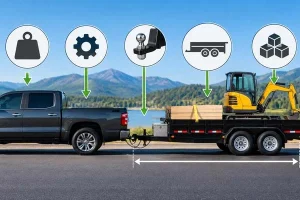
What Size Trailer Do I Need to Haul a Car Easy

what size trailer do i need to haul a car
Choosing the right trailer size sounds simple in theory. Once you are standing in front of a row of trailers in different lengths, widths and styles, the question quickly becomes very real. You start asking yourself what size trailer do i need to haul a car and how do I stay safe and legal at the same time. This guide gives you a clear car trailer size guide, explains how to measure your car, how to check weight ratings and how to choose between an open car trailer, an enclosed car trailer or a heavier car hauler trailer for professional work. The aim is to give you clear size ranges and safety guidance that you can actually use, not vague rules.

Step 1: Measure Your Car and Think About How You Will Use The Trailer

Before you look at prices or brands, start with the car you want to haul and how you plan to use a trailer. Any serious answer to what size trailer do i need to haul a car begins with real measurements and a realistic view of your usage pattern.

A good first step is to gather four basic facts about your situation. You need to know the overall length of the car, its width, its ground clearance and how many cars you want to move at a time. Alongside that, you should decide whether you are an occasional user who might tow a car a few times a year or a more frequent or professional hauler who will spend long days on the road.

Length, Width and Ground Clearance

race car trailer

Your car's length is more than the wheelbase. Measure from the very front of the front bumper to the very back of the rear bumper. If you have a tow hitch, a rear mounted spare or an aftermarket bumper, include that. For width, use the widest realistic setup you drive with, which may include the mirrors if they stay out while loading. Ground clearance matters because it affects loading. A low sports car is much easier to scrape on ramps than a stock sedan. If you know the car is low, a tilt deck trailer or a dovetail with long ramps becomes more important.

Number of Cars and Frequency of Use

car trailer safe

Most private owners focus on one car. In that case you can plan around a single car hauler trailer sized to that vehicle. Dealers, collectors or small transport operators may need to move two or more cars at once. That quickly pushes you toward longer multi car trailers or wedge style haulers. Frequency also shapes your choice. Someone who hauls a track car a few weekends per year can accept a simple open car trailer. A professional who tows several times a week usually benefits from more comfortable, secure and durable equipment.

Step 2: Translate car Specs Into Trailer Size

Once you have basic measurements, you can turn them into real trailer sizes. This is the point where the question what size trailer do I need to haul a car becomes more precise. Instead of guessing, you can use simple rules of thumb that come up again and again in a car trailer size guide.

A common practice is to give yourself a margin in both length and width. The trailer deck should be longer than the car so that you can adjust where the car sits for proper weight balance. It should also be wide enough that you do not feel like you are threading a needle every time you drive up the ramps.

Length Rules of Thumb

A good rule for trailer length is to add about 2 feet to the length of the car. If your sedan is 15 and a half feet long, a 16 foot trailer is the absolute minimum and an 18 foot trailer is often the more comfortable choice. The extra deck space allows you to move the car forward or backward so that you achieve the right tongue weight on the hitch.
Honda Accord

For many compact and mid size cars, 16 feet is the starting point and 18 feet feels ideal. For longer sedans, large coupes and smaller sport utility cars, 18 feet is often the minimum that feels practical. Full size pickups and large SUVs usually require trailers that are 20 feet or longer, especially if you have a crew cab and a longer bed.

Width Margins And Multi Car Bands

Width is easy to underestimate. The car might look narrow in your driveway but once it is sitting between metal fenders on an open car trailer, a couple of inches of clearance can make a big difference. Many drivers prefer at least eighty inches of usable deck width. Wider decks, for example those around eighty four inches or more, make loading wide performance cars and trucks easier and less stressful.

hydraulic tilt car trailer

If you are moving only one car, these size bands are usually enough. If you need to carry two or more vehicles, a larger car hauler trailer comes into play. Two light cars may fit on a longer bumper pull trailer in the mid twenties for deck length. For heavier or more frequent work, wedge style or double deck multi car haulers are usually chosen with help from a specialist dealer rather than from consumer size charts.

Step 3: Check Weight, GVWR And Tow Rating

Dimensions alone do not answer what size trailer do i need to haul a car. Weight is just as important. A car trailer size guide that ignores weight ratings can leave you with a combination that looks fine but is overloaded and unsafe.

To stay within safe limits, you need to understand the empty weight of the trailer, its payload capacity and the towing capacity of the vehicle that will pull it.

Understanding weight ratings is not just a matter of choosing the right trailer but also staying compliant with national safety guidance. Agencies such as the National Highway Traffic Safety Administration publish clear recommendations on safe towing loads, stopping distances and trailer brake performance. Their resources, available at https://www.nhtsa.gov, reinforce why accurate GVWR and payload calculations matter in real-world conditions.

Understanding GVWR And Payload

Every trailer has a gross vehicle weight rating, often shortened to GVWR. This is the maximum combined weight of the empty trailer plus the car and any extra gear you load on it. If a trailer has a GVWR of seven thousand pounds and weighs two thousand pounds empty, it can legally carry five thousand pounds of cargo. That five thousand pounds is the payload.
capacity

For many compact and mid size cars, 16 feet is the starting point and 18 feet feels ideal. For longer sedans, large coupes and smaller sport utility cars, 18 feet is often the minimum that feels practical. Full size pickups and large SUVs usually require trailers that are 20 feet or longer, especially if you have a crew cab and a longer bed.

Tow Rating And Real-World Examples

Weight Distribution Hitch

The second part of the calculation is the tow vehicle. If the same trailer is loaded to six thousand eight hundred pounds and your truck has a maximum tow rating of seven thousand two hundred pounds, you are operating close to the limit. Towing at the edge can strain brakes, the transmission and the cooling system. Ideally the fully loaded trailer should sit clearly below the maximum towing figure printed in your owner manual so that you have a comfortable margin.

Axles, Brakes And Control

Axle layout and brakes also matter. A single axle trailer can carry very light cars or equipment, but as soon as you are moving full size cars, tandem axles are the norm. Two axles share weight more evenly, ride better and provide a backup if one tire fails. In many regions, trailers over a set weight must have their own brakes. Most modern car hauler trailer models use electric brakes controlled from the cab. A properly adjusted brake controller helps slow the whole combination smoothly instead of asking the tow vehicle to do everything.

Step 4: Choose Trailer Type

With size and weight basics in place, you can choose the style of trailer that fits your budget, security needs and climate. The most common choices are open car trailer designs, enclosed car trailers and specialized car hauler trailer models such as tilt decks and wedge systems for multiple cars.

Each type has strengths and weaknesses. Thinking through how you will use the trailer over the next several years helps you avoid buying something that is technically adequate but frustrating in daily life.
car trailer width between fenders

Open trailers shine in dry climates and for cars that are already daily drivers. They are also easier to inspect at a glance because you can see tires, straps and the car itself without stepping into an enclosed box. The tradeoff is constant exposure to weather and road debris. Road salt, gravel and ultraviolet light all reach the car during the trip.

car trailer

The major advantages are protection and privacy. A classic car, luxury sedan or dedicated race car is far less likely to be chipped, scratched or tampered with inside an enclosed trailer. The downside is greater cost, higher empty weight and more wind resistance on the road. You must be sure that your tow car can pull an enclosed trailer of the size you choose, especially when you are also climbing grades or driving in hot weather.

steel deck car hauler trailer

Tilt deck trailers are often open, sometimes enclosed, and designed so that the entire deck pivots. This reduces the loading angle which makes life much easier for low ground clearance cars. If you regularly haul sports cars or low modified cars, a tilt deck is worth serious consideration.

Step 5: Materials And Key Features

Two trailers can share the same size but feel very different in real life. That difference comes from materials and features. These details influence how your chosen size behaves, so they matter when you decide what size trailer do i need to haul a car.

Steel And Aluminum Construction

Tilt Deck Equipment-Type Carriers

Steel is the traditional material for trailers. It is strong, straightforward to work with and usually cheaper at the beginning. A steel open car trailer can last many years if it is cleaned and any chipped paint is repaired. The downside is rust, especially in areas with winter road salt or near the coast. Over time this can require more maintenance.

aluminum tilt deck trailer

Aluminum is naturally resistant to rust and noticeably lighter than steel. An aluminum enclosed car trailer or aluminum open car trailer often weighs several hundred pounds less than a similar steel model. That weight savings can be used as extra payload or simply makes towing easier on the tow vehicle. Aluminum trailers cost more up front, but they tend to keep their appearance better, especially in harsh climates.

Loading And Tie Down Features

Loading and tie down features are also important. Some trailers use separate ramps that slide into pockets, while others use fixed ramps or a tilt system. Long ramps or a tilt deck reduce the risk of scraping low bodywork. Tie down systems can be as simple as a few fixed rings or as flexible as full length track along the floor and walls. If you plan to haul different cars with different wheelbases, flexible tie down options are worth paying for.

Winches And Practical Details

A front mounted winch is very useful when you need to load a car that does not run under its own power. Small details such as good lighting, non slip deck surfaces and accessible storage for straps and chocks also make a difference. These are not just comfort features. They influence how safely and calmly you work around the trailer at night and in bad weather.

Step 6: Legal And Safety Checklist

By the time you reach this step, you have a clear image of size, weight, type and features. The last part of any responsible car trailer size guide is a legal and safety check. Rules vary by country and state, but the principles are similar.
If you keep a short list of checks in mind, you greatly reduce the chance of a surprise at a weigh station or during an insurance claim.

Length, Width And Overhang

Weight Limit

Every jurisdiction sets limits on maximum trailer width and total length of a towing combination. In much of North America, 8 and a half feet is the common maximum width for trailers on public roads. Some areas allow more for commercial haulers under special permits. Overall length limits for a truck and trailer combination also apply, especially when you get into larger car hauler trailer setups.

Overhang rules control how far a load can stick out past the deck. A small amount of rear overhang may be acceptable if it is marked properly. However, designing your setup around constant overhang is usually a sign that the original answer to what size trailer do I need to haul a car was wrong.

Registration, Insurance And Documentation

Most regions require separate registration for a trailer, even if it is light enough that it does not pay a recurring road tax. The plate must be visible, the lights and reflectors must be in the right places and the trailer may need a periodic safety inspection once it passes a certain weight.
Insurance is more complex. In some cases, liability for damage the trailer causes is covered through the tow car policy, but coverage for the car on the trailer can vary. If you haul expensive cars, a conversation with your insurance provider is an important safety step, not a formality.

Expert Advice

Professionals who sell and service trailers repeatedly see the same patterns. Their practical advice can save you from common mistakes when you are deciding what size trailer do i need to haul a car.

One of the most common tips is to think a few years ahead rather than only about the car you own today. If you plan to move from a sedan to a pickup later, it rarely makes sense to buy the smallest trailer that barely fits the sedan. A slightly larger trailer that suits both often costs only a little more but serves you much longer.

Another tip is to spend your money on features that change how the trailer behaves rather than on cosmetics. Good ramps, a strong and flexible tie down system, quality tires and properly set up brakes improve safety and comfort every time you tow. Fancy paint or special wheels are nice but do not affect how confident you feel on the highway.

A final tip is to respect the weight numbers in the manuals even if a combination feels fine on a short drive. Exceeding tow ratings or GVWR reduces your margin of safety. Problems often appear first on long grades, in hot weather or during sudden stops, not in a quick trip around the block. Professionals see the long term costs of overloaded rigs and usually encourage customers to choose a trailer and tow vehicle that work easily together instead of constantly sitting at the limit.

Conclusion

There is no single trailer that fits every car and every driver, but there is a clear process for finding the right one. When you ask what size trailer do I need to haul a car, the answer begins with measuring your car, continues with translating those numbers into realistic length and width, and then expands to cover weight ratings, trailer type, materials, legal rules and real world use.

If you still feel unsure, you do not need to choose alone. You can contact the team at Three Horses Trailer, share details about your car and how you plan to use a trailer, and let experienced staff help you configure the right car hauler trailer for your needs. A short conversation now can lead to many years of safer, more relaxed towing on every trip.

FAQ

Most full size pickups require a trailer that is at least 20 feet long, and in many cases 22 feet feels more comfortable. This allows room for the truck’s wheelbase and for fine tuning weight distribution. A width close to 8 and a half feet is common so that the tires and mirrors are not squeezed. The trailer should have tandem axles and a GVWR that clearly exceeds the truck’s curb weight plus extra gear.
A 16 foot trailer can carry some compact SUVs with short wheelbases, but for most mid size and larger models it is tight. The car may fit in pure length terms but leave little space to move the car forward or backward for weight balance. For a more relaxed and flexible setup, 18 feet is a better starting point for most SUVs and 20 feet is often preferred for larger models.
You can haul a car long distances on an open car trailer if the car is not particularly fragile and you accept exposure to weather and debris. However, for cars with higher value, fresh paint or delicate trim, an enclosed car trailer offers clear benefits. It shields the car from rain, hail, stone chips and road grime, and it hides the car from casual view at rest stops and hotels.
Weights vary widely. A light duty open car trailer that is 16 to 18 feet long might weigh between 1,500 and 2,000 pounds empty. A 20 foot steel trailer with heavier construction may reach 2,500 pounds or more. Enclosed trailers of similar lengths can weigh from about 2,800 pounds up to well over 4,000 pounds depending on materials and options. This is why matching trailer weight to the tow rating of your car is so important.
A trailer that is too short or too narrow pushes you into compromises. You may be tempted to let the car hang over the deck or to squeeze it tightly between fenders. That can upset weight distribution, make the rig more prone to sway, increase stopping distances and increase the chance of physical damage. It also creates a poor impression with law enforcement and can weaken your position in any insurance dispute after a collision.

Share This Post

7fb5089b2bed43458a0dd47da3133cc412838ad1d99256acf731c276c5571f58?s=96&d=mm&r=g

Lalune Teng

Lalune Teng is a seasoned expert in the trailer field with a passion for the trailer manufacturing industry, Lalune specializes in making the connection between innovative trailer solutions and the needs of the customer to help them find the perfect trailer to meet their needs, with over 5 years of professional experience. Lalune is responsible for creating educational and promotional content on car trailers, utility trailers, dump trailers and more. Her work highlights the company's dedication to quality and customization,. Contact Lalune through our latest articles where she shares knowledge, tips and updates on modern trailer solutions!

Table of Contents
Custom Your Trailers

Don’t hesitate to get in touch with us to explore our trailer and discuss how we can meet your unique requirements.

Find Your Trailer

Whether you've purchased a trailer before or are learning about trailers for the first time, we can help you find the right trailer for you.

Recently Posts

Leave a Comment

Your email address will not be published. Required fields are marked *

Scroll to Top
Three Horses Trailer

Find Your Trailer

Whether you've purchased a trailer before or are learning about trailers for the first time, we can help you find the right trailer for you.