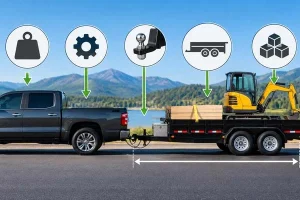
A farm animal trailer should be chosen by animal weight, loading behavior, road conditions, and real daily work, not just by the number of animals you hope to fit inside. That is where many farmers get caught. A trailer may look large enough in photos, but once you add cattle, sheep, goats, pigs, bedding, water, feed buckets, gates, and road movement, the wrong trailer quickly becomes stressful for the animals and risky for the driver.
If you are hauling livestock, the trailer is not just a transport box. It is a moving pen. Animals shift, lean, panic, push, slip, and react to every turn and brake. A farm animal trailer needs enough room for safe standing, but not so much empty space that animals slide around like loose cargo. It also needs the right axle capacity, brakes, floor grip, ventilation, gates, dividers, and towing match.
The real question is not simply "What size farm animal trailer should I buy?" A better question is: "What trailer keeps my animals calm, my load balanced, and my towing setup safe?" That is the question this article answers for farmers, ranchers, livestock traders, smallholders, agricultural dealers, and B2B buyers who need a trailer that works beyond the showroom photo.

Farm animal trailer size matters because livestock transport is different from hauling tools, feed, or machines. Animals are live loads. They do not stay perfectly still. A cow may lean into a turn. A pig may bunch near the gate. Sheep and goats may crowd together when nervous. A horse may shift its weight if the road feels unstable. That movement affects balance, braking, and trailer control.
A trailer that is too small can crowd animals and increase the risk of injury. A trailer that is too large can let animals move too much, especially during sudden stops or sharp turns. Both problems are bad. The safest trailer gives animals enough space to stand naturally while still keeping the group controlled.
Many buyers focus only on trailer length, but length is just one part of the decision. Internal width, height, payload capacity, gate design, ramp angle, floor grip, ventilation, and axle count all matter. A long trailer with weak axles is not safe. A strong trailer with poor airflow is not animal-friendly. A wide trailer with no divider may be harder to control when carrying small groups.
Think of the trailer as a working livestock room on wheels. Space matters, but so does structure. The trailer must be strong enough for the heaviest animal, stable enough for rough farm roads, and practical enough for daily loading. When those details line up, the trailer feels easier to use from the first week.
A farm animal trailer is a trailer designed to transport livestock such as cattle, calves, sheep, goats, pigs, horses, alpacas, donkeys, and other farm animals. It usually has a reinforced frame, secure side panels, good ventilation, non-slip flooring, a strong rear gate or ramp, suitable suspension, and enough payload capacity for live animal movement.
Unlike a standard utility trailer, a farm animal trailer is built around animal safety. It must handle weight that moves. It must be easy to clean after manure, mud, straw, and bedding. It must be strong enough for animals that push, kick, or crowd against the sides. It must also load and unload smoothly, because poor loading design can turn a simple farm job into a half-hour battle.
A well-designed farm animal trailer can also serve mixed farm work. Many farms use one trailer for livestock, feed bags, small machinery, fencing materials, and field supplies. That is fine, but livestock safety should still come first. If the trailer is used for animals even once a week, the floor, gates, panels, brakes, and suspension need to be chosen with animals in mind.
A farm animal trailer is built for live animals, while a utility trailer is built for general cargo. That sounds obvious, but it is one of the most common buying mistakes. A utility trailer may have a strong deck and open sides, but that does not mean it is safe for sheep, goats, pigs, or calves.
Animals need secure side protection, better footing, safer gates, controlled airflow, and a layout that reduces stress. A utility trailer may have low rails, wide gaps, a mesh ramp, or a floor that becomes slick after rain. That may be fine for tools or garden equipment, but it can be risky for livestock.
If you only move feed, firewood, fencing, or tools, a utility trailer may be enough. If you move animals, even small animals, choose a farm animal trailer or a livestock trailer configuration. The difference is not just comfort. It is safety, control, and long-term trailer durability.
| Feature | Farm Animal Trailer | General Utility Trailer |
|---|---|---|
| Main use | Transporting cattle, sheep, goats, pigs, horses, and other livestock | Moving tools, feed, equipment, garden supplies, and general cargo |
| Side protection | Higher and more secure panels for live animals | Often lower rails or open sides |
| Flooring | Non-slip, easy-clean, and strong enough for hooves and live loads | May be suitable for cargo but not always safe for animals |
| Ventilation | Designed to manage airflow, heat, and odor during transport | Usually not designed around animal comfort |
| Loading | Gate or ramp designed for animal movement | Ramp may be too steep, noisy, or unsafe for livestock |
The best farm animal trailer starts with the animals you haul most often. A trailer for goats does not need the same structure as a cattle trailer. A trailer for pigs needs different flooring priorities than a trailer for sheep. A trailer for horses needs more height and smoother loading than a trailer for calves.
Before buying, list your real transport jobs. Are you moving two calves to a vet? A group of sheep to market? Pigs between pens? Goats to a local sale? Cattle across rough farm roads? Horses to events? Your most common job should decide the trailer. Occasional jobs can be handled with removable dividers, extra gates, or custom panels.
Cattle need a farm animal trailer with strong side panels, a reinforced floor, proper braking, and enough axle capacity. Even one adult cow creates a heavy, shifting load. When the trailer turns, brakes, or moves over rough ground, that weight pushes against the floor, walls, and suspension.
For cattle, trailer strength is not optional. The sides should be high enough and strong enough to stop pushing or leaning. The gate should close securely and withstand repeated impact. The floor should provide grip even when wet or dirty. A smooth, slippery floor is a serious risk because large animals can injure themselves badly if they fall.
Calves are lighter, but they are not always easier. Young animals may move suddenly or try to turn around in tight spaces. A trailer used for calves should avoid dangerous gaps where legs or heads can get trapped. Internal dividers are useful because they reduce open space and keep animals from bunching too much during transport.
For cattle transport, tandem axle farm animal trailers are often the better choice. They spread weight better, tow more steadily, and usually offer more confidence on rural roads, slopes, and longer trips. If cattle are the main load, do not buy a trailer that is only barely strong enough. Leave capacity margin, because live weight puts more pressure on the trailer than static cargo.
Sheep and goats need secure panels, good airflow, and a trailer layout that prevents crowding. They are smaller than cattle, but they can still create handling problems if the trailer is poorly designed. Goats are especially good at finding gaps, weak latches, and low rails. If there is a small escape point, they will notice it.
A farm animal trailer for sheep and goats should have side panels with safe spacing, a rear gate that locks firmly, and a floor that gives enough grip. For larger groups, partitions help control movement and reduce pressure near the gate. Without dividers, animals may pile together during braking or crowd one end of the trailer.
Ventilation also matters. Sheep and goats can overheat in a poorly ventilated trailer, especially during summer transport or longer trips. Open side panels or adjustable ventilation can help keep the trailer more comfortable without sacrificing safety. For small farms, a medium-size livestock trailer with removable partitions is often more useful than a very large empty box.
Pigs need a trailer that is easy to clean, easy to load, and strong enough for shifting weight. They may refuse a steep ramp or hesitate if the floor feels unstable. Once pigs resist loading, the whole job becomes slower and more stressful. A low ramp angle, solid gate, and non-slip floor can make a big difference.
Cleanability is especially important for pig transport. Mud, manure, bedding, and moisture can build up quickly. If the trailer has poor drainage or too many dirt-trapping corners, cleaning becomes harder and corrosion risk increases. A practical pig trailer should have a washable floor, simple interior surfaces, and a gate that can handle repeated farm use.
For small livestock, the same rule applies: secure space, safe footing, and easy cleaning. Do not choose a trailer only because the animals fit inside. Choose one that keeps them stable and makes daily handling easier. The right trailer should reduce pushing, slipping, and stress during both loading and unloading.
Horses and larger animals need more headroom, smoother towing, and a safer loading experience. A horse may be more sensitive to floor movement, ramp noise, and trailer sway. If the trailer feels unstable, loading can become difficult very quickly.
A trailer used for horses should have enough internal height, safe partitions, proper ventilation, and a floor that feels solid underfoot. The ramp should not be too steep, and the rear opening should feel open enough for the animal to enter without hesitation.
If horses are your regular transport need, a purpose-built horse trailer is usually better. If you use a farm animal trailer for occasional horse transport, check height, width, floor strength, ramp design, ventilation, and towing stability carefully before using it. Larger animals punish weak trailer design quickly, so every detail should be treated seriously.
The right farm animal trailer size depends on animal type, number of animals, average animal weight, trip distance, and towing vehicle capacity. A small farm hauling goats or sheep may not need a large trailer. A cattle farm or mixed livestock operation may need a stronger tandem axle model with internal dividers.
Do not buy by outside length alone. Internal space is what animals use. Overall size affects road legality and maneuverability, but internal length, width, and height decide how animals stand and move. A trailer may be advertised as 10 ft long, but the usable inside space, gate design, and divider layout may tell a different story.
For small livestock, a compact trailer may be enough if the load is light and trips are short. For cattle or horses, the trailer needs more capacity and more stability. For mixed farm use, a medium or larger trailer with removable partitions is often more useful than a single-purpose layout.
Trailer length decides how many animals can be carried, but it should not be used as the only sizing rule. Animals need enough standing room, but too much open floor can be unsafe if the group is small. That is why internal dividers are valuable. They let you adjust the space to the load.
Internal width matters too. A narrow trailer may be hard to load and uncomfortable for larger animals. A very wide trailer may be harder to tow through gates, lanes, and older farm roads. If your farm has narrow access points, tight turns, or small yards, trailer width should be checked before purchase.
Height is also important. Sheep and pigs do not need the same height as cattle or horses. Taller animals need enough clearance to stand naturally without hitting the roof or feeling trapped. Poor height selection can stress animals and make loading harder.
Payload capacity is the weight the trailer can safely carry. GVWR, or Gross Vehicle Weight Rating, is the total rated weight of the trailer plus the load. Both numbers matter. A trailer can look large but still have limited payload if the trailer itself is heavy.
Livestock weight adds up faster than many buyers expect. A few cattle can quickly push a trailer near its limit. Pigs, sheep, and goats may seem lighter individually, but group loads can still become heavy. Add bedding, gates, panels, feed, tools, and water, and the real loaded weight may be much higher than expected.
Always choose a farm animal trailer with a safety margin. Running at the limit every trip increases wear on tires, brakes, axles, suspension, and frame. It also reduces control when animals move inside the trailer. A safe trailer is not the one that can barely carry the load. It is the one that carries the load with room to breathe.
A single axle farm animal trailer is suitable for lighter loads, small livestock, short trips, and farms that need easy maneuverability. It costs less to maintain and is easier to move around tight areas. For goats, sheep, calves, or small pigs, a properly rated single axle trailer can work well.
A tandem axle farm animal trailer is better for heavier animals, longer trips, rougher roads, and frequent livestock transport. Tandem axles spread the load across more tires, improve road stability, and usually tow with more confidence. They are especially useful for cattle and larger livestock.
The downside is maintenance. More axles mean more tires, hubs, bearings, brakes, and suspension parts to inspect. But for heavy animal transport, that extra maintenance is usually worth the added stability. If the trailer is used for commercial livestock movement, a tandem axle setup is usually easier to justify.
| Trailer Setup | Best For | Main Advantage | Buyer Watch Point |
|---|---|---|---|
| Single axle farm animal trailer | Goats, sheep, calves, small pigs, short trips, light farm use | Lower cost, easier turning, simpler maintenance | Limited payload and less stability with heavy live loads |
| Tandem axle farm animal trailer | Cattle, larger livestock, frequent transport, rough roads, longer trips | Better load distribution and towing stability | More tires, hubs, brakes, and bearings to maintain |
| Trailer with removable dividers | Mixed farms carrying different animals | Adjustable internal space for safer loading | Divider strength and latch quality must be checked |
Flooring is one of the most important parts of a farm animal trailer because animals stand on it for the whole trip. A weak or slippery floor can cause fear, falls, injuries, and loading problems. Once an animal slips badly, it may resist entering the trailer again.
A good livestock trailer floor should be strong, non-slip, moisture-resistant, and easy to clean. Textured steel, treated boards, rubber mats, aluminum tread plate, or coated flooring can all be used depending on the trailer design and budget. What matters most is grip and durability under real farm conditions.
The floor also needs proper drainage. Manure, urine, wash water, and rain should not sit in corners and attack the structure. If the floor traps moisture, corrosion and rot can appear faster. Buyers should inspect the underside of the floor, not just the top surface.
For B2B buyers, floor design is a complaint-prevention detail. A trailer can look strong in product photos, but if the floor becomes slippery, difficult to clean, or weak after repeated farm use, the customer will not care how good the paint looks. The floor is where animal safety and product durability meet.
Ramps, gates, and doors decide how smoothly animals enter and leave the trailer. A farm animal trailer with a poor gate design can waste time every day. A gate that is too heavy, too narrow, too steep, or hard to latch is not just annoying. It can become unsafe.
A ramp should have enough grip and a comfortable angle. Animals are more willing to load when the ramp feels stable and not too steep. Pigs, calves, sheep, and goats often benefit from a ramp because it reduces the step into the trailer. Larger animals may also load more calmly when the entry feels open and secure.
Side doors are helpful for inspection, feeding, cleaning, and handling animals without opening the full rear gate. Internal division gates are also useful because they allow farmers to separate animals by size, type, or destination. For livestock transport, good gates are not decoration. They are daily working tools.
Latch quality also matters. A weak latch may look like a small hardware issue, but animals push, rub, and lean during transport. A gate that opens unexpectedly can create a serious accident. Farmers should be able to close the gate quickly, lock it securely, and check it without fighting the hardware.
Ventilation is essential in a farm animal trailer because animals produce heat, moisture, and odor during transport. Poor airflow can make the trailer uncomfortable quickly, especially in warm weather or during longer trips. Heat stress is a real concern, and a poorly ventilated trailer can make animals restless.
Side openings, vents, slatted panels, or adjustable covers help manage airflow. The right design depends on climate. Hot regions need more airflow. Cold or windy regions may need partial protection from direct wind and rain. For mixed markets, adjustable ventilation is often the best solution.
Good ventilation should not weaken security. Side openings must be designed so animals cannot squeeze through, trap legs, or injure themselves. The goal is airflow with control. For sheep and goats, gap size is especially important. For cattle and horses, panel strength matters more because larger animals can put more force against the sides.
A farm animal trailer should be easy to control when loaded. That means brakes, tires, suspension, and coupler setup need serious attention. A trailer that tows well empty may behave very differently with live animals inside.
Brakes are especially important for heavier livestock trailers. Depending on the region and trailer weight, electric brakes, hydraulic brakes, surge brakes, or mechanical systems may be used. The brake system should match the trailer load, towing vehicle, and local rules. If the trailer carries cattle or horses, brakes should not be treated as a nice extra. They are part of safe control.
Tires must be rated for the load and road conditions. Farm trailers often move between rough tracks, gravel roads, wet yards, and public roads. Weak or worn tires can cause blowouts, poor handling, and downtime. A farm animal trailer should not run on tires that barely meet the load requirement.
Suspension affects both trailer durability and animal comfort. A rough ride can stress animals and increase wear on the frame. The coupler should also match the towing vehicle and trailer capacity. If the hitch setup is wrong, the trailer may sway, bounce, or place too much load on the tow vehicle.
The first mistake is buying a farm animal trailer by price alone. Low-cost trailers can be tempting, but weak floors, light axles, poor gates, thin panels, and low-grade tires can become expensive later. Livestock transport is hard work. The trailer needs to be built for it.
The second mistake is choosing a trailer that is too small. Crowding animals may look efficient, but it increases stress, injury risk, and handling problems. It can also make unloading harder. A trailer should give livestock enough room to stand safely and recover balance during movement.
The third mistake is choosing a trailer that is too large without dividers. Extra space may sound good, but animals can shift too much during braking or turning. For mixed loads, removable partitions are often more useful than extra empty space. The goal is controlled space, not empty space.
The fourth mistake is ignoring the towing vehicle. A trailer must match the truck, tractor, or SUV that will pull it. Check tow rating, hitch type, brake controller, plug type, and tongue weight before buying. If the tow vehicle is not matched to the loaded trailer, the setup is unsafe no matter how strong the trailer looks.
The fifth mistake is forgetting cleaning and maintenance. Farm animal trailers face manure, mud, moisture, bedding, and fertilizer residue. If these are not cleaned regularly, corrosion and floor damage can appear much sooner. A trailer that is hard to clean will usually be cleaned less often. That is why practical interior design matters.
A used farm animal trailer can be a good buy, but it needs careful inspection. Start with the frame. Look for deep rust, cracks, poor repairs, bent sections, and weak welds. Surface rust may be manageable, but structural rust is a serious warning sign.
Check the floor next. This is where many problems hide. Walk across the floor, inspect the underside, and look for soft spots, corrosion, rot, loose panels, or sharp edges. A bad floor can injure animals and cost a lot to repair.
Inspect the axles, tires, hubs, brakes, lights, coupler, safety chains, gate hinges, latches, ramps, side panels, and internal dividers. Make sure everything opens, closes, locks, and supports weight properly. If the trailer was used for livestock, assume it has seen moisture and dirt. Look closely, not quickly.
Ask how the trailer was stored and what animals it carried. A trailer used occasionally for sheep may have a very different wear pattern from a trailer used heavily for cattle. If repair records are available, review them. If the seller cannot explain the trailer’s weight rating, brake condition, or floor history, be cautious.
| Inspection Area | What to Check | Why It Matters |
|---|---|---|
| Frame | Deep rust, cracks, poor weld repairs, bent sections | Frame damage affects the whole trailer structure |
| Floor | Soft spots, sharp edges, rot, corrosion, loose boards or plates | Weak flooring can injure animals and cause loading failure |
| Gates and latches | Loose hinges, weak locks, heavy operation, misalignment | Gate failure can create serious livestock escape risk |
| Axles and tires | Uneven tire wear, noisy hubs, worn bearings, low tire rating | These parts control load support and road safety |
| Brakes and lights | Brake response, wiring damage, plug match, light function | Road use requires reliable stopping and visibility |
The right size depends on the animals you carry, their average weight, the number of animals, and how far you tow. Small livestock such as goats, sheep, and calves may only need a compact trailer. Cattle, horses, and larger groups usually need more internal space, stronger axles, better brakes, and often a tandem axle setup. The safest choice is a trailer that gives animals enough room to stand naturally while keeping the load controlled.
A utility trailer can move farm supplies, but it is not always safe for animals. A farm animal trailer should have secure sides, proper ventilation, a non-slip floor, safe gates, and enough strength for live loads. If the utility trailer does not have those features, it should not be used for livestock. A trailer that works for feed bags may not work for nervous animals that shift during transport.
A single axle trailer can be enough for small animals, lighter loads, and short local trips. It is easier to tow and cheaper to maintain. For cattle, horses, heavy pigs, or regular long-distance transport, a tandem axle trailer is usually safer and more stable. The final decision should be based on real loaded weight, road distance, farm terrain, and towing vehicle capacity.
The best floor is strong, non-slip, easy to clean, and resistant to moisture. Rubber mats, textured metal, treated boards, or coated flooring can all work if properly designed. The floor should also drain well and be checked often for damage, rust, rot, or sharp edges. For livestock transport, floor grip is one of the biggest safety details because slipping can cause injuries and make animals afraid to load again.
Many farm animal trailers need brakes, especially when carrying heavy livestock or traveling on public roads. Even when brakes are not legally required for lighter loads, they are still strongly recommended for safety. Live animals shift during transport, so better braking gives the driver more control. For cattle, horses, and frequent livestock hauling, brakes should be considered part of the core trailer setup.
A ramp is often better for pigs, calves, sheep, goats, and nervous animals because it makes loading easier. A step-up gate can work for larger animals if the trailer height is suitable. For mixed farm use, a strong non-slip ramp is usually more flexible. The ramp should feel stable, have good grip, and avoid a steep angle that makes animals hesitate.
A livestock trailer needs enough airflow to reduce heat, moisture, and odor. The right amount depends on climate, animal type, and trip length. Hot weather requires more airflow, while cold regions may need adjustable panels to protect animals from direct wind. Good ventilation should keep animals comfortable without creating unsafe gaps in the trailer sides.
Use a non-slip floor, rubber mats, bedding, or textured surface. Keep the floor clean and avoid sudden braking or sharp turns. Driving style matters too. Smooth acceleration, gentle braking, and slower cornering help animals stay balanced. If animals regularly slip while loading, the ramp angle, floor surface, and interior layout should all be checked.
Check the frame, floor, axles, tires, brakes, lights, wiring, coupler, safety chains, gate hinges, latches, ramps, side panels, and dividers. Pay close attention to the floor and underside because moisture and manure often cause hidden damage. If the frame has deep rust or the floor feels weak, the trailer may not be worth the repair cost.
Yes, one trailer can carry different animals if it has the right layout. Removable dividers, secure side panels, good ventilation, safe flooring, and flexible gates make mixed use easier. The trailer should still be rated for the heaviest load you plan to carry. A trailer that works for goats may not automatically be strong enough for cattle.
A trailer for sheep and goats should have secure panels, safe spacing, good airflow, a non-slip floor, and a reliable rear gate. Internal partitions are useful when carrying larger groups because they reduce crowding and movement during transport. For goats, latch quality and panel spacing deserve extra attention because they are good at finding weak spots.
A cattle trailer should have a strong frame, high side panels, reinforced flooring, reliable brakes, and enough axle capacity for heavy live loads. Tandem axles are often preferred because they provide better weight distribution and towing stability. The trailer should also have secure gates and enough internal space to keep cattle controlled without dangerous crowding.
A farm animal trailer should be cleaned after livestock transport, especially when manure, bedding, mud, or moisture is left inside. Regular cleaning protects the floor, reduces odor, helps prevent corrosion, and keeps the trailer safer for the next load. If the trailer is used heavily, quick rinsing and deeper scheduled cleaning should both be part of routine maintenance.
The most important feature is not one single part. It is the match between animal type, payload capacity, floor grip, gate design, ventilation, axle setup, and brakes. A safe trailer works as a complete system. If one part is weak, the whole trailer becomes harder to use and less safe for animals.
A farm animal trailer should be chosen around real livestock work, not showroom appearance. The right trailer gives animals enough space, keeps the load controlled, supports safe loading, handles rough farm conditions, and matches the towing vehicle. That combination matters more than simply buying the longest or cheapest model available.
For small farms, a compact trailer with secure panels and good flooring may be enough. For cattle, horses, and frequent livestock movement, a stronger tandem axle trailer with proper brakes, dividers, and reinforced structure is usually the better choice. For mixed farms, flexibility matters. Removable partitions, practical gates, easy-clean flooring, and suitable ventilation can make one trailer useful for several jobs.
A good farm animal trailer saves time, reduces stress, and protects livestock during transport. If it fits your animals, your land, your tow vehicle, and your daily routine, it becomes more than a trailer. It becomes one of the most dependable tools on the farm.