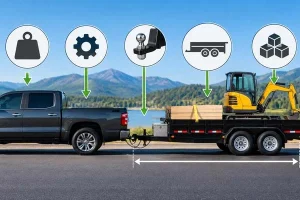
Race car trailer weight is one of the first numbers buyers should check before choosing a trailer, because it affects payload, braking, towing stability, fuel use, tire wear, and the legal limit of the complete towing setup. For race teams, dealers, transport companies, and serious car owners, a trailer is not just a deck with wheels. It is part of a working transport system that has to carry a valuable vehicle, spare tires, tools, jacks, fuel cans, cabinets, and sometimes a full weekend of racing equipment.
The mistake many buyers make is simple: they only look at the race car weight. A lightweight track car may seem easy to haul, but once the trailer itself, toolboxes, extra wheels, fuel, winch, ramps, and tie-down equipment are added, the real towing weight can be much higher than expected. That is why understanding race car trailer weight before purchase helps avoid overloaded axles, poor handling, weak braking, and expensive trailer problems later.

Race car trailer weight matters because motorsport hauling usually involves higher-value cargo and longer driving distances than normal personal transport. A race car may travel from a workshop to a track, then to another event, then back to storage. The route may include highways, steep entrances, paddock roads, fuel stops, and tight parking areas. If the trailer is too heavy for the tow vehicle or too light for the load, the whole setup becomes harder to control.
The safest race trailer setup starts with the correct weight match between the trailer, race car, tow vehicle, and equipment load. When a trailer is overloaded, braking distance increases and tires heat up faster. When tongue weight is wrong, the trailer can sway at speed. When axle capacity is too close to the actual load, even a small mistake in loading position can create stress on tires, bearings, springs, and the frame.
For a professional race team, these details are not small issues. A trailer failure on the way to an event can mean missed race time, damaged equipment, recovery costs, and schedule problems. For a dealer or motorsport service company, it can also affect customer trust. This is why serious buyers usually check race car trailer weight together with GVWR, payload capacity, brake system, axle configuration, and frame construction.
Race car transport usually needs more planning than moving a normal road car, because racing vehicles often have low ground clearance, wider tires, modified body kits, and extra parts that travel with the car. A trailer that works for a standard sedan may not be the right trailer for a lowered track car or a sprint car. The buyer has to consider not only how heavy the car is, but also how the car loads, where it sits on the deck, and how much support equipment will be carried.
Race car trailer weight should be understood as more than one number. Buyers need to separate empty trailer weight, payload capacity, GVWR, axle rating, and actual loaded weight. These numbers work together. Looking at only one of them can lead to the wrong buying decision, especially when the trailer will be used often or for commercial motorsport transport.
Empty trailer weight, also called curb weight or dry weight, is the weight of the trailer before loading the race car and equipment. An open steel race car trailer may be much lighter than an enclosed trailer, while a hydraulic tilt trailer may weigh more because of the lift system, cylinder, stronger deck structure, and added components. This number is important because it directly reduces how much payload the trailer can legally and safely carry.
Payload capacity tells buyers how much weight can be loaded onto the trailer after subtracting the empty trailer weight from the GVWR. For example, if a trailer has a GVWR of 10,000 lb and an empty weight of 2,800 lb, the practical payload capacity is about 7,200 lb. That payload must cover the race car, spare wheels, tools, fuel, cabinets, jack, straps, winch, and any other track equipment carried on the trailer.
GVWR, or Gross Vehicle Weight Rating, is the maximum rated weight of the loaded trailer. Axle rating shows how much the axles are designed to support. A tandem axle race car trailer usually offers better load distribution than a single axle trailer, which is why many buyers choose tandem axles for race cars, heavier vehicles, or long-distance towing. The key point is not to use GVWR as a target. It should be treated as a limit, with enough safety margin for real-world use.
Race car trailer weight can vary widely because trailer design, material, deck length, axle setup, ramp type, and enclosed body structure all change the final number. A buyer hauling a small track car with an open trailer has very different needs from a race team hauling a car, tires, cabinets, and tools inside an enclosed trailer.
Open race car trailers are usually lighter, easier to inspect, and more practical for buyers who want a simple hauling setup. Many open steel car trailers fall into a moderate weight range depending on deck size, frame thickness, ramps, dovetail design, and axle capacity. They are often suitable for repair shops, dealerships, small motorsport teams, and private owners who need dependable transport without the extra weight and cost of a full enclosed trailer.
Enclosed race car trailers usually weigh more because they include walls, roof, doors, flooring, cabinets, lighting, and sometimes air systems or workbenches. The extra weight can be useful because it protects the race car from weather, road debris, and unwanted attention. However, buyers must make sure the tow vehicle can handle both the loaded trailer weight and the extra wind resistance created by the enclosed body.
Tilt and hydraulic race car trailers can be a smart choice for low-clearance race cars because they reduce the loading angle and make loading easier. The trade-off is that tilt systems and hydraulic components add weight. For buyers moving lowered cars, track cars, or vehicles with front splitters, this extra trailer weight may be worth it if it reduces loading damage and saves time at the track.
The right race car trailer weight setup starts with a full load calculation, not a quick guess. Buyers should list every item that will travel on or inside the trailer. This includes the race car, spare wheels, fuel cans, toolboxes, jack, compressor, winch, straps, ramps, cabinets, generator, battery, and personal racing gear. Once the full equipment list is clear, the buyer can compare the actual loaded weight against the trailer rating and the tow vehicle rating.
A race car trailer may look lightly loaded when the car is the only visible item, but support equipment adds weight quickly. Four spare wheels, a heavy floor jack, tool chests, fuel containers, and tie-down gear can add hundreds of pounds. In an enclosed trailer, built-in cabinets and work areas may add even more. Buyers should leave a comfortable margin instead of buying a trailer that barely meets the calculated load.
The tow vehicle must be rated for the trailer’s actual loaded weight, not just the race car weight. Buyers should check towing capacity, Gross Combined Weight Rating, hitch rating, brake controller compatibility, rear axle rating, and tire rating. A trailer with the right GVWR can still be a poor match if the truck or SUV cannot control it safely at highway speed or during emergency braking.
Weight numbers are important, but they do not tell the whole story. A well-built race car trailer should combine proper capacity with strong structure, safe loading design, stable braking, reliable suspension, and practical tie-down locations. Buyers who only compare price and GVWR may miss details that affect daily use at the shop, on the road, and at the track.
A race car trailer needs a frame that can handle repeated loading, road vibration, and concentrated vehicle weight. Deck length and width should match the vehicle type, tire width, and loading position. A longer deck can make weight balance easier, while a wider deck can help with race cars that use wider tires or bodywork. The frame should feel suitable for real use, not just for the number printed on the rating plate.
A good race car trailer should have braking and suspension components that match the loaded weight. Tandem axle trailers with electric brakes are common for heavier race car hauling because they offer better control and stopping support. Tie-down points should be strong, easy to reach, and placed where the car can be secured without damaging suspension parts, wheels, or bodywork.
Low-clearance race cars need special attention during loading. Even if the trailer weight rating is correct, a steep ramp angle can scrape splitters, exhaust parts, or chassis components. Buyers should compare dovetail design, ramp length, tilt angle, and deck height. For many motorsport users, a trailer that loads safely is more valuable than one that only looks good on paper.
The most common mistake is buying too close to the limit. A buyer may think a trailer is enough because the race car weighs less than the listed payload capacity. In real work, the trailer also carries tools, tires, fuel, and extra equipment. Weather, road conditions, loading position, and driving distance also affect how the trailer performs under load.
Race car weight is only the starting point. A 3,000 lb car does not mean a 3,000 lb payload trailer is enough. Buyers need to include every extra item and leave room for future use. Race teams often add more equipment over time, so a trailer that feels enough in the first season may become too limited later.
Tongue weight affects how the trailer follows the tow vehicle. Too little tongue weight can cause sway, while too much can overload the hitch and rear suspension of the tow vehicle. The position of the race car on the deck matters. Buyers should plan the loading position carefully and use the correct hitch setup, especially when hauling at highway speed or over long distances.
A race car trailer should be inspected often because motorsport hauling puts repeated stress on the trailer. Tires, wheel bearings, brakes, lights, coupler, safety chains, ramps, deck boards, frame welds, and tie-down points should be checked before long trips. A trailer that is properly rated but poorly maintained can still become unsafe.
Trailer tires should be checked for pressure, age, cracks, and uneven wear. Wheel bearings should be serviced based on usage and travel distance. Brakes should be tested before hauling a valuable race car, especially after long storage. The frame and deck should also be inspected for cracks, loose fasteners, corrosion, and damage from repeated loading. These checks are simple, but they protect the car, the trailer, and the schedule.
A race car trailer can vary from a lighter open trailer to a much heavier enclosed trailer. Open trailers are usually lighter because they have no walls or roof, while enclosed trailers add structure, doors, cabinets, lighting, and storage space. The exact weight depends on deck size, material, axle rating, ramp type, and whether the trailer has hydraulic or tilt functions.
You should choose a trailer based on the full loaded weight, not only the race car weight. Add the race car, spare tires, tools, fuel, jack, winch, straps, cabinets, and any track equipment. Then compare that number with the trailer payload capacity, GVWR, axle rating, hitch rating, and tow vehicle capacity. A safe setup should include a practical margin instead of operating at the maximum limit every trip.
Yes, an enclosed race car trailer usually weighs more because it includes walls, roof, doors, flooring, lighting, and often interior storage. The benefit is better protection for the race car and equipment. The downside is higher towing weight and more wind resistance. Buyers should make sure the tow vehicle has enough power, braking support, and stability for the heavier setup.
Tongue weight matters because it affects trailer stability and tow vehicle control. If the tongue weight is too light, the trailer may sway. If it is too heavy, the tow vehicle rear suspension and hitch may be overloaded. Race cars should be positioned carefully on the trailer so the weight sits correctly over the axles and creates stable towing behavior.
Steel trailers are often chosen for strength, durability, and cost control, while aluminum trailers are popular when buyers want lower empty trailer weight and better corrosion resistance. The right choice depends on budget, road conditions, frequency of use, payload needs, and maintenance expectations. For commercial or frequent motorsport use, buyers should compare total trailer structure and service support instead of choosing by material alone.
Race car trailer weight should be checked before purchase because it controls how much you can safely haul, how the trailer behaves on the road, and whether the tow vehicle can manage the complete setup. Buyers should look beyond the car weight and calculate the real loaded weight, including tools, tires, fuel, ramps, winch, storage, and track equipment. A trailer with the right GVWR, axle rating, brake setup, loading angle, and frame strength will make race transport safer and more practical.
For race teams, dealers, repair shops, and motorsport transport buyers, the best trailer is not simply the heaviest or the cheapest. It is the one that matches the vehicle, the route, the loading method, the equipment list, and the long-term workload. When race car trailer weight is planned correctly, every trip becomes easier to control, easier to repeat, and safer for both the driver and the car.