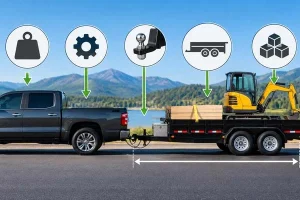
Choosing the right car trailer size is crucial for safety, convenience, and performance. Whether you’re transporting a compact sedan or a heavy-duty SUV, selecting a properly sized trailer ensures your vehicle fits securely and that your towing vehicle can handle the load. Many drivers underestimate the importance of matching a trailer’s dimensions and weight to their vehicle’s capabilities.
Introduction to Car Trailer Sizes
Car trailer sizes vary widely, and understanding these differences can help you avoid overloading, legal issues, or inefficient hauling. From small car trailers perfect for compact vehicles to large haulers for trucks and SUVs, each size category has its own unique strengths and limitations.
Choosing the wrong trailer size can lead to instability, damage to your vehicle, or even legal problems if weight limits are exceeded. Factors like trailer weight limits, towing capacity, and total car trailer weight must be evaluated to ensure compatibility. In this guide, we’ll explore how to properly assess your needs and match them with the most appropriate trailer dimensions for your specific situation. Whether you’re a first-time buyer or a seasoned hauler, understanding car trailer sizes is essential.

Factors to Consider When Choosing a Car Trailer Size
One of the first things to evaluate when choosing a car trailer is your vehicle’s dimensions. Length, width, and weight all play significant roles. If your trailer is too short or too narrow, loading can be unsafe or even impossible. A trailer that’s too long or too wide can be harder to maneuver and may exceed your local towing regulations.
Towing Capacity
This is the maximum weight your tow vehicle can safely pull. It includes the weight of the trailer itself and the vehicle being transported. Always consult your vehicle’s manual to understand its towing capacity. Exceeding this limit can put you and other road users at risk, strain your engine and brakes, and potentially void your insurance coverage. It’s also important to understand that towing capacity can be influenced by factors such as elevation, road gradient, and environmental conditions.

Trailer Weight Limits
Each trailer comes with a Gross Vehicle Weight Rating (GVWR), which is the total weight the trailer can handle. This includes the trailer weight plus the weight of the car you’re towing. Never exceed this limit, as it can lead to accidents, increased wear, and even legal consequences. Make sure to factor in the added weight of fuel, gear, and accessories.
Car Trailer Weight
The trailer’s own weight is also essential to consider. Heavier trailers reduce your payload capacity. Lightweight, small car trailers are ideal for compact vehicles because they are easier to tow and put less strain on the towing vehicle. When selecting a trailer, it’s critical to find a balance between durability and weight. Aluminum trailers, for instance, offer the advantage of being lightweight without sacrificing strength.

Vehicle Compatibility
Ensure the trailer hitch and brake systems are compatible with your towing vehicle. Also, factor in the wheelbase, turning radius, and gross axle weight rating (GAWR). Your vehicle may require additional equipment such as a weight-distributing hitch or brake controller. Proper compatibility not only ensures safety but also enhances driving comfort, especially on long trips or when navigating through tight spaces.
Common Car Trailer Sizes
Car trailers come in a range of sizes to accommodate different vehicle types. Below are some of the most common sizes:
Small Car Trailer (4x8 to 6x12 feet)
These are suitable for compact cars, motorcycles, or small off-road vehicles. A small car trailer is lightweight and easy to tow, making it ideal for short-distance or occasional hauling. Because of their compact size, these trailers are also easier to store when not in use. They require minimal maintenance and are generally more affordable, making them a great choice for budget-conscious individuals.

Medium Trailers (6.5x14 to 7x16 feet)
These trailers are versatile and can fit most sedans and mid-size SUVs. They’re commonly used for standard cars and offer a good balance between capacity and maneuverability. Medium trailers are excellent for users who need to transport vehicles regularly but don’t want the added complexity of a large trailer. Their design allows them to accommodate a broader range of vehicles, making them a popular option for rental services and dealerships.

Large Trailers (7x18 feet and above)
Designed for large trucks, full-size SUVs, and specialty vehicles. They offer more space but require a towing vehicle with a higher towing capacity and may have stricter weight limits. These trailers often come with advanced features such as built-in winches or multiple axle setups, providing added stability and load distribution. They’re perfect for commercial applications or long-distance hauls.

Enclosed vs. Open Trailers
Open trailers are lighter and cheaper, while enclosed trailers offer weather protection and security. Each type comes in different car trailer sizes and must still respect trailer weight limits and towing capacity. Enclosed trailers also protect your vehicle from road debris and theft, making them ideal for valuable or show cars. However, they add considerable car trailer weight and wind resistance, affecting fuel efficiency.

How to Measure the Right Size for Your Car
Measuring your vehicle correctly is key to choosing the right trailer. Follow these steps:
Measure Vehicle Length
From bumper to bumper. Add extra space if you plan to carry tools or spare tires. It’s also wise to allow for movement during transportation, particularly if you’re using tie-down straps or wheel locks.
Measure Vehicle Width
Include side mirrors if they don’t fold in. Add clearance for safe loading. You don’t want your car to be squeezed onto the trailer deck, which can lead to scratches or misalignment.
Check Ground Clearance
Ensure ramps can support your car’s approach angle. Low sports cars may require extended ramps or specialized equipment.
Assess Trailer Deck Length and Width
Make sure it accommodates your measurements with at least 6–12 inches of buffer space. This buffer is essential for safe loading, unloading, and overall stability.
Account for Car Trailer Weight
Don’t forget the trailer’s own weight when calculating total towing needs. The combined weight of your trailer and vehicle must be under your tow vehicle’s maximum towing capacity and the trailer’s GVWR.
A trailer too snug may result in scratches or accidents during loading, while an oversized one can be harder to control. A well-measured setup provides not only safety but also peace of mind when you’re on the road.
Matching Trailer Size to Vehicle and Use
Choosing a trailer isn’t just about vehicle size; it also depends on your usage. Ask yourself:
● Are you transporting daily or occasionally?
● Do you need to travel long distances?
● Is security or weather protection important?

Small Car Trailer Use Cases
Ideal for city moves, short hauls, or lightweight vehicles. They’re also budget-friendly and require less powerful towing vehicles. If you’re someone who only transports a vehicle a few times a year or needs a secondary trailer for emergency use, small car trailers are ideal. They provide essential utility without requiring a large investment.
Medium Trailer Use Cases
Perfect for regular use or medium-sized vehicles. Balances space, cost, and weight efficiently. This trailer size is great for families with multiple vehicles or small business owners who frequently move inventory or equipment. They offer enough capacity for flexibility but are still manageable in urban settings.
Large Trailer Use Cases
Best for professional haulers or long-distance travel. Suitable for heavy-duty tasks but require strong towing capacity and may exceed some trailer weight limits. These trailers are recommended for users with consistent hauling needs, such as transporting racing vehicles or commercial equipment. They also provide room for customizations like tool cabinets or power sources.
Match the trailer size not only to your vehicle but also to your lifestyle and frequency of use. Remember, a trailer is an investment, and choosing the right size ensures that it serves you well for years to come.
Conclusion
Choosing the right car trailer size means balancing vehicle dimensions, trailer weight limits, and towing capacity. Consider how often you’ll use the trailer, your budget, and what type of vehicle you’re towing. For small cars, a small car trailer is ideal, while larger vehicles require more substantial options.
Pay close attention to trailer weight limits and ensure your towing vehicle can handle the full car trailer weight. With careful planning and correct measurements, you can safely and effectively transport your vehicle without hassle. Take the time to assess your requirements thoroughly, consult with professionals if needed, and always prioritize safety.
Remember, the right car trailer makes all the difference—whether for occasional use or regular hauling. A well-chosen trailer not only serves your current needs but adapts with you as those needs grow or change over time.
FAQ
What is the standard trailer size for a car?
Most standard car trailers range from 16 to 20 feet in length and 6.5 to 7 feet in width. These dimensions can accommodate a wide variety of car types. However, if you’re hauling a compact car or something like an ATV, a small car trailer with dimensions around 4×8 or 5×10 may be more than sufficient. It’s important to assess not just the vehicle size but the trailer’s weight and how it fits into your towing setup.
How do I know if my car fits a trailer?
Measure your car’s length and width, then choose a trailer with at least 6–12 inches of extra space on all sides. This extra room allows for safe maneuvering and proper securing of your vehicle. Also, consider the height and ramp angle to ensure easy loading and unloading. Always double-check the trailer’s GVWR and your towing vehicle’s capacity to ensure the entire setup is safe.
Can I use a small car trailer for a full-size vehicle?
No. Small car trailers are designed for light-duty vehicles only. Using them for heavier cars can exceed trailer weight limits and put you at risk. Overloading a trailer not only causes mechanical strain but could also lead to dangerous driving conditions such as trailer sway or brake failure. Always match the trailer size and car trailer weight capacity to the size and mass of the vehicle you intend to transport.
Is towing capacity more important than trailer size?
Both are equally important and interdependent. Even if the trailer size fits your car, your towing vehicle must have sufficient towing capacity to handle the total car trailer weight. A mismatch can compromise control, braking, and fuel efficiency. Never assume that just because a car fits on a trailer, it’s safe to tow. Always verify numbers before hitting the road.
What’s better: Enclosed or open trailers?
It depends. Enclosed trailers protect from weather and theft, but they’re heavier, increasing the car trailer weight and requiring more towing capacity. Open trailers are lighter and cost-effective but offer less protection. If you’re hauling a valuable vehicle or need to transport it long distances, enclosed may be the better choice. Otherwise, open trailers are great for budget-conscious users who prioritize ease of use.
Share This Post

Shyla Xi
Custom Your Trailer
Don’t hesitate to get in touch with us to explore our trailer and discuss how we can meet your unique requirements.
Latest Posts
Find Your Trailer
Recently Posts