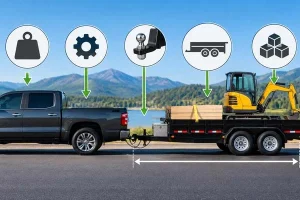
Loading a car on a trailer safely depends on three things: choosing equipment that can carry the vehicle, positioning the car so the trailer remains balanced, and securing all four corners before moving. The most important work happens before the tires touch the ramps. You need to confirm the vehicle weight, trailer payload capacity, towing capacity, ramp angle, deck width, hitch rating, tire condition, and tie-down method. When these details are checked first, the actual loading process becomes slower, calmer, and much more predictable.

Many loading problems start when someone treats a car hauler like an ordinary utility trailer. A vehicle is a concentrated load with substantial weight, moving suspension, and a high center of gravity compared with boxes or building materials. If the car sits too far behind the axles, the trailer may sway. If it sits too far forward, the rear axle and hitch of the tow vehicle may be overloaded. If the straps are attached to weak or unsuitable points, the car can shift even though every ratchet appears tight. A reliable vehicle trailer loading procedure should therefore be treated as a planned transport task rather than a quick drive up a pair of ramps.
This guide explains how to load a car onto a trailer from the first capacity check to the final walk-around inspection. It also covers low-clearance vehicles, non-running cars, electric vehicles, tie-down choices, tongue weight, trailer sway, and the mistakes that often cause avoidable damage. Trailer designs and manufacturer instructions vary, so always follow the limits shown on the trailer identification plate, tow vehicle manual, hitch label, tire sidewall, winch manual, and tie-down equipment. Those ratings are more important than a general rule found online.
Correct loading keeps the tow vehicle, trailer, hitch, axles, tires, brakes, and cargo working as one stable system. That stability matters most during sudden braking, lane changes, downhill travel, crosswinds, and emergency steering. A poorly positioned vehicle can make the trailer feel nervous even on a straight road. The driver may notice the trailer moving from side to side, the steering becoming light, the rear of the tow vehicle sitting unusually low, or the trailer brakes struggling to control the load. These are not small comfort issues. They are warnings that the towing combination may be outside a safe operating condition.
Consider a common example. A driver loads a project car with the engine, the heaviest part of the vehicle, behind the trailer axles because the car fits more easily in that position. The trailer may look level while parked, but the rear-heavy arrangement reduces tongue weight. Once speed increases, a small movement caused by wind or steering can grow into repeated trailer sway. The driver then makes a sharper correction, which can increase the movement instead of stopping it. Moving the car forward by only a short distance may completely change how the trailer behaves because the load is now pressing down on the hitch instead of trying to lift it.
Proper securement is equally important. The parking brake and transmission are designed to hold a vehicle while parked, not to serve as cargo restraints during transport. Road vibration, suspension movement, braking forces, potholes, and cornering can all move an unsecured car. Four suitable tie-downs create independent restraint points and help keep the vehicle centered on the trailer. Taking extra time to check these connections is much less expensive than repairing a damaged bumper, wheel, suspension part, trailer fender, or another vehicle on the road.
The safest way to start loading car on trailer equipment is to confirm that the trailer is actually suitable for the vehicle. Do not judge capacity by trailer size or appearance. A long steel deck may still have a limited payload because the trailer itself uses a large part of its gross vehicle weight rating. The useful number is payload capacity, which is generally the maximum permitted loaded trailer weight minus the empty trailer weight. The vehicle, spare parts, tools, fuel containers, winch accessories, storage boxes, and anything else carried on the trailer all count toward that loaded weight.
For example, imagine a trailer with a gross vehicle weight rating of 7,000 pounds and an empty weight of 2,000 pounds. Its theoretical payload would be 5,000 pounds before accounting for any additional equipment or manufacturer restrictions. A 4,700-pound vehicle might appear to fit, but a mounted winch, spare tire, tool chest, ramps, and accessories could push the total beyond the limit. This is why estimating from memory is risky. Check the actual vehicle weight and compare it with the ratings shown on the trailer, tires, axles, hitch, and tow vehicle.
An open car trailer is often easier to load because the driver and spotter can see the wheels, deck edges, and tie-down points. Open trailers are usually lighter than enclosed models, which may leave more available towing and payload capacity. They are commonly used for everyday vehicles, repair shop transport, track cars, farm vehicles, and short-distance hauling. Their main limitation is exposure. The transported car remains open to rain, dust, salt, stones, insects, tree branches, and public view.
An enclosed trailer protects the vehicle from weather and road debris, but loading space can be tighter. The side walls may make it difficult to open the driver's door after the car is positioned. An escape door, removable fender, winch, or wheel basket system can make enclosed trailer loading much easier. The enclosed body also adds weight and creates more wind resistance, so the tow vehicle must have enough capacity for the complete loaded combination. When transporting a classic car, race car, luxury vehicle, or freshly restored vehicle, the added protection may justify the extra weight and cost.
| Trailer Factor | What to Check | Why It Matters |
|---|---|---|
| Payload capacity | Vehicle weight plus all additional cargo | Prevents axle, tire, frame, and brake overload |
| Deck width | Tire width and clearance between fenders | Prevents tire or body contact during loading |
| Deck length | Wheelbase and final tie-down position | Allows proper balance without overhang problems |
| Ramp angle | Front bumper, splitter, exhaust, and breakover clearance | Reduces scraping and underbody damage |
| Brake system | Brake operation, controller setting, and breakaway system | Supports controlled stopping with a heavy load |
| Anchor points | Number, location, condition, and rating | Provides suitable positions for four-point securement |
A trailer may have enough capacity while the tow vehicle does not. Before loading, compare the expected loaded trailer weight with the tow rating, gross combined weight rating, rear axle rating, hitch rating, and tire load capacity of the tow vehicle. These limits work together, and the lowest relevant rating controls the setup. A heavy-duty hitch does not increase the manufacturer's tow rating, and upgraded rear springs do not automatically increase the legal or engineered axle rating. The complete combination must stay within every applicable limit.
Tongue weight is part of this calculation because it becomes load carried by the tow vehicle. It affects the rear axle, suspension, tires, steering balance, and available payload. Passengers, fuel, tools, luggage, and accessories in the tow vehicle also use payload capacity. This is easy to miss when the trailer is within its own rating but the truck is carrying several people and a bed full of equipment. A public vehicle scale or suitable tongue weight scale can provide real measurements when the margin is close.
Inspect the hitch connection before driving onto the ramps. The coupler should be fully seated on the correct size hitch ball, and the latch should be closed and secured. Cross the safety chains under the coupler where required so they can help support the trailer tongue if the main connection fails. Attach the breakaway cable to a separate suitable point on the tow vehicle rather than looping it around a safety chain. Connect the trailer plug and test the running lights, turn signals, brake lights, electric brakes, and brake controller response.
Use firm, level, dry ground whenever possible. A level surface makes alignment easier and reduces the chance of the car, trailer, ramps, or tow vehicle moving unexpectedly. Loose gravel, mud, wet grass, steep slopes, and uneven shoulders create unnecessary risk. Trailer jacks and ramp ends can sink into soft surfaces when the vehicle's weight moves onto the rear of the deck. If the ground is not strong enough, the loading angle may change suddenly or a ramp may slip.
Keep the trailer connected to the tow vehicle during loading unless the trailer manufacturer specifically provides another approved procedure. The connected tow vehicle helps resist rearward movement and reduces the chance of the trailer tongue lifting as the car moves up the ramps. Place the tow vehicle in Park, apply its parking brake, and use wheel chocks where appropriate. Do not depend only on the trailer tongue jack to support a disconnected trailer while driving a vehicle onto it.
Clear the area around the ramps and both sides of the trailer. Children, pets, customers, and unnecessary helpers should stay away from the loading path. Decide who is giving directions before the vehicle moves. One spotter is usually more useful than several people making different hand signals. The spotter should remain visible to the driver, stay away from the front and rear of the moving vehicle, and never stand between the car and a fixed object.
A pre-loading inspection helps you find problems while the trailer is still empty and easy to work around. Check every tire for correct pressure, visible damage, cracking, embedded objects, and unusual wear. Trailer tires should be inflated according to the trailer or tire requirements, not simply matched to the tow vehicle pressure. Inspect the wheel nuts, wheels, hubs, suspension components, wiring, brake lines, deck, fenders, ramps, and anchor points. Any part that is loose, bent, badly corroded, or damaged should be repaired before loading.
Look closely at removable ramps. Their hooks, pins, locks, or retaining tabs must fit the trailer correctly. A ramp that is only resting against the deck can slide backward when the driven wheels apply power. Confirm that both ramps are equally supported and aligned with the vehicle tires. If the trailer uses hydraulic tilt or a tilting deck, inspect the locking mechanism and follow the manufacturer's instructions for raising, lowering, and securing the platform.
- Confirm the trailer is coupled to the tow vehicle and the hitch latch is secured.
- Check the safety chains, breakaway cable, electrical plug, and trailer brakes.
- Inspect tire pressure, tire condition, wheel nuts, hubs, and suspension.
- Check the deck, ramps, ramp locks, winch cable, and anchor points.
- Remove loose tools, straps, blocks, and debris from the driving path.
- Place wheel chocks where needed and confirm the loading area is level.
Inspect the transported vehicle before loading, especially if it is damaged, modified, unusually low, or not running. Check that the tires hold air and can roll freely. Confirm that the steering works and the wheels are not locked at an angle. Look underneath for loose exhaust parts, hanging body panels, fluid leaks, or damaged suspension components that could catch on the ramps. Remove loose items from the cabin, trunk, bed, or roof because they can move during transport.
Measure the car when clearance is uncertain. Important dimensions include total width, outside tire width, wheelbase, front overhang, rear overhang, ground clearance, and the height of any roof accessories. Compare these measurements with the space between the trailer fenders, deck width, ramp width, enclosed trailer door opening, and interior height. Do not assume that a vehicle will fit because another model with a similar body style fit previously. Different wheels, tires, suspension settings, splitters, side steps, and body kits can change the required space.
Plan how the driver will exit after the car reaches its final position. On a narrow open trailer, the driver's door may hit the fender. Inside an enclosed trailer, there may be very little side clearance. Removable fenders, trailer escape doors, window access, or winching the car from outside can solve this problem. Work out the exit method before loading so the driver does not become trapped or damage the door after the vehicle is already secured.
Low-clearance cars require more than simply driving slowly. The vehicle can scrape at three main points: the front bumper or splitter as it reaches the ramp, the center underside where the ramps meet the deck, and the rear bumper or exhaust as the vehicle levels out. A long front overhang may contact the ramp even when the published ground clearance appears acceptable. Lowered suspension, aerodynamic parts, side skirts, battery enclosures, and exhaust systems must all be considered.
Reduce the loading angle by placing approved ramp extensions or suitable approach boards in front of the main ramps. The goal is to create a gradual transition rather than a sudden step. The boards must be strong enough for the vehicle weight, wide enough to support the tires, and positioned so they cannot slide. Do not build an unstable stack of short timber pieces. A shifting board can drop the vehicle onto the ramp edge and damage the tire, wheel, bumper, or underside.
A tilt trailer can be useful for sports cars and other low vehicles because the deck and ramp form a longer, smoother loading path. Even with a tilt deck, check the breakover point near the axle area. Air suspension can sometimes provide temporary additional clearance, but it should only be used according to the vehicle manufacturer's instructions. If you cannot confirm safe clearance from the driver's seat, stop and have the spotter inspect the front, center, and rear of the vehicle before continuing.
A running vehicle can usually be driven onto a trailer when the ramps are secure, traction is good, and the driver has a clear view or a reliable spotter. Select the lowest practical gear and use gentle, steady throttle. Sudden acceleration can spin the tires, move the ramps, or cause the vehicle to jump forward once it reaches the deck. Keep the steering wheel as straight as possible and make small corrections. If alignment begins to drift, stop rather than trying to fix a large error while moving.
A winch gives more control when the car does not run, has mechanical damage, has limited traction, or is too valuable to risk driving in a confined space. The winch, cable or synthetic rope, hook, mounting point, battery supply, pulley system, and attachment point must all be rated for the task. Attach the winch to a manufacturer-approved recovery or towing point. Suspension arms, steering parts, bumpers, and thin body structures are not automatically suitable pulling points.
Keep people away from a tensioned winch line. Do not stand directly in front of, behind, or over the cable. Feed the line evenly onto the drum and stop if it begins stacking heavily on one side. A snatch block may change the pulling direction or increase mechanical advantage, but it also changes the forces applied to the equipment. Follow the winch manufacturer's instructions rather than improvising a pulley arrangement.
| Loading Method | Best Used When | Main Precaution |
|---|---|---|
| Driving the car | The vehicle runs, brakes, and steers correctly | Use gentle throttle and avoid sudden movement |
| Electric winch | The car is damaged, non-running, valuable, or difficult to access | Use rated equipment and an approved vehicle attachment point |
| Manual winch | The vehicle is light enough and loading is occasional | Confirm the winch rating and control the handle carefully |
| Tilt deck loading | The vehicle has limited ground clearance | Lock the deck correctly after the vehicle is positioned |
Connect the trailer completely before loading. Lower the coupler onto the correct hitch ball, secure the latch, attach the safety chains, connect the breakaway cable, and plug in the electrical connector. Park the tow vehicle and trailer in a straight line on level ground. Apply the tow vehicle parking brake and use suitable wheel chocks if the surface or trailer design requires them. This stable starting position prevents the trailer from rolling or lifting when the car's weight reaches the rear of the deck.
Place each ramp at the correct spacing for the vehicle tires. Measure the outside tire width when visual alignment is difficult. Lock or pin the ramps to the trailer so they cannot move backward. Check that the lower ends have full contact with the ground and the upper ends are seated evenly against the deck. Add approved extensions before the main ramps if the vehicle has a low bumper, long overhang, or limited breakover clearance.
Position the car several feet behind the ramps so the driver has enough distance to straighten the wheels. The tires should point directly toward the center of each ramp. Use a spotter where visibility is limited, but agree on simple hand signals before moving. The driver should stop immediately if the spotter disappears from view. Good alignment at the bottom prevents larger corrections near the top, where the trailer is narrower and the consequences of a mistake are greater.
Drive or winch the car forward at a slow, controlled pace. Avoid stopping with the driven wheels at the steepest part of the ramp unless necessary, because restarting may require more throttle. Listen for scraping and watch the tire position. The spotter should monitor the front bumper, underbody, wheels, fenders, and rear clearance. If any part appears likely to touch, stop and change the ramp setup rather than forcing the car forward.
Do not stop simply because the vehicle is fully on the deck. Move it to a position that produces suitable tongue weight while keeping enough room for tie-downs. The exact location depends on the trailer axle position, vehicle weight distribution, engine location, and manufacturer instructions. A front-engine car loaded forward may need a different position from a rear-engine car, pickup truck, or electric vehicle. Marking a known position on the deck is useful only when the same vehicle and loading arrangement are used again.
Once the car reaches the intended position, place the transmission in Park for an automatic or in gear for a manual transmission, apply the parking brake, and switch off the engine. These actions help keep the vehicle still while straps are installed, but they do not replace tie-downs. Check that the car is centered between the trailer edges and fenders. Confirm that there is space to attach and tension every strap without contact with tires, brake hoses, body panels, or sharp metal.
Trailer balance is not something you should judge only by looking at the tire position relative to the axles. The heavier end of the transported vehicle matters. A front-engine sedan may place much more load on the trailer tongue than a rear-engine sports car parked in the same wheel position. Electric vehicles may carry substantial battery weight across the floor, while pickup trucks can vary depending on cab length, bed length, drivetrain, and added equipment. This is why one fixed stopping point does not work for every car.
A commonly discussed starting range for many conventional bumper-pull trailers is tongue weight equal to approximately 10 to 15 percent of the loaded trailer weight. This is not a universal instruction. Follow the limits stated by the trailer, hitch, and tow vehicle manufacturers. Too little tongue weight can encourage trailer sway, while too much can overload the hitch or rear axle and reduce steering response at the front of the tow vehicle. A scale provides better information than guessing from how far the truck suspension drops.
After loading, view the combination from the side. The tow vehicle and trailer should not show extreme sagging or an obviously nose-high trailer. However, appearance alone cannot confirm legal axle weights or correct tongue weight. When transporting a heavy vehicle or operating close to rated capacity, weigh the loaded combination by axle group. This shows whether the front axle, rear axle, trailer axles, total trailer weight, and combined weight are within their ratings.
A car positioned too far behind the trailer axles may produce light tongue weight. The tow vehicle can feel unusually light at the rear connection, and the trailer may react strongly to wind, passing trucks, or small steering movements. Sway that appears as speed increases is a serious warning. Do not try to solve a loading problem by driving faster, making rapid steering corrections, or relying only on an anti-sway device. Slow down safely, stop, and reposition the vehicle.
Excessive forward loading can make the rear of the tow vehicle sit low and the front feel light. Steering, braking balance, headlight aim, suspension travel, and rear tire loading can all be affected. The hitch, coupler, trailer frame, and rear axle may also carry more load than permitted. A weight-distribution hitch may help manage certain approved towing combinations, but it cannot make an overloaded tow vehicle or trailer safe. The cargo position and total weights still need to be corrected.
Use four independent vehicle-rated tie-down assemblies unless the trailer or securement system specifies another approved arrangement. Each tie-down should connect to a suitable trailer anchor and an approved point on the vehicle or wheel restraint system. Check the working load limit of every strap, chain, hook, ratchet, and anchor. The complete system is only as strong as its weakest component. A heavy strap does not help if it is connected to a light anchor or damaged hook.
Wheel straps are popular because they secure the tires while allowing the vehicle suspension to move naturally. Common designs include over-the-tire straps, basket straps, and systems that pull the tire toward dedicated deck anchors. These systems must match the tire size and trailer layout. The strap should sit correctly on the tire and remain clear of sharp bodywork, brake parts, and steering components. Recheck the position after tensioning because the strap can move toward the inside or outside edge of the tread.
Axle straps or approved frame attachment points may be used when suitable for the specific vehicle and trailer. Modern vehicles can have sensitive suspension parts, plastic covers, air lines, brake hoses, battery structures, aerodynamic panels, and electronic sensors underneath. Never wrap a strap around a component simply because it looks strong. Consult the vehicle manufacturer or a qualified transport professional when approved securement points are not obvious.
A tie-down should pull in a useful direction without rubbing against sharp edges. Twisted webbing can reduce even loading and make inspection more difficult. Use edge protection where the strap could contact metal, but do not allow protectors to create a loose connection. Position ratchets so they can be operated safely and will not hit the vehicle. After tightening, secure the loose strap tails so they cannot flap in the wind, drag on the road, or wrap around a tire or axle.
A loading winch is intended to pull the vehicle onto the trailer. Unless the winch and trailer manufacturer specifically approve it as part of the transport securement system, it should not replace the required tie-downs. The winch line can lose tension as the car moves on its suspension, and shock loads can damage the line, drum, gears, or mounting structure. After the car is secured with the proper restraints, the winch line can usually be relaxed or managed according to the equipment instructions.
Walk around the entire trailer after all tie-downs are tensioned. Check that the vehicle is centered, every tire is fully supported, and no body part is touching the fenders, rails, winch, toolboxes, or trailer walls. Confirm that each hook is properly seated and cannot detach if the strap briefly loses tension. Make sure the ratchets are closed, strap tails are secured, and the webbing is not twisted, cut, frayed, melted, or rubbing against a sharp surface.
Remove the ramps and lock them in their transport position. Ramps stored under the deck must be fully inserted and pinned. Ramps carried on the side or rear should have secure retaining devices rather than relying on gravity. Close and latch tilt decks, loading doors, escape doors, cabinets, and toolboxes. Check that no loose blocks, wheel chocks, gloves, or tools remain on the trailer deck.
Test the lights and brakes again because loading activity can disturb cables or connectors. Confirm the coupler latch, hitch pin, safety chains, breakaway cable, jack, and electrical plug. Look at the trailer tires to make sure they are not visibly overloaded or contacting the fenders. Adjust the trailer brake controller according to the manufacturer's procedure and road conditions. The loaded trailer will require a different braking response from an empty trailer.
- The vehicle is centered and positioned for suitable tongue weight.
- Four approved tie-downs are installed, tensioned, and undamaged.
- Hooks, ratchets, anchors, and wheel straps are seated correctly.
- The hitch latch, safety chains, breakaway cable, and trailer plug are secure.
- Ramps, doors, tilt decks, toolboxes, and loose equipment are locked.
- Trailer lights, brakes, tires, and wheel clearance have been checked.
Tie-downs can settle after the vehicle begins moving. Tires flex, straps seat into position, suspension moves, and webbing may adjust slightly around a wheel or attachment point. Stop in a safe location after the first few miles and inspect every connection. A common practical interval is within the first 5 to 10 miles, followed by checks during fuel, rest, or meal stops. More frequent inspections may be needed on rough roads, during severe weather, or after hard braking.
Touch each ratchet and look for visible loss of tension rather than assuming the straps are still tight because the car has not moved. Check whether hooks have rotated, wheel baskets have shifted, or webbing has started rubbing against an edge. Inspect the hitch, chains, plug, tires, hubs, and stored ramps. Stop again if the trailer begins handling differently. New sway, vibration, noise, heat, or steering changes can indicate a developing problem.
Electric vehicles are often heavier than similarly sized gasoline vehicles because of their battery packs. Confirm the exact curb weight and do not rely on the weight of another model with a similar body. The underfloor battery enclosure can also reduce breakover clearance and must not contact the ramp or deck edge. Use only approved towing, recovery, lifting, and tie-down points. An incorrect attachment can damage the battery housing, cooling system, high-voltage components, or aerodynamic panels.
Some electric vehicles have special transport modes, air suspension settings, parking procedures, or restrictions on wheel movement. Follow the owner's manual carefully. A vehicle with a damaged high-voltage battery may require specialist recovery and storage procedures rather than ordinary trailer transport. Warning signs such as smoke, heat, hissing, unusual odors, sparks, or battery damage should be treated seriously.
A full trailer that keeps all four wheels off the road is generally used when transporting an all-wheel-drive vehicle over distance, but the vehicle manufacturer remains the correct source for towing restrictions. Do not pull an all-wheel-drive car with only one axle on the road unless the manufacturer specifically allows that arrangement. Drivetrain damage can occur when the wheels rotate in a way the system was not designed to handle. Transmission position and transport mode should also follow the owner's manual.
A damaged car may not roll, steer, or brake normally. A locked wheel can drag the vehicle sideways and pull it off the ramps. Broken suspension can reduce ground clearance or allow the body to contact a tire. Use wheel skates, dollies, a properly rated winch, or professional recovery equipment when needed. Do not ask people to push from behind while another person controls a winch. A sudden release or cable failure could place everyone in the danger area.
Check for leaking fuel, oil, coolant, brake fluid, and battery electrolyte before loading. Leaks can create fire, environmental, and traction hazards. Damaged doors, hoods, trunks, bumpers, and body panels should be secured so they cannot open or detach during transport. Photographing the vehicle before loading is also useful for documenting existing damage and confirming its condition before the trip.
Weight estimates are often wrong after accessories, larger tires, tools, fuel, batteries, winches, spare parts, and modifications are added. A trailer that handled a lighter car safely may be overloaded by a larger SUV or electric vehicle. Check labels and actual scale weights where possible. Leaving a reasonable capacity margin can also help account for equipment that was not included in a basic curb-weight figure.
Rear-heavy loading is one of the most dangerous mistakes because it can create low tongue weight and trailer sway. Drivers sometimes move the car backward to reduce tow vehicle sag without measuring axle loads. This may solve one visible issue while creating a more serious stability problem. The correct response is to check the total weights, hitch setup, tow vehicle capacity, and vehicle position rather than relying on appearance.
Two straps do not provide the same independent restraint as a suitable four-point system. If one connection loosens or fails, the remaining strap may not control the vehicle. Four approved tie-down points help resist forward, rearward, and sideways movement. Do not use the parking brake, transmission, winch cable, or a single chain as a substitute for proper securement.
Control arms, steering links, anti-roll bars, exhaust parts, bumpers, and thin frame sections may bend or fail under tie-down force. Modern vehicles often hide important cables, sensors, brake hoses, and battery components underneath. Use wheel straps or identified securement points. When you are uncertain, obtain model-specific information before tightening the strap.
Soft or sloping ground can allow the tow vehicle, trailer, ramps, or support legs to move during loading. The trailer may appear stable until the car's rear axle reaches the ramp and shifts the load. Choose level pavement or another firm surface whenever possible. If conditions are unsafe, moving to a better loading location is usually faster than recovering a vehicle that has slipped off a ramp.
A ramp can slide even when it feels heavy and stable by hand. Driven wheels apply force in a different direction, especially when the driver uses extra throttle. Always use the designed pins, hooks, locks, or retaining system. After loading, store and secure the ramps before departure. An unsecured ramp can become a dangerous road hazard.
Wet ramps reduce tire traction and can make painted steel, wood, or aluminum surfaces slippery. Slow the process, clean mud and oil from the ramps, and use a winch when controlled driving is not possible. Do not compensate for poor traction with aggressive acceleration. The tires may spin and then suddenly grip, causing the car to jump forward. If heavy rain prevents the spotter from seeing tire position or hand signals, wait for safer conditions.
Strong crosswinds can affect open vehicle doors, loading ramps, enclosed trailer doors, and the tow vehicle itself. Keep doors controlled and avoid loading beside fast-moving traffic. At night, use fixed lighting that illuminates the ramps, deck edges, tires, anchor points, and surrounding area. A handheld flashlight is useful for inspection but should not be the only light source while the vehicle is moving.
Not necessarily. The correct position is the location that keeps the vehicle within the trailer deck, allows proper securement, and produces suitable tongue weight without overloading any axle or hitch component. Vehicle weight distribution matters as much as wheel position. A front-engine car and a rear-engine car may need different stopping points on the same trailer. Use manufacturer guidance and actual weight measurements when possible.
Many front-engine vehicles are loaded facing forward because this often places the heavier end toward the trailer tongue, but that is not a rule for every combination. A rear-engine car, unusual trailer axle position, or limited tie-down layout may require a different arrangement. The final choice should provide correct balance, adequate clearance, secure tie-down angles, and safe access. Do not load backward simply because it is easier without checking tongue weight.
A four-point securement system with vehicle-rated equipment is the common approach for transporting a car on a trailer. This gives each corner an independent restraint and helps control movement in several directions. The required strap rating and attachment method depend on the vehicle, trailer, local rules, and equipment design. Inspect every strap and anchor before use, and replace damaged webbing or hardware.
Use straps and hardware designed and rated for vehicle transport. Light cargo straps may not have enough working load capacity, suitable hooks, abrasion resistance, or secure ratchets. The rating label should remain readable. Do not use straps with cuts, burns, severe fraying, broken stitching, bent hooks, damaged ratchets, or unknown capacity.
The parking brake can be applied after positioning the car unless the vehicle manufacturer gives different transport instructions. The transmission can also be placed in Park or the recommended gear. These measures are secondary. The vehicle must still be secured with approved tie-downs because the parking brake and transmission are not cargo restraint systems.
A winch should not be treated as the main tie-down unless the equipment and trailer manufacturers specifically approve that use. Install the required vehicle restraints after loading. The winch line may be left connected, relaxed, or disconnected according to the approved setup, but it should not replace four suitable securement points.
The straps should be tensioned enough to remove slack and hold the vehicle securely without damaging the tire, wheel, suspension, body, or attachment point. Follow the strap manufacturer's instructions. More force is not always safer. Over-tightening can damage ratchets, anchors, vehicle parts, and tire straps. Recheck the tension after the first few miles because the system may settle.
Inspect the tie-downs shortly after starting the trip, commonly within the first 5 to 10 miles, and check them again at fuel and rest stops. Stop sooner if the trailer handling changes, you hear a new noise, or the road is unusually rough. Each inspection should include the straps, hooks, ratchets, anchors, hitch, safety chains, tires, stored ramps, and trailer doors.
Stay calm, reduce speed gradually, keep the steering controlled, and avoid sudden braking or sharp steering. Use the trailer brake control carefully if the system and conditions allow it. Move to a safe stopping location and inspect the load position, tongue weight, tires, hitch, and tie-downs. Do not continue at normal speed until the cause has been corrected.
Loading a disconnected trailer can cause the tongue to rise, the trailer to roll, or the support jack to fail. Keep the trailer attached to the tow vehicle unless the trailer manufacturer provides a specific procedure and support system for disconnected loading. A trailer designed for independent loading may use stabilizer legs or another engineered arrangement, but ordinary tongue jacks are not a substitute for full support.
A trailer with a low deck, long ramps, ramp extensions, removable fenders, or a hydraulic tilt deck can make low-clearance loading easier. The best choice still needs enough payload, deck width, tie-down points, and towing compatibility. Measure the vehicle's front overhang, wheelbase, ground clearance, and breakover angle before choosing the trailer. A low deck alone does not guarantee that the front splitter or center underside will clear.
One experienced person may load a vehicle using a winch, remote control, mirrors, cameras, and a suitable trailer, but a trained spotter usually improves visibility and control. The spotter can monitor wheel alignment, underbody clearance, and the distance to the front stops. When loading alone, stop frequently and inspect from outside rather than trying to correct uncertain alignment from the driver's seat.
Loading a car on a trailer safely begins with accurate ratings, suitable equipment, and a stable loading area. Connect and inspect the trailer before installing the ramps. Align the vehicle carefully, move slowly, and stop at a position that creates appropriate tongue weight rather than simply placing the tires over the axles. Secure the car with approved tie-down equipment at four suitable points, then inspect the hitch, brakes, tires, lights, ramps, anchors, and every strap before departure.
The best loading process is repeatable. Use the same checklist every time, even when you know the vehicle and trailer well. Conditions change, straps wear, tire pressure drops, electrical connections loosen, and different cargo changes the balance. A few extra minutes spent checking the setup can prevent trailer sway, vehicle damage, equipment failure, and roadside delays. When the vehicle weight, attachment points, or trailer capacity is uncertain, stop and confirm the correct information before moving.