
A flatbed trailer for towing a car is one of the most practical solutions for transporting vehicles safely and efficiently. Unlike towing methods that only support part of the vehicle, a flatbed trailer carries the entire vehicle on a stable platform, making it suitable for car haulers, repair shops, motorsport teams, and professional transport operators.

Choosing the right flatbed trailer requires more than checking the trailer size. Buyers need to consider load capacity, deck dimensions, axle design, braking systems, tie-down options, and towing conditions. A properly selected trailer can improve transportation safety while reducing operating problems during daily use.
A flatbed trailer provides a stable and flexible platform for vehicle transportation. It allows the entire vehicle to sit on the trailer deck, reducing stress on the towing system and making it suitable for many different car transport situations.
Vehicle transportation can become challenging when dealing with damaged cars, heavy vehicles, long-distance hauling, or vehicles with special requirements. Traditional towing methods may not provide enough support or flexibility for every situation.
The open deck design allows easier loading, better visibility, and greater versatility. Operators can transport different vehicle types without needing major adjustments, making flatbed trailers a popular choice for professional and personal use.
A flatbed trailer for towing a car is a trailer with a full-length flat platform designed to carry vehicles. The car is loaded completely onto the deck and secured using straps, chains, or other approved tie-down equipment.
During loading, the vehicle is driven or pulled onto the trailer deck using ramps, a winch, or other loading equipment. Once positioned correctly, the vehicle is secured to prevent movement during transportation.
Important components include the trailer frame, axles, suspension system, brakes, tires, ramps, and tie-down points. Each part affects towing performance, durability, and safety.
Flatbed trailers are used in many industries because they provide reliable vehicle transportation. Their flexible design makes them suitable for different applications.
Professional car haulers rely on flatbed trailers to move vehicles between dealerships, auctions, repair facilities, and customer locations. Durability and loading efficiency are key factors for these users.
Race cars and classic vehicles often require careful transportation. A flatbed trailer provides better support and allows operators to load vehicles without adding unnecessary mileage.
Repair shops and recovery operators use flatbed trailers for vehicles that cannot be driven. The full-deck design makes it easier to move damaged or non-operational vehicles.
Selecting the right flatbed trailer depends on your vehicle type, towing frequency, and operating environment. Buyers should evaluate several important factors before purchasing.
The trailer must have enough capacity to safely support the vehicle weight. Buyers should also consider deck length and width to ensure compatibility with different vehicles.
Axle configuration affects stability, load distribution, and towing performance. Choosing the correct axle setup helps improve handling and reduce stress on trailer components.
Features such as ramps, winch mounting points, and tie-down locations can significantly improve loading efficiency and safety.
Enclosed trailers provide protection from weather and road debris, while flatbed trailers offer easier access, lower weight, and more flexible loading options. The best choice depends on the transportation requirements.
A tow dolly only supports part of the vehicle, while a flatbed trailer carries the entire vehicle. For long-distance transport and professional applications, flatbed trailers often provide better stability.
Correct weight distribution is essential for safe towing. Improper loading can affect trailer control and increase stress on the towing vehicle.
Using suitable tie-down equipment prevents vehicle movement during transportation. Operators should inspect all connections before starting a trip.
Regular inspection of the frame, tires, brakes, suspension, and connection points helps identify problems before they become safety issues.
Cleaning the trailer regularly and protecting metal components from moisture can extend service life, especially when trailers are stored outdoors.
Many buyers focus only on price and overlook important factors such as capacity, construction quality, and long-term maintenance. A trailer should be selected according to actual transportation needs rather than short-term cost alone.
The correct size depends on the vehicle dimensions, weight, towing vehicle capacity, and intended use. Buyers should choose a trailer with enough deck space and load capacity while maintaining safe towing conditions.
A flatbed trailer provides full vehicle support because all wheels remain on the trailer deck. It is often preferred for professional transport, long-distance hauling, and vehicles that require extra stability.
Vehicles should be secured with proper tie-down equipment connected to suitable anchor points. Operators should check the load before departure and during long transportation routes.
Yes. Many flatbed trailers can transport different vehicle types as long as the trailer capacity, dimensions, and loading system match the vehicle requirements.
Buyers should evaluate trailer capacity, frame construction, axle quality, braking system, loading method, and manufacturer support before making a purchase decision.
Choosing the right flatbed trailer for towing a car helps improve transportation safety, loading efficiency, and long-term reliability. By considering capacity, structure, safety features, and maintenance requirements, buyers can select a trailer that meets their vehicle hauling needs.

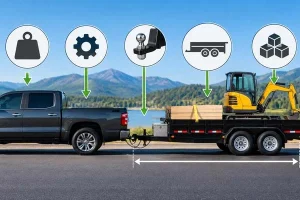


How do I know if a flatbed trailer is rated high enough for my car? Should I go by the trailer’s empty weight or its actual load capacity?