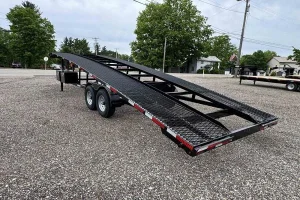
How much does a boat trailer weight

The weight of a boat trailer is a crucial element in determining how safely and efficiently a boat can be transported. Whether you’re towing a small inflatable boat or a massive yacht, understanding the weight of the trailer, the boat, and the combined towing load is critical for ensuring smooth, safe, and legal towing. The boat trailer weight is influenced by several factors, such as the trailer’s construction material, its size, load capacity, and additional features designed to enhance safety and usability. Each of these factors directly impacts the weight and, consequently, the towing dynamics, including fuel efficiency, towing vehicle performance, and overall safety on the road.

In this article, we’ll explore how the weight of the boat trailer is determined, the factors that contribute to this weight, and how to ensure the trailer and towing vehicle are well-matched for the best towing experience. We’ll also address the process of calculating the weight, understanding weight limits in different regions, and the various configurations available for different boat types. By the end of this article, you should have a comprehensive understanding of boat trailer weight, how to calculate it, and how to match it to your vehicle’s towing capacity.

Understanding the Importance of the Weight of the Boat Trailer

When towing any kind of trailer, the weight of the trailer itself, as well as the weight of the load it carries (in this case, a boat), plays an essential role in ensuring both the safety and efficiency of the towing operation. Inadequately matched trailer weight can lead to dangerous driving situations. If the trailer is too heavy, it can overstrain the towing vehicle, causing it to lose power, struggle with braking, and be more difficult to control, especially when maneuvering sharp turns or when driving on uneven or steep terrain. On the other hand, a trailer that is too light may be prone to swaying or fishtailing, which can be particularly hazardous on highways or when driving at high speeds.
Boat trailer weight

Moreover, understanding the boat trailer weight is important for meeting legal weight restrictions that various jurisdictions impose. Exceeding these weight limits can result in fines and penalties, and, in the worst case, could lead to accidents. Therefore, having a good grasp of how to calculate the boat trailer GVWR and knowing how to match it to your towing vehicle’s capacity will ensure that you not only stay within legal bounds but also optimize your towing experience.

The boat trailer weight is not just about the mass of the trailer; it’s also a key factor in deciding the overall towing experience. If your trailer’s weight exceeds the limits of your towing vehicle, it may lead to performance issues like reduced acceleration, poor braking, and difficulty in handling the trailer during adverse weather conditions. On the flip side, if the trailer is too light for the boat, it could cause instability during transit, which can be a safety hazard.

Factors Affecting the Weight of the Boat Trailer

The weight of a boat trailer is determined by several factors, each of which plays a vital role in the trailer’s overall structure and towing dynamics. These factors include the materials used in construction, the size and load capacity of the trailer, and any additional features or configurations that may be added to the trailer to improve its functionality or safety.

Trailer Material

One of the most important factors influencing the weight of a boat trailer is the material used in its construction. The material chosen determines not only the weight but also the durability, corrosion resistance, and overall longevity of the trailer.

Boat trailer weight

Steel Trailer Weight

Steel is one of the most common materials used in boat trailer construction, particularly for larger boats. Steel offers great strength and can withstand significant loads. Steel trailers are typically heavier than aluminum trailers because steel itself is a dense, durable material. A steel trailer can weigh anywhere from 500 to 1,500 pounds, depending on its size, design, and boat trailer weight capacity. The additional weight makes steel trailers ideal for transporting larger boats. However, steel trailers are more susceptible to rust and corrosion, especially when exposed to saltwater environments. As a result, regular maintenance and corrosion protection are necessary to extend the life of a steel trailer.
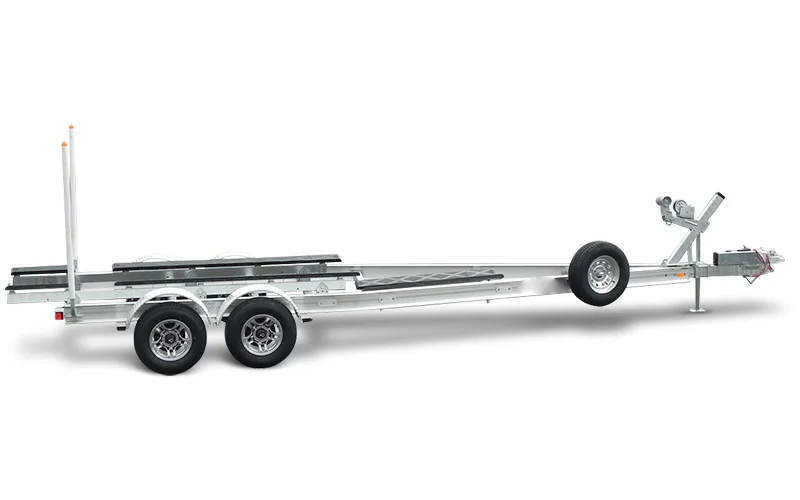
Steel’s weight and durability make it a go-to choice for individuals who need a trailer that can handle large boats, especially those frequently towed over long distances or in challenging conditions. However, for boat owners who are looking to reduce the weight of their towing setup, a steel trailer might not always be the best choice. Steel trailers tend to add extra weight to the load, which could result in increased fuel consumption and strain on the towing vehicle, particularly for long hauls.

aluminum boat trailer

Aluminum Trailer Weight

Aluminum is another popular material used in boat trailers due to its lightweight nature and resistance to corrosion. Aluminum trailers are lighter than steel trailers, which makes them a better option for those looking to reduce the overall weight of their boat and trailer combination. The average boat trailer weight for aluminum models can range from 300 to 1,200 pounds, making them more manageable when towing with smaller vehicles. Additionally, aluminum trailers do not rust, making them more suitable for use in saltwater environments.

One significant advantage of aluminum trailers is their resistance to corrosion, making them a long-lasting option, particularly for boat owners who store their boats in areas with high humidity or who frequently tow through saltwater. However, aluminum trailers can be less durable than steel trailers in terms of load-bearing capacity. While they are sufficient for lighter boats and mid-sized vessels, aluminum trailers may not be suitable for the heaviest or largest boats.

Trailer Size and Load Capacity

The size of the trailer and its load capacity play an essential role in determining the weight of the trailer. A trailer’s design must be suited to the size and weight of the boat it is intended to carry. As the boat size increases, so does the trailer size and weight. Trailer manufacturers design their products to accommodate different boat sizes, and these designs are crucial for ensuring the trailer can support the boat without risking damage or instability.

Boat trailer weight

A single-axle trailer is typically used for smaller boats, such as inflatable boats or small fishing boats. These trailers are generally lighter and more maneuverable than multi-axle trailers. A single-axle trailer usually weighs between 500 and 1,500 pounds, depending on its design and the material used. These trailers are suitable for lightweight boats and are ideal for short-distance towing. However, they may not offer the same level of stability and load-bearing capacity as a multi-axle trailer. The boat trailer weight capacity of a single-axle trailer is generally lower than that of a double- or triple-axle trailer, making them ideal for smaller vessels.
Single-axle trailers are often the most economical choice for boaters who have small boats and who need to perform occasional towing. They are ideal for lightweight boats, such as canoes, kayaks, and small fishing boats, and are particularly useful for local trips or trips over shorter distances.
Boat trailer weight

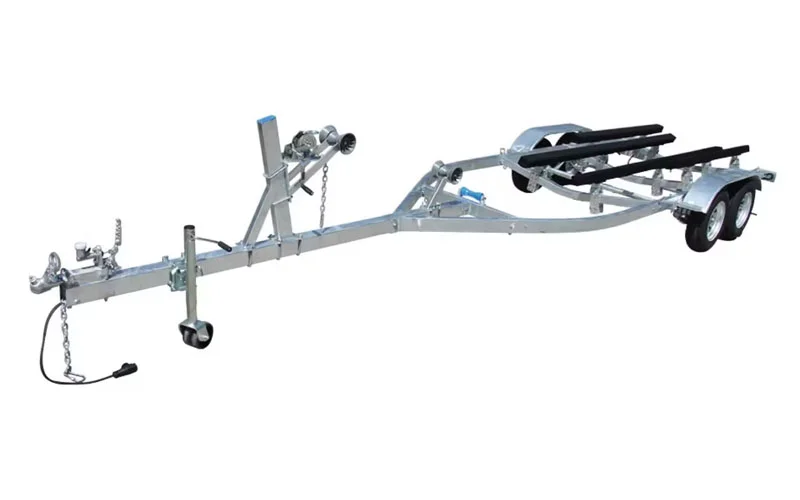
A double-axle trailer is built for larger boats and can bear more weight compared to a single-axle trailer. These trailers provide better stability while towing, especially when driving at high speeds or on uneven terrain. Boat trailer weight capacity for double-axle trailers ranges from 1,200 to 3,500 pounds, providing enhanced weight distribution and making it easier to control the trailer when towing. These trailers are designed for boats ranging from 16 to 25 feet in length, such as mid-sized yachts and larger fishing boats.
Double-axle trailers are often preferred by boat owners who have larger, heavier boats that require added stability and enhanced load distribution. They provide better safety during towing and can handle more challenging road conditions.

Boat trailer weight

Triple-axle trailers are designed for the largest boats, typically those longer than 25 feet, including large yachts and offshore vessels. These trailers are significantly heavier, often weighing between 3,500 and 6,000 pounds. The third axle helps distribute the weight of the boat evenly, preventing it from swaying or becoming unstable during towing. These trailers are essential for maintaining control when hauling boats with large weights and dimensions.
Triple-axle trailers are usually the best option for boaters who need to transport very large boats. While they offer optimal load distribution and stability, they also require a vehicle with a higher towing capacity. These trailers are ideal for transporting vessels such as luxury yachts and commercial boats, and they often come with advanced features such as hydraulic lift systems for easier loading and unloading.

Additional Configurations for Boat Trailers

In addition to the basic structure of the trailer, certain additional features can affect the total weight of the trailer. These features are often designed to improve the towing experience, increase safety, or make it easier to load and unload the boat. Let’s explore some of the most common features and how they influence the boat trailer weight:

Hydraulic Brakes

Brake Systems

Larger boat trailers, particularly those that carry heavier loads, often come with brake systems that help reduce the strain on the towing vehicle’s brakes. These brake systems are essential for ensuring the safety of the trailer during towing, especially when driving downhill or when carrying a heavy boat. The inclusion of brake systems can add anywhere from 100 to 300 pounds to the total weight of the trailer, depending on the type of brake system used. There are several types of brake systems, including surge brakes and electric brakes, each with its own weight implications.
The addition of a brake system to a trailer is essential when towing larger or heavier boats, as it helps ensure that the vehicle can stop safely and with more control. A boat trailer weight calculator can be helpful when trying to determine the impact of these systems on the total trailer weight and your vehicle’s towing capacity.

guide 1

Guide Systems

Guide systems are often added to boat trailers to help align the boat with the trailer during loading and unloading. These systems make it easier for the boat to be securely loaded onto the trailer and prevent damage to the boat and trailer. Guide systems typically consist of upright poles or rails that help guide the boat into position. These systems add additional weight to the trailer, usually between 50 and 200 pounds, depending on their design and material.

Weight of Different Types of Boat Trailers

Boat trailers come in a variety of sizes to accommodate boats of different lengths and weights. Each trailer type is designed to handle specific boat sizes, and the boat trailer weight will vary accordingly.

small boat trailer

Small boat trailers are typically designed to transport boats ranging from 10 to 15 feet in length. These boats, such as inflatable boats, small fishing boats, and dinghies, are lightweight and do not require heavy-duty trailers. Small boat trailers are ideal for individuals who need to transport their boats over short distances. These trailers generally weigh between 500 and 1,500 pounds, depending on their construction material and load capacity. Since smaller boats do not require as much weight support, the trailer is usually designed with a single axle, which keeps the overall weight lower.

Medium boat trailer

Medium-sized boat trailers are built to carry boats ranging from 16 to 25 feet in length. The boat trailer GVWR for these trailers typically ranges from 1,200 to 3,500 pounds, depending on the design and material. Medium boat trailers are equipped with double axles, which allow for better load distribution and improved towing stability.

large boat trailer

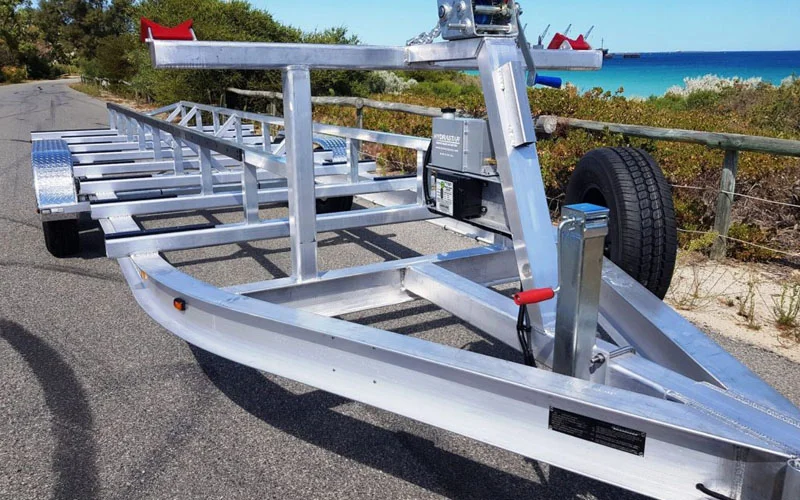
Large boat trailers are used to carry boats that exceed 25 feet in length, such as large yachts and offshore vessels. These trailers are the heaviest, weighing anywhere from 3,500 to 6,000 pounds. Large boat trailers are often equipped with advanced braking systems and can be fitted with a boat trailer weight calculator to ensure optimal weight distribution.

How to Measure and Calculate the Total Weight of Boat Trailers

To ensure safe towing, it’s crucial to know the total weight of your boat trailer, which includes not just the weight of the trailer itself but also the weight of the boat, fuel, equipment, and any other accessories. Calculating the total weight allows you to confirm that you are within the legal limits for towing and helps ensure that your vehicle can safely pull the combined load.

boat trailer

How to Obtain the Trailer Weight

There are several methods to determine the weight of a boat trailer. The weight of the trailer includes both its dry weight (the trailer itself without any boat or gear) and its total weight when fully loaded with the boat and equipment. Here are the main methods to obtain the weight:

Manufacturer Data: Most trailers come with a data plate or an owner’s manual that provides the weight of the trailer. This is usually the easiest way to determine the average boat trailer weight, as the manufacturer provides specific details about the trailer’s weight and load capacity. In most cases, the trailer weight is given as a standard number without any additional equipment or boat onboard.

GVWR (Gross Vehicle Weight Rating): The GVWR is the maximum weight the trailer is rated to carry, including the trailer’s weight and its load capacity. To calculate the trailer’s dry weight (the weight of the trailer without any boat or additional equipment), simply subtract the load capacity from the GVWR.
Formula: GVWR – Load Capacity = Trailer Weight

The boat trailer GVWR is an important number because it tells you the maximum weight that the trailer can handle, including both the trailer itself and the load it carries. When choosing a boat trailer, you should always ensure that the combined weight of the boat and the trailer does not exceed this rating.

Calculation Method of Actual Total Weight

The total weight of the boat trailer is the combined weight of the trailer, boat, and any additional equipment such as fuel, supplies, or other accessories. You can calculate the total weight by adding up the following:
Total Weight = Vessel Weight + Fuel + Equipment + Trailer Weight.

Boat trailer weight

The vessel weight refers to the boat itself, without any fuel or equipment. The fuel weight is calculated based on the amount of fuel in the boat's tank, and the equipment weight includes everything the boat is carrying (such as safety gear, fishing gear, or additional passengers). The trailer weight refers to the empty trailer without any boat or equipment.

Knowing the actual total weight is essential for ensuring that your towing vehicle can handle the load. For example, if you are towing a large yacht, the combined weight could be substantial, and you need to ensure that your vehicle has a high enough towing capacity to handle both the boat and trailer.

Use of Floor Scale or Professional Weighing Equipment

If you are unsure about the weight of your boat trailer or if you do not have access to the manufacturer’s data, you can use a floor scale or professional weighing equipment to get an accurate reading. Many truck stops and weighing stations offer floor scales that can measure the total weight of the boat and trailer combined. 

Weighing Equipment

Using a boat trailer weight calculator or weighing station is the most accurate way to determine the total weight and ensure you are within safe and legal limits for towing. These scales provide a precise measurement of the total load, including the boat, fuel, equipment, and trailer. This method is especially useful when you have a custom-built trailer or have added extra features to the trailer that may not be included in the manufacturer’s specifications.

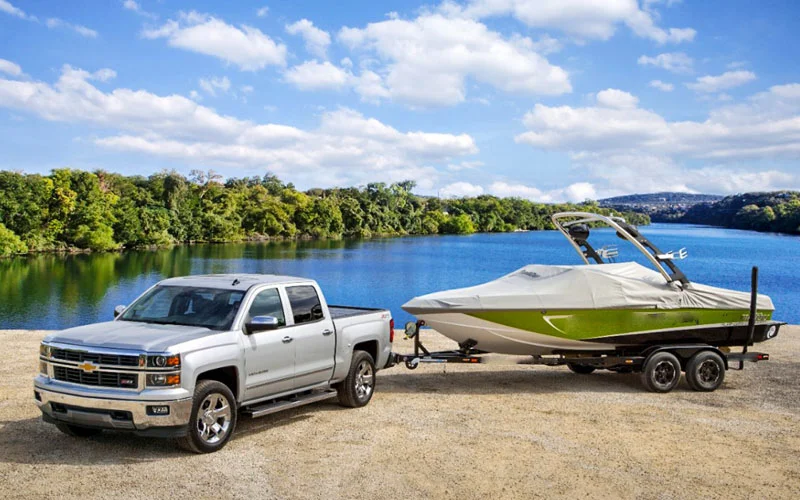
Matching the Weight and Traction Capacity of the Boat Trailer

Matching the boat trailer weight with the towing capacity of the vehicle is critical to ensure that both the vehicle and trailer perform optimally during transport. If the total weight of the boat and trailer exceeds the towing capacity of the vehicle, it can lead to a variety of problems, including strain on the vehicle’s engine, difficulty in braking, and potential safety hazards on the road.

trailer cleaning

Trailer Weight vs Total Weight (Including Boat)

The total weight of the boat trailer, including the weight of the boat and any other items being transported, should not exceed the towing capacity of the vehicle. Exceeding this weight can lead to dangerous towing situations. To ensure the safety of the towing operation, it is essential to calculate the total weight of the trailer, boat, and additional equipment, and ensure that it falls within the capacity of the towing vehicle.

The boat trailer GVWR plays a critical role in determining how much weight the trailer can safely carry. When you exceed the GVWR, you risk damaging the trailer, the towing vehicle, or both. Additionally, it can cause issues such as unstable towing, increased braking distance, and reduced control of the vehicle and trailer. Therefore, ensuring that the boat trailer weight and total weight are within the appropriate limits is paramount to safe and efficient towing.

Principles of Towing Limit and Adaptation of Vehicles for Different Trailer Types

Different types of vehicles have varying towing capacities, which determines how much weight they can safely pull. Here’s an overview of common towing vehicles and their general towing capabilities:

Boat trailer weight

Pickup Trucks

Pickup trucks have some of the highest towing capacities, ranging from 5,000 to 12,000 pounds, depending on the vehicle’s make and model. These vehicles are ideal for towing larger trailers with heavier boats, making them the preferred choice for most boaters. Pickup trucks are versatile, capable of towing a wide variety of boat sizes, from small fishing boats to large yachts.

Boat trailer weight

SUVs and Minivans

SUVs and minivans generally have lower towing capacities compared to pickup trucks. Their towing capacity usually ranges from 3,500 to 6,000 pounds, which makes them suitable for towing smaller and medium-sized boat trailers. These vehicles are not designed to handle the same heavy loads as pickup trucks, so they are better suited for lighter boats and trailers. SUVs are a good choice for boat owners with smaller boats, such as dinghies or inflatable boats, while minivans are more commonly used for recreational trailers and smaller craft.

Weight Limit of the Boat Trailer

Every region or country has specific laws and regulations regarding the maximum allowable weight for trailers, including boat trailers. Knowing and adhering to these limits is essential to ensure that you do not face legal penalties or safety hazards during transport.

Weight Limit

Weight Limit of the Boat Trailer in Different Countries

In the United States, the Federal Highway Administration (FHWA) regulates the maximum weight for trailers, which is generally set at 80,000 pounds gross weight on public roads. However, individual states may have their own specific regulations regarding the weight limits of trailers. Therefore, it’s important to check with local authorities to ensure compliance when towing a boat trailer.

If you're not familiar with the regulations related to trailers, please refer to the U.S. Highway Traffic Safety Administration (NHTSA) for accurate and up-to-date information.

European countries also have specific weight limits for trailers. For example, in the United Kingdom, the maximum weight for a trailer is typically 3,500 kg (7,700 pounds), although this may vary depending on the country and the vehicle type. Countries like Germany, France, and Spain have similar weight restrictions, and it’s important to familiarize yourself with these laws before embarking on long-distance or international towing.

Conclusion

Understanding the weight of your boat trailer is crucial for ensuring a safe and efficient towing experience. By considering the various factors that affect boat trailer weight capacity—such as the material, size, load capacity, and additional features—you can make informed decisions about the right trailer for your boat. Calculating the total weight of your boat, trailer, and equipment ensures that you stay within legal limits and avoid straining your towing vehicle.

Matching the weight of the trailer with the towing capacity of your vehicle is essential for safe transport. By following the guidelines and understanding the different types of boat trailers and their respective weights, you can confidently tow your boat while minimizing risks and optimizing your vehicle’s performance.
Remember to always consult your vehicle’s towing capacity and adhere to local laws regarding weight limits to ensure a safe, smooth, and efficient towing experience.

FAQ

The weight of a typical boat trailer ranges between 500 and 6,000 pounds, depending on its size and construction. Smaller trailers for boats up to 15 feet in length typically weigh around 500 to 1,500 pounds, while larger trailers for boats over 25 feet in length can weigh upwards of 6,000 pounds.

Dry Weight refers to the weight of the boat and trailer when unloaded, with no fuel or water onboard.
Wet Weight refers to the total weight when the boat is fully loaded, including fuel, water, and any equipment or supplies.

Knowing the difference between dry and wet weight is important for determining the correct boat trailer weight capacity and ensuring that the vehicle’s towing capacity is not exceeded.

To check if your trailer is overloaded, compare its actual weight (including the boat, equipment, and fuel) to the trailer’s GVWR (Gross Vehicle Weight Rating). If the total weight exceeds the GVWR, the trailer is overloaded.

Yes, the weight of the trailer significantly affects towing performance. Heavier trailers can reduce fuel efficiency, put additional strain on the towing vehicle’s engine and braking system, and make the vehicle harder to control, especially when driving at high speeds. To ensure safe towing, it’s essential to keep the total weight within the vehicle’s towing capacity and make sure that the trailer is properly matched to the towing vehicle.

You should check the weight of your boat trailer regularly, especially when adding new equipment, modifying the boat, or when preparing for long trips. Ensuring that the trailer remains within safe weight limits will help maintain towing stability and vehicle safety.

Share This Post

Picture of Shyla Xi

Shyla Xi

Hi, I'm the editor and sales director from Three Horses. I'm also an ordinary person who loves life and enjoys work. My name is Shyla. As a member of Three Horses, I'm proud of our products and team. From the design to the production to the sales of trailers, we are committed to the perfection of every detail, just to make customers feel at ease and assured. My job is not only to sell products, but also to create value for customers and inject more warmth into the company's brand. If you have any questions or want to know more about our products, please feel free to contact me! Looking forward to communicating and cooperating with you!

Don’t hesitate to get in touch with us to explore our trailer and discuss how we can meet your unique requirements.

Latest Posts

Find Your Trailer

Whether you've purchased a trailer before or are learning about trailers for the first time, we can help you find the right trailer for you.

Leave a Comment

Your email address will not be published. Required fields are marked *

Scroll to Top
Three Horses Trailer

Find Your Trailer

Whether you've purchased a trailer before or are learning about trailers for the first time, we can help you find the right trailer for you.