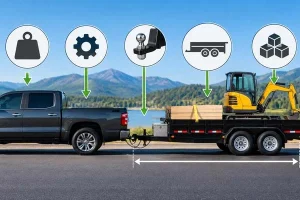
How Does a Farm Hydraulic Dump Trailer Save Farm Labor?
A farm hydraulic dump trailer can turn a slow, labor-heavy unloading job into a controlled mechanical process. Instead of workers shoveling manure, compost, soil, mulch, firewood, fencing debris, or other bulk materials out of a fixed trailer, the hydraulic lifting system raises the dump body and lets gravity handle much of the unloading. For farms that move materials several times a week, or several times a day during busy seasons, that difference can directly affect labor requirements, turnaround time, and how efficiently tractors, pickups, and crews are used.

The important point for a farm buyer is that not every hydraulic dump trailer is suitable for the same work. A trailer hauling light yard waste has very different requirements from one carrying dense soil, gravel, manure, or construction material. Payload rating, body dimensions, hydraulic mechanism, axle configuration, braking system, tires, tow vehicle compatibility, and unloading stability all need to be considered together. Buying according to body size alone can leave a farm with a trailer that has plenty of volume but not enough usable weight capacity.
What Is a Farm Hydraulic Dump Trailer?
A farm hydraulic dump trailer is a towable trailer equipped with a body that can be raised hydraulically to discharge its load. The hydraulic system provides the lifting force, while the pivoting body creates the angle needed for material to slide toward the rear. Depending on the trailer design, the system may use a direct hydraulic cylinder, telescopic cylinder, scissor hoist, or another lifting arrangement.
For agricultural operations, the advantage is versatility. One trailer may spend the morning moving compost, carry fencing supplies in the afternoon, and remove branches or farm waste later in the day. Farms with livestock, crop production, landscaping work, property maintenance, or mixed agricultural operations often need exactly this type of flexible equipment.
The trailer can also reduce dependence on a dedicated dump truck for smaller internal transport jobs. A pickup or suitable farm vehicle may tow the trailer when the combination falls within the tow vehicle's ratings and local requirements. That gives farms another way to move bulk material without assigning a larger truck to every short-distance job.
Why Are Hydraulic Dump Trailers Useful on Farms?
Farm transport rarely involves one clean, predictable material. Agricultural sites generate a mixture of loose, bulky, wet, dirty, and irregular loads. Manure, feed packaging, branches, soil, compost, stones, fencing debris, timber, and maintenance materials all create different loading and unloading problems. A hydraulic dump body gives operators a practical way to handle many of these jobs with the same trailer.
The biggest operational advantage appears at unloading. Loading can often be handled with a tractor, skid steer, loader, mini excavator, or by hand, but unloading a fixed trailer may still require workers to shovel or remove material piece by piece. Hydraulic tipping changes that workflow by allowing the trailer itself to perform much of the unloading movement.
Reducing Manual Handling
Manual unloading consumes time that could be spent on higher-value farm work. Consider a trailer filled with manure, damp compost, soil, or wood waste. Even when several people are available, clearing the trailer manually can be physically demanding and slow. If the same job occurs repeatedly, the accumulated labor requirement becomes significant.
With a properly selected farm hydraulic dump trailer, the operator can position the unit, prepare the unloading area, release the rear gate as required by the design, and raise the body through the hydraulic system. Workers may still need to clean residual material from the bed, but the bulk of the load can be discharged mechanically.
That makes hydraulic dumping especially useful during planting, harvesting, livestock management, landscaping, and property maintenance periods when labor is already stretched across multiple tasks. The benefit is not simply that the trailer is easier to unload. It is that the same crew can complete more transport cycles during a working day.
Faster Unloading Between Farm Jobs
Turnaround time matters when the trailer is part of a repeating transport cycle. A loader fills the trailer, the tow vehicle moves it to another part of the farm, the trailer unloads, and the combination returns for another load. Every additional minute spent emptying the body slows the entire cycle.
This is especially noticeable when hauling material from barns, livestock areas, storage yards, field edges, drainage projects, or construction work around the farm. Faster unloading can keep the loading equipment working instead of waiting for an empty trailer to return.
For contractors serving multiple farms, the time saving becomes even more important. The ability to unload without bringing separate unloading equipment to every destination can simplify scheduling and reduce the amount of machinery required for smaller jobs.
How Does the Hydraulic Dump System Work?
The hydraulic system converts hydraulic pressure into lifting force. In many electric-over-hydraulic trailer systems, a battery powers a hydraulic pump. The pump sends pressurized fluid to the lifting cylinder or cylinders, which raise the body. Reversing or releasing the hydraulic pressure allows the bed to return to its transport position according to the system design.
For buyers, the important details are lifting capacity, hydraulic layout, cylinder placement, operating speed, accessibility, battery requirements, control method, hose protection, and serviceability. A powerful lifting system is useful, but so is a system that farm staff can inspect and maintain without dismantling half of the trailer.
Scissor Hoists, Cylinders, and Lifting Geometry
Different hydraulic mechanisms produce lifting force in different ways. Scissor hoists use a mechanical linkage beneath the bed. Direct-push systems place one or more cylinders between the chassis and body, while telescopic cylinders extend through multiple stages to create substantial lifting travel. None of these arrangements is automatically best for every farm. The correct design depends on trailer capacity, body dimensions, expected load distribution, desired dump angle, available underbody space, and manufacturer engineering.
| Hydraulic Arrangement | General Characteristic | What a Farm Buyer Should Check |
|---|---|---|
| Scissor Hoist | Uses a linkage to raise the dump body | Hoist rating, pivot strength, lubrication points, and service access |
| Direct Hydraulic Cylinder | Cylinder pushes directly between the chassis and dump body | Cylinder size, mounting geometry, protection, and lifting force |
| Telescopic Cylinder | Multi-stage cylinder provides long extension | Rated capacity, mounting position, stability, seals, and maintenance access |
Procurement teams should ask the trailer supplier how the lifting capacity was matched to the trailer's rated load. They should also confirm whether there are mechanical body supports or other procedures for safe maintenance beneath a raised dump body. Hydraulic pressure alone should never be treated as a substitute for the manufacturer's specified maintenance support procedure.
How Much Payload Capacity Do You Need?
Payload should be one of the first numbers checked when choosing a farm hydraulic dump trailer. A large-looking body can be misleading because bulky materials and dense materials behave very differently. Branches may fill the trailer without creating a high total weight, while wet soil or gravel can reach the trailer's weight limit before the body is anywhere near full.
Buyers therefore need to start with what the farm actually hauls. Make a list of common materials, approximate load weights, loading equipment, trip distances, and the heaviest occasional jobs. Selecting capacity around real work is more reliable than assuming that a larger box automatically means a more capable trailer.
Payload vs. GVWR
Gross vehicle weight rating, or GVWR, represents the maximum rated weight of the loaded trailer according to its specification. Payload is the amount of cargo the trailer can actually carry after the trailer's own weight is accounted for. These two values should not be confused.
For example, batteries, hydraulic equipment, spare wheels, ramps, toolboxes, high side extensions, and other installed equipment can all affect the trailer's empty weight. The usable cargo capacity must be calculated from the finished trailer configuration rather than from body volume alone.
Dense farm materials require particular attention. Soil, wet manure, gravel, stone, and similar loads can become heavy quickly. Operators should know the approximate weight of what they are loading and avoid assuming that a trailer can safely be filled to the top with every material.
Matching the Trailer to the Tow Vehicle
Trailer capacity is only half of the towing equation. The tow vehicle must also be rated for the loaded trailer, hitch load, and complete operating combination. Farm pickups vary widely in towing capability, and the same model family may have different ratings depending on engine, drivetrain, axle ratio, cab configuration, suspension, hitch equipment, and manufacturer specification.
Before purchasing a larger dump trailer, confirm the intended tow vehicle's rated towing capacity and hitch requirements. Also consider trailer brakes, electrical connections, breakaway equipment, coupler type, tire ratings, and applicable local regulations. A high-capacity trailer provides little practical value if the farm cannot tow it legally and safely with the vehicles already in the fleet.
Choosing the Right Body Size and Configuration
Body dimensions should match loading equipment, farm access, and cargo type. A wider or longer body can carry more bulky material, but it may be less convenient in narrow lanes, barns, livestock yards, orchards, vineyards, or confined storage areas. A compact trailer can be easier to maneuver but may require more trips.
Think about the machines that will load it. If a skid steer or front loader is used regularly, the trailer body should provide enough width and side clearance for controlled loading. Side height should suit the material. Low sides make hand loading and equipment access easier, while taller sides or removable extensions may improve capacity for lightweight materials.
The rear gate design also matters. Different applications may benefit from spreader-style gates, barn-door arrangements, top-hinged gates, or removable rear sections. Buyers should discuss exactly how they intend to unload manure, mulch, branches, soil, equipment, or packaged materials rather than selecting a gate only by appearance.
Which Trailer Materials and Components Matter?
Farm trailers work in difficult environments, so durability depends on more than the thickness of the dump body. Mud, fertilizer residue, manure, water, stones, vibration, uneven farm roads, and repeated loader contact can all accelerate wear. The frame, body floor, side panels, hinges, pivot points, welds, hydraulic mounts, axle brackets, and rear gate all need to work as one structure.
Ask how the frame is protected against corrosion and what finish is used on exposed steel. Drainage and cleaning access also deserve attention because wet organic material left inside corners can hold moisture against the body. Farms that frequently haul corrosive or wet material should make regular washing and inspection part of their operating routine.
Running gear is equally important. Axles, hubs, bearings, wheels, tires, suspension, brakes, safety chains, lighting, wiring, and coupler components need ratings appropriate for the trailer. For rough farm access roads, ground clearance and component protection may matter almost as much as highway towing behavior.
Common Farm Hydraulic Dump Trailer Applications
The strongest case for a hydraulic dump trailer usually comes from farms that can use the same trailer across several jobs. Instead of buying equipment for a single purpose, the farm gains a transport platform that can move loose materials, waste, tools, and selected equipment depending on its configuration.
- Moving manure from livestock areas to storage or application locations.
- Transporting compost, topsoil, mulch, and other landscaping materials.
- Carrying gravel or aggregate for farm road and drainage maintenance within rated capacity.
- Removing branches, brush, crop residue, and general property waste.
- Transporting firewood, timber offcuts, and fencing materials.
- Moving bagged feed, seed, tools, and agricultural supplies when the body configuration is suitable.
- Supporting barn, fence, gate, irrigation, and general infrastructure repairs.
- Moving selected compact equipment when loading, payload, deck structure, and tie-down arrangements are designed for the task.
The mix of jobs matters when deciding which options are worth paying for. A farm hauling mostly loose organic material may prioritize side height and easy cleaning. A contractor moving small machinery may value ramps and tie-down points more. An operation maintaining long farm roads may care most about payload, heavy-duty running gear, and repeated hydraulic cycles.
What Makes Dumping Safer?
Hydraulic dumping changes the trailer's center of gravity as the body rises, so unloading location and operator procedure are critical. The trailer should be positioned on firm, stable, and appropriately level ground according to manufacturer instructions. Dumping on a side slope or unstable surface can increase the risk of the trailer becoming unbalanced.
Before lifting the body, confirm that the unloading area is clear of workers, animals, vehicles, buildings, overhead obstructions, and utility lines. The rear gate must operate correctly, and the load should be able to discharge without creating an unexpected blockage. Sticky material can remain in the body instead of sliding uniformly, so operators should be alert to uneven load movement.
Never overload the trailer in an attempt to reduce the number of trips. Overloading affects far more than the hydraulic cylinder. It can overload tires, wheels, axles, brakes, suspension, frame members, hitch components, and the tow vehicle. It can also change braking distance and handling before the trailer even reaches the unloading site.
Maintenance That Keeps a Dump Trailer Working
A farm dump trailer needs routine attention because it combines conventional trailer running gear with a hydraulic lifting system. A simple inspection habit can prevent a small problem from becoming a breakdown during a busy workday.
- Inspect hydraulic hoses for abrasion, cracking, leaks, and damaged fittings.
- Check cylinders and seals for signs of leakage or physical damage.
- Confirm the hydraulic pump and controls operate normally.
- Maintain the battery and charging system according to manufacturer instructions.
- Inspect pivot pins, hinges, hoist points, and lubrication areas.
- Check the floor and body for cracks, deformation, corrosion, or damaged welds.
- Inspect rear gate latches and hinges before loading.
- Check tire pressure, tread condition, wheel fasteners, hubs, and bearings.
- Test trailer brakes, breakaway equipment, lights, and electrical connections.
- Inspect the coupler, safety chains, jack, and attachment points.
Cleaning is especially important after hauling manure, fertilizer-related material, wet soil, or other loads that hold moisture against steel surfaces. Removing residue gives operators a chance to inspect the body instead of allowing dirt to hide damage. It also makes gate mechanisms and moving parts easier to check.
Maintenance records are useful for larger farms and contractors operating several trailers. Recording hydraulic repairs, tire replacement, wheel bearing service, brake work, battery replacement, and structural repairs helps purchasing managers understand the actual operating cost of each unit.
Purchase Price vs. Total Ownership Cost
The lowest purchase price does not always produce the lowest cost per year of farm use. A hydraulic dump trailer should be evaluated according to how often it will work, how much labor it can replace, how many machines it can support, and how easy it will be to maintain.
Suppose a fixed trailer is inexpensive but needs two workers to spend significant time unloading dense material. If the same task occurs hundreds of times over several years, the labor difference can eventually become more important than the initial price difference between the trailers. The hydraulic model may also allow the farm to complete additional loads during the same workday.
Downtime should be included in the calculation. Ask whether replacement hydraulic hoses, seals, pumps, batteries, brake components, bearings, lights, and other wear parts are readily available. A farm trailer is a working asset. Waiting weeks for a proprietary component during harvest, construction, or livestock work can quickly erase savings made at the time of purchase.
Farm Hydraulic Dump Trailer Buying Checklist
A good quotation request should describe the job, not just the trailer size. The more clearly a buyer explains the intended materials and towing conditions, the easier it is for the manufacturer or supplier to recommend an appropriate configuration.
- List the materials the trailer will carry most frequently.
- Estimate the maximum expected cargo weight.
- Determine the required usable payload rather than body volume alone.
- Confirm the tow vehicle's towing and hitch ratings.
- Select a body length and width suitable for farm access roads and loading equipment.
- Check side height and whether extensions are required for bulky materials.
- Compare hydraulic lifting systems and their rated capacity.
- Ask about maximum dump angle and unloading procedure.
- Review frame, floor, hinge, pivot, and cylinder mounting construction.
- Confirm axle, suspension, tire, wheel, and brake specifications.
- Review rear gate style based on the materials being hauled.
- Decide whether ramps and equipment tie-down points are required.
- Check hydraulic battery capacity and charging arrangement.
- Ask about replacement parts and technical support.
- Confirm applicable towing, registration, braking, and weight requirements in the operating market.
For B2B buyers purchasing several trailers, standardization can also reduce long-term costs. Using common tire sizes, wheel patterns, brake components, hydraulic parts, batteries, couplers, and lighting components across the fleet can simplify spare parts inventory and maintenance training.
Frequently Asked Questions
Is a Farm Hydraulic Dump Trailer Worth Buying for Daily Farm Work?
A farm hydraulic dump trailer is most valuable when bulk material transport and unloading happen regularly. Farms that frequently move manure, compost, soil, gravel, branches, firewood, waste, or maintenance materials can save substantial handling time compared with manually unloading a fixed trailer. If the trailer would only be used a few times a year, however, the additional hydraulic equipment may be harder to justify. The decision should be based on annual work volume, labor availability, material type, and how many different farm jobs the trailer can support.
Can a Hydraulic Dump Trailer Carry Farm Equipment?
Some dump trailers can transport selected compact equipment, but only when the trailer has sufficient payload capacity, structural support, suitable loading ramps or access, and properly engineered tie-down points. Buyers also need to consider how the equipment's concentrated wheel loads affect the floor. A trailer designed primarily for loose material should not automatically be assumed suitable for machinery. Tell the manufacturer what equipment you expect to transport before ordering.
What Size Dump Trailer Should a Farm Buy?
The right size depends on both volume and weight. Farms moving branches, straw-related waste, or other lightweight bulky loads may benefit from a larger body with high sides. Operations hauling soil, stone, or wet manure may reach their payload limit with a much smaller volume. Access conditions are equally important. A long trailer may carry more material but can be awkward around narrow gates, barns, field entrances, and livestock areas.
How Often Should the Hydraulic System Be Inspected?
Operators should visually inspect the hydraulic system before regular use and follow the trailer manufacturer's maintenance intervals for detailed servicing. Hoses, fittings, cylinders, fluid condition, pump operation, electrical wiring, switches, and the hydraulic battery deserve regular attention. Any leak, damaged hose, abnormal movement, unusual noise, or reduction in lifting performance should be investigated before continuing heavy work.
Can You Fill a Dump Trailer Completely With Soil or Gravel?
Not necessarily. Soil, gravel, stone, and similar materials are dense, so a trailer can reach its payload limit long before the body is physically full. The operator needs to estimate cargo weight and stay within the trailer, axle, tire, hitch, and tow vehicle ratings. Body volume tells you how much space is available, but payload determines how much weight can actually be carried.
What Should You Check Before Raising the Dump Body?
Check that the trailer is positioned on a suitable stable surface, the tow combination is secured as required by the manufacturer, the unloading area is clear, the rear gate is ready to release material, and there are no overhead obstructions. Operators should also consider whether the material could stick in the body or discharge unevenly. Everyone not involved in the operation should remain clear of the dumping area.
Final Thoughts
A farm hydraulic dump trailer earns its place on a farm when it removes repetitive work from everyday material handling. Its biggest advantage is straightforward: load the trailer with the equipment you already use, transport the material where it needs to go, and let the hydraulic system handle much of the unloading. That can shorten transport cycles and reduce the amount of time workers spend shoveling material out of a fixed body.
The best trailer, however, is not simply the one with the biggest box or strongest-looking hydraulic cylinder. Buyers should match payload, body size, lifting mechanism, axle capacity, brakes, tires, rear gate, tow vehicle, farm access conditions, and maintenance support to real operating requirements. When those details are specified correctly, a farm hydraulic dump trailer becomes more than transport equipment. It becomes a practical tool for keeping agricultural work moving with fewer unnecessary handling steps.