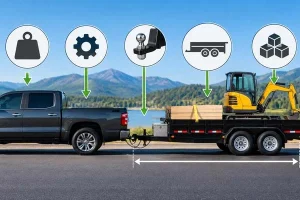
A tilt trailer gooseneck is designed for buyers who need to move heavy equipment without spending valuable time positioning, lifting, and storing separate loading ramps. By combining a tilting deck with a gooseneck hitch connection, this trailer gives contractors, farmers, equipment rental companies, landscapers, and machinery owners a practical way to load heavy cargo and maintain better towing control. The deck lowers toward the ground, allowing a skid steer, compact excavator, tractor, scissor lift, or disabled vehicle to move directly onto the trailer. Once the equipment reaches the correct position, the deck returns to its transport position and the operator can begin securing the load.

The most important advantage is not simply that the trailer looks stronger or carries more weight. A properly selected gooseneck tilt trailer can reduce loading time, limit manual handling, and create a more predictable routine for crews that move equipment several times each day. The gooseneck hitch places the connection inside the truck bed, close to the rear axle, rather than behind the rear bumper. This arrangement can make a long equipment trailer feel more stable during highway travel, lane changes, turns, and braking. However, that benefit only applies when the truck, trailer, hitch, tires, brakes, and cargo weight are correctly matched.
If you are searching for the best tilt trailer gooseneck for construction equipment, farm machinery, or vehicle transport, you should look beyond total trailer length and advertised gross vehicle weight rating. Buyers need to compare actual payload capacity, empty trailer weight, deck width, loading angle, axle ratings, hydraulic system design, brake equipment, tie-down points, and truck compatibility. A trailer that works well for a compact track loader may not be suitable for a low-clearance race car, while a trailer built for a tractor may not have the correct deck balance for a mini excavator with several attachments. This guide explains the differences so you can choose a trailer based on the work you actually do.
A tilt trailer gooseneck is a heavy-duty flatbed or equipment trailer that connects to a hitch installed inside the bed of a pickup truck. Its rear deck, main deck, or hydraulic dovetail moves downward to create a loading surface. This means the operator can drive or winch equipment onto the trailer without carrying two separate steel ramps. Depending on the design, the trailer may use gravity, hydraulic damping, or a powered hydraulic pump to control the deck movement.
The term tilt trailer gooseneck covers several different trailer layouts. Some models use a full-length deck that tilts as one section. Others divide the trailer into a stationary front deck and a moving rear deck. Heavy-duty equipment trailers may use a hydraulic dovetail that lowers to the ground while the main deck stays level. Although all three designs make loading easier, they are not interchangeable. The best layout depends on the cargo length, wheelbase, ground clearance, weight distribution, and number of machines carried on each trip.
A typical gooseneck tilt trailer includes a welded steel frame, tandem or triple axles, electric or hydraulic brakes, a treated wood or steel deck, adjustable gooseneck coupler, heavy-duty jacks, safety chains, breakaway equipment, LED lights, and rated cargo securement points. Powered models also include a battery, hydraulic pump, fluid reservoir, hoses, controls, and one or more cylinders. Buyers should inspect each of these systems because the trailer's useful capacity depends on the lowest-rated critical component, not only the strongest part of the frame.
A gravity tilt deck moves by using the weight of the cargo and the balance of the trailer deck. The operator releases the deck lock, and the rear of the deck moves toward the ground. As the machine drives forward, its weight passes over the deck's pivot point. The deck then returns slowly to the horizontal position. Many gravity tilt trailers use a hydraulic damping cylinder to control this movement. The cylinder does not necessarily power the deck, but it slows the motion so the deck does not drop suddenly or slam into its travel position.
A powered hydraulic tilt trailer uses an electric hydraulic pump to move the deck. The operator activates the system through a mounted control, wired remote, or wireless remote, depending on the trailer configuration. Hydraulic power gives the operator more control because the deck can often be stopped at different positions. This is helpful when loading a non-running vehicle, an unevenly balanced machine, or equipment with low ground clearance. It can also reduce the sudden deck movement sometimes associated with basic gravity tilt systems.
A hydraulic dovetail works differently because only the rear section moves. The main deck remains level while the dovetail lowers and becomes a full-width loading ramp. This layout is useful for operators who carry more than one machine because equipment already secured on the main deck does not need to move when the tail is lowered. The operator can load the first machine, raise the hydraulic tail, reposition the load if necessary, and then use the remaining deck space for attachments or additional equipment.
The gooseneck hitch connects over or slightly ahead of the truck's rear axle. This position changes the way trailer weight acts on the tow vehicle. A bumper-pull trailer applies leverage behind the rear bumper, while a gooseneck transfers part of the trailer weight directly into the truck bed near the axle. For long trailers and heavy machinery, this can create a more controlled towing feel and reduce some of the side-to-side movement drivers experience with large bumper-pull trailers.
This does not mean every pickup truck can safely tow a gooseneck tilt trailer. The truck must have enough payload capacity to carry the hitch weight transferred into the bed. Passengers, tools, fuel, the gooseneck hitch, bed accessories, and other cargo also count against the truck's payload. A truck may have a high advertised towing capacity but reach its rear axle or payload limit before reaching that maximum trailer number. Buyers should check the door-jamb label, owner's manual, towing guide, axle rating, tire capacity, and hitch rating for the exact truck configuration.
The gooseneck connection also changes turning behavior. The trailer can follow the truck more tightly through corners, which can help in construction yards, farms, and narrow entrances. At the same time, the trailer neck can move close to the truck cab during a sharp turn. Cab clearance, tailgate clearance, bed-rail clearance, and coupler height must be checked before towing. This is especially important when using a short-bed pickup or traveling across steep entrances and uneven job sites.
Contractors usually choose a gooseneck tilt trailer because it helps them move equipment with fewer loading steps. A crew that transports a skid steer in the morning, unloads it at one project, moves it to another site after lunch, and returns it to the yard in the evening may load and unload four or more times in one day. Traditional ramps must be removed, positioned, checked, and stored during every loading cycle. A hydraulic or gravity tilt deck turns the trailer itself into the loading path, which can reduce the time spent handling ramps and preparing the trailer.
A full-width tilt deck is also easier to approach than two narrow ramps. Tracked equipment can move onto the trailer without the operator trying to align each track with a separate ramp. Wheeled machines with different widths can use the same loading surface. This is useful for rental companies and contractors who transport skid steers, compact track loaders, mini excavators, trenchers, rollers, forklifts, scissor lifts, and tractors on the same trailer at different times.
The raised front section of a gooseneck trailer can also provide useful storage or loading space. Some designs include a platform above the truck bed for buckets, forks, pallets, toolboxes, chains, binders, spare tires, and hydraulic equipment. This keeps loose items away from the main machine and allows the operator to use the trailer deck more efficiently. For businesses that carry several attachments to every job, this extra space can be more valuable than simply buying a longer bumper-pull trailer.
Removable ramps create more work than many first-time trailer buyers expect. They can be heavy, muddy, frozen, bent, or difficult to pull from their storage channels. The operator must position them at the correct width, confirm that they are fully supported, and make sure they cannot shift while the equipment climbs. After loading, the ramps must be lifted again and locked securely for transport. If one ramp is damaged or misplaced, the trailer may be unusable until a replacement is found.
A tilt trailer gooseneck removes many of these repeated tasks. The operator lowers the deck or hydraulic tail, checks the loading area, and moves the equipment onto a wide surface. This is especially useful in rain, snow, mud, or low-light conditions where handling loose ramps becomes more difficult. It can also reduce physical strain on employees who would otherwise lift steel ramps several times each day.
However, a tilt deck should not be treated as a reason to rush. The trailer should remain connected to the truck during loading, and both vehicles should stand on firm ground. The operator should inspect the pivot points, hydraulic hoses, deck locks, and ground contact before moving any equipment. Bystanders should stay away from the moving deck and possible pinch points. The loading system saves time only when the operator follows a consistent routine.
A gooseneck tilt trailer can provide better control than a similarly sized bumper-pull trailer because the hitch point sits closer to the truck's rear axle. This reduces the long leverage effect created when a heavy trailer connects behind the rear bumper. Drivers often notice a more stable feeling during highway travel and lane changes, especially when the trailer carries a tall or heavy machine. The truck and trailer can feel more like one connected unit rather than two separate vehicles pulling against each other.
Correct load placement remains essential. A compact excavator positioned too far behind the trailer axles can reduce hitch weight and create trailer sway. The same machine placed too far forward can overload the truck's rear axle, tires, or hitch. Attachments, buckets, fuel, and additional tools also affect balance. Operators should learn where each machine needs to sit and use clear reference points on the deck so the load can be positioned consistently.
Trailer brakes also play a major role in towing control. A heavy gooseneck tilt trailer normally uses brakes on multiple axles and requires a compatible in-cab brake controller. The controller should be adjusted for the actual load. Too little trailer braking allows the trailer to push the truck during stops, while excessive braking may lock the trailer wheels. Correct adjustment, maintained brakes, properly inflated tires, and balanced cargo must work together to produce stable towing.
The most common types are full-tilt models, split-deck tilt models, and hydraulic dovetail gooseneck trailers. Manufacturers may use different names for similar designs, so buyers should look at how the deck moves rather than relying only on the product title. Ask which section tilts, how the movement is controlled, how much weight the moving section can support, and whether the deck can be locked manually if the hydraulic or electrical system fails.
The correct design depends on what you load most often. A car transporter may need a long, smooth tilt section to reduce the risk of scraping a low front bumper or underbody. A construction contractor may prefer a stationary front deck for buckets and attachments. An equipment rental company that loads different machines throughout the day may prefer a hydraulic dovetail because the main deck remains level during loading.
You should also think about unloading order. If two machines are carried on the same trailer, can the rear machine be unloaded without moving the front machine? Can a bucket remain on the stationary deck while the tilt section moves? Can the hydraulic tail support the concentrated weight of steel tracks? These questions often matter more in daily use than the total advertised deck length.
A full-tilt gooseneck trailer allows most or all of the main deck to pivot toward the ground. The long moving surface can produce a smooth loading transition, making this design suitable for vehicles, lifts, compact equipment, and machinery with limited ground clearance. Since the deck itself becomes the ramp, the operator receives a wide loading path with no narrow channels to align.
The full-tilt design can be less convenient when carrying several pieces of equipment. Cargo cannot usually remain on the moving deck while it is lowered to load another item. If the operator wants to carry a skid steer and several attachments, everything on the tilt section may need to be arranged after the loading process is complete. Buyers should also consider the hydraulic power required to move a long steel deck, particularly on larger trailers.
For low-clearance vehicles, the long tilt surface can be a major advantage, but it does not guarantee that every car will load without contact. The buyer should compare the trailer's loading angle, deck height, breakover point, and transition shape with the vehicle's wheelbase, front overhang, rear overhang, and ground clearance. A real loading test or accurate side-profile drawing is more reliable than judging from dealer photographs.
A split-deck trailer combines a stationary front section with a tilting rear section. The fixed area can carry buckets, forks, pallets, tools, or a small machine while the rear deck moves. This makes the design practical for contractors who transport one main machine together with several attachments. The stationary deck also gives the operator more options when adjusting weight distribution.
The disadvantage is the transition between the fixed deck and the tilt deck. A long-wheelbase vehicle or low machine may contact the trailer where the two sections meet. The rear tilt section may also be shorter than the deck on a full-tilt model, creating a steeper loading angle. Buyers should measure the equipment and request the actual deck angle before purchasing.
A split-deck model works best when the operator knows how the available areas will be used. If the stationary deck is too short for the attachments, the main machine may need to move farther back than expected. That can reduce hitch weight and affect towing stability. Before ordering, draw the machine and attachments on the proposed deck dimensions and identify where the axle group will sit.
A hydraulic dovetail gooseneck trailer keeps the main deck level while the rear section lowers to the ground. The hydraulic tail becomes a wide loading ramp, allowing wheeled and tracked equipment to enter the trailer. Once the machine is loaded, the operator raises the tail and locks it into the travel position. This design is popular with construction companies and equipment haulers because cargo already placed on the main deck does not need to move when the tail is operated.
The hydraulic dovetail may also provide usable carrying space when raised, but buyers must check its rated capacity. The tail may have a lower loading or carrying limit than the trailer's total payload rating. A trailer could legally carry a heavy excavator while the hydraulic tail is not rated to support the machine as it crosses. Steel tracks and narrow tires can create concentrated loads that place more stress on hinges, cylinders, and support members.
Hydraulic dovetails also require more maintenance than simple ramps. The battery must remain charged, the pump needs clean fluid, and the hoses and fittings should be checked for leaks or damage. Pivot points require lubrication, and electrical connections must be protected from corrosion. Buyers should ask whether the trailer includes a manual backup system and how the tail can be raised if the battery or pump fails away from the shop.
The most important tilt trailer gooseneck specifications are GVWR, empty trailer weight, payload capacity, deck size, loading angle, axle ratings, tire capacity, brake type, hydraulic capacity, and hitch requirements. These numbers determine whether the trailer can safely carry your equipment. Features such as wireless remotes, toolboxes, extra lights, upgraded paint, and spare tire mounts are useful, but they should not distract buyers from the basic capacity calculation.
Specifications should be checked for the finished trailer, not only the basic model shown in a brochure. Optional hydraulic jacks, steel flooring, winches, batteries, toolboxes, spare tires, and extra deck length all add weight. Every pound added to the empty trailer reduces the available payload. Ask the manufacturer or dealer for the actual empty weight of the completed configuration whenever possible.
| Specification | Why It Matters | What Buyers Should Check |
|---|---|---|
| GVWR | Shows the maximum permitted loaded trailer weight. | Confirm the certified rating on the trailer identification plate. |
| Empty Weight | Determines how much capacity remains for equipment and attachments. | Use the weight of the completed trailer with installed options. |
| Payload Capacity | Shows the approximate cargo weight the trailer can carry. | Subtract actual empty weight from GVWR and confirm manufacturer limits. |
| Deck Length and Width | Determines whether equipment fits and can be positioned correctly. | Measure the full machine, including buckets, blades, and attachments. |
| Loading Angle | Affects low-clearance vehicles and long-wheelbase equipment. | Request a measured angle for the exact trailer configuration. |
| Axles and Tires | Support the load and affect service life. | Compare axle ratings, tire load indexes, wheel ratings, and suspension. |
| Brake System | Controls the trailer during stopping and downhill travel. | Check brake type, number of braked axles, and controller compatibility. |
| Tilt or Tail Capacity | The moving section may have a lower rating than the complete trailer. | Confirm both loading capacity and transport capacity for the moving section. |
Payload capacity is usually estimated by subtracting the trailer's empty weight from its GVWR. For example, if a gooseneck tilt trailer has a GVWR of 20,000 pounds and an actual empty weight of 6,000 pounds, the estimated payload is 14,000 pounds. This calculation provides a useful starting point, but buyers must still check axle ratings, tire ratings, coupler capacity, frame limits, and manufacturer instructions.
The weight of the cargo should also be based on the working configuration. A compact excavator's published operating weight may not include every bucket, hydraulic thumb, quick coupler, fuel load, blade option, or material packed into the tracks. A tractor may gain considerable weight from a front loader, rear implement, ballast, or fluid-filled tires. Chains, binders, spare parts, tools, and fuel containers also count as cargo.
It is wise to leave a reasonable capacity margin rather than operating at the maximum rating every day. A small margin allows for attachments, fuel, job-site material, or future equipment changes. However, excessive oversizing also has disadvantages. A heavier trailer reduces fuel economy, increases tire and brake costs, and may require a larger truck. The best trailer has enough capacity for normal working loads without carrying unnecessary weight on every trip.
Deck length affects both equipment fit and weight distribution. Measure the machine from its furthest front point to its furthest rear point, including the bucket, boom, blade, mower, fork attachment, or rear overhang. The trailer needs enough length to hold the entire load while allowing the machine's weight to sit correctly in relation to the axle group. A machine may physically fit on a short trailer but still be impossible to position safely.
Deck width determines whether the tires or tracks can enter the trailer without contacting fenders, side rails, or hydraulic components. Low-profile trailers often place the deck between the wheels, which keeps the deck lower but limits usable width. Deckover gooseneck trailers place the deck above the wheels, providing a wide platform that is useful for large equipment and side loading. The trade-off is a higher deck, which can increase the loading angle and overall cargo height.
The loading angle is especially important when choosing a gooseneck tilt trailer for low-clearance cars, race vehicles, scissor lifts, or long-wheelbase machinery. A steep angle can cause the front bumper, underbody, exhaust, or rear overhang to contact the trailer. Buyers should ask for the measured loading angle and compare it with the equipment. Additional approach ramps may help in some situations, but they must be rated for the load and supported correctly.
Axles, suspension, wheels, and tires must be treated as one system. Adding two axle ratings together does not automatically tell you the trailer's legal payload because part of the loaded weight transfers to the truck through the gooseneck. The frame, coupler, tires, wheels, brakes, or certification may also create a lower limit. Always follow the trailer's certified GVWR and component ratings.
Tire load capacity should be checked at the correct inflation pressure. Underinflated trailer tires generate heat, flex excessively, and may fail under heavy loads. Tires should be inspected for cracks, cuts, uneven wear, bulges, and age-related damage. Wheel nuts need regular torque checks, especially after new wheels are installed or a tire has been replaced.
Heavy gooseneck tilt trailers commonly use electric drum brakes, although some models offer hydraulic disc or electric-over-hydraulic braking. The truck's brake controller must match the trailer system and be adjusted for the load. Operators should test the brakes at low speed before entering traffic. Regular brake inspection should include magnets, shoes, drums, wiring, bearings, hydraulic fluid, and breakaway equipment, depending on the system.
Start by listing the equipment you expect to haul. Record the real operating weight, overall length, overall width, wheelbase, ground clearance, tire or track spacing, and attachment configuration. Identify the machine you transport most often and the heaviest machine you may need to move. If you carry two machines together, calculate the combined weight and draw their positions on the trailer deck.
Next, consider where the trailer will be used. A landscaping company entering residential driveways may need a shorter trailer with a manageable turning radius. A construction contractor moving excavators between highway projects may prioritize payload, hydraulic loading, and long-distance towing stability. A farm operator may need a wide deck for tractors and implements. A vehicle transporter may care more about loading angle, winch position, and breakover clearance.
Loading frequency should also guide the decision. A powered hydraulic tilt or dovetail can provide real value when used several times each day. An occasional user may prefer the lower maintenance requirements of a gravity tilt system. The question is not which design has the most features. The better question is which design removes the most problems from your normal workday.
The tow vehicle must be rated for the trailer when fully loaded. Check the exact truck model, model year, engine, transmission, axle ratio, cab configuration, bed length, drivetrain, and factory towing package. Two trucks with the same badge can have very different towing and payload ratings. The highest number shown in an advertisement may apply only to a specific configuration that is different from your truck.
Truck payload is often the first limit reached with a gooseneck trailer. The load placed in the bed includes the gooseneck hitch weight, hitch hardware, passengers, tools, fuel, and other cargo. This total must stay within the truck's payload rating and rear axle limit. The rear tires and wheels must also have enough capacity for the actual load.
The trailer should travel level when connected. A nose-high or nose-low trailer can create uneven axle loading, poor braking behavior, reduced ground clearance, and irregular tire wear. The adjustable coupler should be set within the manufacturer's approved range. Bed-rail and cab clearance should be checked during turns and when crossing slopes, dips, or raised entrances.
A trailer can have enough payload but still be the wrong layout for the equipment. The machine needs enough deck length to sit in the correct position over the axle group. The operator also needs access to rated tie-down points. Chains should pull in suitable directions without rubbing sharp steel edges, interfering with hydraulic components, or contacting tires.
If you carry attachments, decide where they will sit before ordering the trailer. Buckets and forks may fit on a raised front platform, stationary deck, or side storage area. Their weight changes trailer balance, so they should not be treated as small accessories. A large excavator bucket or tractor attachment can add significant weight and occupy more deck space than expected.
For low-clearance vehicles, ask whether the loading surface has any sharp transitions. A full-tilt deck may offer a smoother path than a split deck, but the actual result depends on deck height and pivot position. A hydraulic dovetail can provide a wide ramp, although the transition from tail to main deck must still be checked. Measure the vehicle rather than relying on general descriptions such as low-profile or car-friendly.
Begin with the trailer securely connected to the tow vehicle. Confirm that the gooseneck coupler is fully seated and locked, the safety chains are attached to rated anchors, the electrical connector is secure, and the breakaway cable is connected independently. The truck and trailer should stand on firm, reasonably level ground. Avoid loading on loose soil, steep slopes, soft shoulders, or uneven areas that prevent the deck from contacting the ground correctly.
Inspect the loading system before lowering the deck or dovetail. Look for leaking hydraulic fluid, damaged hoses, loose pins, bent hinges, cracked welds, weak batteries, damaged wiring, and debris around moving parts. Keep people away from the rear of the trailer, underneath the deck, and near all pinch points. The operator should use the controls from a position with a clear view of the deck and cargo.
Approach the trailer slowly and as straight as possible. Sudden acceleration can cause a gravity tilt deck to move quickly or make steel tracks slide on the deck. A spotter can help when the operator has limited visibility, but the spotter should remain outside the machine's path. Both people should agree on hand signals before loading begins.
Once the machine reaches the correct position, lower buckets, blades, or attachments as recommended, apply the parking brake, and shut down the equipment. Use rated chains, straps, binders, and anchor points that match the cargo. Secure movable attachments separately when needed. After driving a short distance, stop in a safe place and inspect the load again because chains can loosen as tires, tracks, suspension, and attachments settle.
Never assume the hydraulic tilt section or dovetail can support the trailer's full payload. Confirm the separate loading and transport ratings for the moving section before driving heavy equipment across it.
Regular maintenance protects both the trailer and the equipment it carries. Before each trip, inspect the tires, lights, brakes, coupler, safety chains, breakaway system, deck locks, tie-down points, hydraulic components, and jacks. Look underneath the trailer for loose wiring, damaged brake cables, cracked welds, hanging hoses, and fluid leaks. Small problems are easier to repair in the yard than beside a highway.
The hydraulic system needs clean fluid and secure connections. Check the reservoir level according to the manufacturer's instructions and inspect hoses for rubbing, cracking, swelling, or leakage. Keep the battery charged and clean corrosion from the terminals. If the trailer has an onboard charger or charging connection from the truck, test it regularly rather than assuming the battery will remain full.
Pivot points, hinges, jacks, coupler parts, and suspension components should be lubricated at the specified intervals. Wheel bearings require inspection and service based on mileage and working conditions. Trailers used in mud, dust, road salt, or water may need more frequent maintenance. Brakes should be checked for wear, adjustment, damaged wiring, leaking seals, and uneven operation.
The deck also deserves attention. Replace damaged boards before they break under a tire or track. Check steel decking for loose welds, deep corrosion, bent sections, and slippery contamination. Mud, hydraulic oil, fuel, ice, and loose gravel can reduce traction during loading. Keeping the deck clean is a simple step that improves both safety and equipment control.
The main advantage is easier loading without repeatedly handling separate ramps. The deck or hydraulic tail lowers toward the ground and creates a wide path for equipment. This saves time for contractors who load skid steers, excavators, tractors, lifts, and other machines several times each day. The gooseneck connection can also provide a more controlled towing feel because the hitch point sits close to the truck's rear axle.
The benefit is greatest when the trailer matches the equipment and truck correctly. A tilt system cannot correct an overloaded trailer, poorly positioned machine, weak tow vehicle, or incorrectly adjusted brake controller. Buyers should treat the tilt feature as part of a complete hauling system rather than a replacement for capacity planning and safe loading.
The carrying capacity depends on the trailer's GVWR, actual empty weight, axle system, tires, frame, coupler, brakes, and manufacturer certification. Payload is commonly estimated by subtracting empty trailer weight from GVWR. A 20,000-pound GVWR trailer that weighs 6,000 pounds empty may provide an estimated 14,000 pounds of payload, but the final rating on the trailer plate and manufacturer documentation must be followed.
The tilting deck or hydraulic dovetail may have a separate limit. A machine may be within the trailer's total payload capacity but too heavy for the moving section during loading. Buyers should confirm the loading capacity of the tail, especially when carrying excavators, rollers, forklifts, or machinery with concentrated wheel and track loads.
A hydraulic tilt trailer provides more control because the operator can power the deck up and down. This is useful for non-running vehicles, unevenly balanced machines, and frequent commercial loading. The deck can often be stopped at different positions, giving the operator more time to check clearance and alignment.
A gravity tilt trailer has fewer powered components and may require less maintenance. It can be a practical choice for occasional users who haul predictable equipment and want a simpler system. The best option depends on loading frequency, cargo type, service access, and how costly a hydraulic problem would be during your workday.
Some gooseneck tilt trailers can carry low-clearance cars, but the trailer must have a suitable loading angle and smooth deck transition. Measure the vehicle's wheelbase, ground clearance, front overhang, rear overhang, and bumper height. Compare these measurements with the trailer's deck height, tilt length, breakover point, and loading angle.
A winch can help because it allows the vehicle to move slowly while the operator watches the front bumper and underbody. Additional approach ramps may also reduce the angle, but they must be properly rated and supported. A loading test with a similar vehicle is the safest way to confirm compatibility before purchase.
The truck needs a correctly rated gooseneck hitch installed in the bed and enough towing, payload, rear axle, tire, wheel, and combined weight capacity. A bumper hitch cannot replace a gooseneck hitch. The truck also needs a compatible electrical connection and brake controller for the trailer's brake system.
Bed length and cab clearance should also be considered. Short-bed trucks may have less clearance between the trailer neck and the cab during sharp turns. The coupler should be adjusted so the trailer travels level while maintaining enough clearance above the bed rails.
Common loads include skid steers, compact track loaders, mini excavators, tractors, scissor lifts, forklifts, trenchers, rollers, small dozers, farm equipment, race cars, utility vehicles, and disabled machinery. The trailer may also carry buckets, forks, mowers, pallets, and other attachments when the deck layout provides enough space and payload.
Each load requires a separate capacity and balance check. Equipment that looks small may be heavy, while long equipment may be difficult to position even when its weight is within the trailer rating. Always use verified equipment dimensions and working weights before selecting a trailer.
On many hydraulic dovetail trailers, equipment can remain on the fixed main deck while the tail is lowered. This is one of the main reasons commercial haulers choose the design. It allows the operator to load or unload another machine without tilting the entire deck.
The existing cargo must still be secured and positioned correctly. Lowering the tail changes the trailer's rear clearance and may slightly affect balance. Follow the manufacturer's operating instructions and do not exceed the hydraulic tail's loading capacity.
The operator should visually inspect the hydraulic system before every loading cycle. Check for leaks, damaged hoses, loose fittings, weak battery voltage, unusual pump noise, and bent cylinder components. A small leak can become a complete failure when the system is placed under load.
Fluid changes, filter service, lubrication, and detailed inspections should follow the trailer manufacturer's schedule. Trailers used daily, stored outdoors, or operated in dusty and wet conditions may require more frequent service. Keeping service records also helps identify repeated problems before they cause downtime.
A deckover tilt trailer provides a wide, unobstructed deck because the platform sits above the wheels. It works well for wide equipment, pallets, side loading, and machines that would not fit between fenders. The trade-off is a higher deck height, which can increase the loading angle and the overall height of the cargo.
A low-profile trailer keeps the deck closer to the ground, making it easier to load low-clearance vehicles and reducing the cargo's center of gravity. However, the usable width may be limited by the fenders. The correct design depends on whether deck width or lower loading height matters more for your normal cargo.
A winch is not required for every load, but it is valuable when moving disabled cars, non-running equipment, or machinery that cannot safely drive onto the trailer. It provides slow and controlled movement, allowing the operator to watch clearance and deck position. A winch can also help recover equipment when loading conditions are slippery.
The winch, cable or rope, mounting plate, battery, and anchor points must be rated for the intended load. The pulling force required can increase when tires are flat, brakes are locked, or the loading angle is steep. Buyers should also consider a fairlead, remote control, battery disconnect, and secure storage for winch accessories.
A tilt trailer gooseneck is a practical choice for buyers who move heavy machinery frequently and want to reduce the time spent handling ramps. The tilting deck creates a broad loading path, while the gooseneck hitch supports stable towing when the load is positioned correctly. For contractors, farmers, equipment dealers, rental companies, and vehicle transporters, the right trailer can improve daily productivity and make equipment movement more consistent.
The best choice starts with accurate information. Verify the weight and dimensions of the equipment, calculate the required payload, compare deck layouts, and check the loading angle. Confirm the capacity of the moving deck or hydraulic tail, not only the overall trailer rating. Then match the loaded trailer to the exact tow vehicle configuration, including payload, rear axle capacity, tires, hitch, and brake controller.
Do not choose a trailer only because it has the highest GVWR or the longest deck. A trailer that is too large may require a heavier truck and cost more to operate, while a trailer that is too small leaves no room for attachments or future equipment. The right gooseneck tilt trailer should carry your normal loads with a sensible capacity margin, provide enough deck space for correct balance, and use components that can be serviced in your area.
Before making a final purchase, inspect the trailer in person whenever possible. Operate the tilt system, examine the welds, test the controls, check the deck transitions, and ask how the trailer can be used if the battery or hydraulic pump fails. A well-matched trailer should not create new problems for your crew. It should load smoothly, tow predictably, and remain dependable through years of regular work.