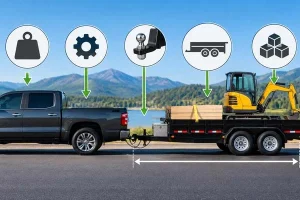
Heavy duty car trailer ramps are not just accessories. They decide whether loading a vehicle feels smooth and controlled or risky and stressful. If you haul cars, pickups, UTVs, tractors, race cars, or light equipment, the ramp is the first part of the trailer that takes the load. A weak ramp can bend, slip, scrape the vehicle, or make the driver lose control during loading. That is why buyers should look beyond a simple weight rating and think about ramp length, material, traction, loading angle, attachment method, and real working conditions.

When people search for heavy duty car trailer ramps, they usually want one thing: a ramp that can handle real weight without drama. They may be loading a low-clearance car onto a flatbed trailer, moving a heavy pickup for a customer, or using the same trailer for both vehicles and equipment. In each case, the right ramp saves time, protects the vehicle, and gives the operator more confidence. A good ramp should feel stable under the tires, sit firmly against the trailer, and create a loading angle that does not punish the bumper, chassis, or exhaust system.
The most important reason to choose heavy duty car trailer ramps is safety. During loading, a vehicle's weight does not sit evenly across the trailer. The front tires climb first, the weight shifts, and the ramps take concentrated pressure before the vehicle reaches the deck. This moment is where many cheap ramps show their weakness. They may flex in the middle, twist at the sides, or move slightly away from the trailer edge. Even a small movement can make the driver correct the steering, brake suddenly, or apply too much throttle.
For business buyers, the risk is even bigger. A car hauler, equipment dealer, repair shop, farm owner, or auction transport company cannot afford loading accidents. One damaged bumper, bent ramp, or injured operator can cost far more than a stronger ramp set. Heavy duty ramps also improve daily efficiency because the loading process becomes repeatable. When the ramps are strong, wide, and properly matched to the trailer height, the operator does not need to guess every time. The vehicle climbs in a controlled line, the tires keep traction, and the trailer stays stable.
Weak loading ramps rarely fail in a dramatic way at first. More often, they start with small warning signs. The ramp bends slightly after a few uses. The surface loses grip. The hook end becomes loose. The welds show small cracks. Many trailer owners ignore these details because the ramp still looks usable. But loading ramps work like bridges. Once the structure is tired, every new load makes the problem worse. A ramp that feels soft today can become unsafe under a heavier vehicle tomorrow.
Another problem is that many ramps are advertised as heavy duty, but they are not always suitable for cars, trucks, or equipment with concentrated tire loads. Lawn mower ramps, ATV ramps, and light utility ramps may look similar in photos, but their structure is often different. A car trailer ramp needs enough width, enough beam strength, and a secure connection to the trailer. If you are loading a heavy vehicle, do not buy based on price alone. Buy based on the heaviest vehicle you expect to load, the trailer deck height, and the surface where the ramp will be used.
A truly heavy duty car trailer ramp should combine high load capacity with stable real-world performance. Capacity matters, but it is only the starting point. The ramp also needs good side rail strength, strong cross members, a safe tire surface, and an attachment end that locks or grips the trailer securely. If one part is weak, the whole loading process becomes less reliable. A high-rated ramp with poor traction can still be dangerous. A thick ramp with a poor hook design can still slide. Good ramps are built as a complete loading system, not just two pieces of metal.
Buyers should also think about how often the ramps will be used. A private owner who loads a car once a month may need a different ramp than a transport company loading several vehicles each day. Commercial use puts more stress on the ramp because of repeated loading cycles, changing vehicle weights, wet tires, rough ground, and rushed jobsite conditions. If the ramp will be used often, choose a stronger model than your minimum requirement. A larger safety margin usually means less flex, longer service life, and fewer problems during daily work.
| Ramp Feature | Why It Matters | What To Check Before Buying |
|---|---|---|
| Load capacity | Shows the maximum weight the ramp is designed to support. | Choose a rating higher than your heaviest expected vehicle. |
| Ramp length | Controls the loading angle and helps protect low-clearance vehicles. | Use longer ramps for taller trailers or lower vehicles. |
| Ramp width | Gives tires more contact area and makes alignment easier. | Match the ramp width to tire size and vehicle track width. |
| Surface traction | Helps tires grip during wet, muddy, or dusty loading conditions. | Look for punched, serrated, mesh, or crossbar traction surfaces. |
| Attachment end | Keeps the ramp from slipping away from the trailer. | Check for hook ends, pins, brackets, or secure ramp pockets. |
The safest way to choose heavy duty car trailer ramps is to start with the heaviest vehicle or equipment you plan to load, then add a clear safety margin. Do not use the vehicle's empty weight alone if it may carry tools, parts, fuel, cargo, or attachments. A pickup with a toolbox, winch bumper, spare tires, and equipment in the bed can be much heavier than its basic curb weight. A race car may also carry extra parts or have a low front splitter that changes how carefully it must be loaded. The ramp should match the real job, not the number printed in a brochure.
A practical rule is to choose ramps rated well above the expected load. Many experienced haulers prefer a margin of at least 20% because loading is not a perfectly smooth laboratory test. The ground may be uneven. The tires may be wet. The driver may stop halfway up the ramps. The vehicle may bounce slightly when power is applied. All these small factors increase stress. If your heaviest load is close to the ramp rating, you are asking the ramp to work at its limit too often. That is not a good habit for safety or long-term durability.
Weight distribution is one of the most misunderstood parts of ramp selection. A vehicle may weigh 6,000 pounds, but that does not mean each ramp only feels half of that weight in a simple way. During loading, the front axle climbs first, and the weight shifts based on the vehicle's engine position, suspension, wheelbase, and loading angle. A front-heavy diesel pickup can put serious pressure on the ramp before the rear wheels even touch it. This is why a ramp that looks strong enough on paper may still feel unstable when a heavy vehicle starts climbing.
Tire size also matters. A narrow tire concentrates force into a smaller contact area. Equipment with compact wheels or heavy front attachments can be harder on ramps than a wider vehicle with more balanced weight. If you load different vehicles, choose ramps based on the most demanding case, not the average one. For example, a ramp used for both cars and compact tractors should be selected for the tractor's concentrated load and not only for the car's total weight. This kind of thinking is what separates casual buying from safer, more professional trailer setup.
Steel and aluminum ramps can both work well, but they serve different buyers. Steel ramps are strong, tough, and often more affordable. They are a good choice for rugged jobs where weight is less of a concern and the ramps may face hard daily use. The downside is that steel ramps are heavy to move and can rust if the finish gets damaged. For a one-person operation, lifting heavy steel ramps several times a day can become tiring and may even create back or shoulder strain.
Aluminum heavy duty car trailer ramps are popular because they are easier to handle and naturally resist corrosion. For car haulers, race teams, mobile mechanics, and private trailer owners, that lower weight makes a big difference. Aluminum ramps are easier to position, easier to store, and easier to use when one person is loading alone. The key is to choose a reinforced aluminum ramp designed for vehicle loading, not a light-duty ramp meant for small equipment. Good aluminum ramps can handle serious work, but only when the design, rating, and support structure match the job.
| Material | Main Strength | Main Concern | Best For |
|---|---|---|---|
| Steel ramps | Strong, rugged, and often lower in cost. | Heavy to move and may rust over time. | Commercial yards, equipment hauling, and tough daily use. |
| Aluminum ramps | Lightweight, corrosion-resistant, and easier to handle. | Usually costs more and must be properly rated. | Car hauling, race cars, low-clearance vehicles, and one-person loading. |
Ramp length has a direct effect on loading angle, and loading angle has a direct effect on vehicle protection. If the ramp is too short, the vehicle has to climb too sharply. That steep angle can cause the front bumper, exhaust, oil pan, frame, or rear bumper to scrape. For low-clearance cars, this is often the main problem. A ramp may be strong enough to carry the car, but if it is too short, the loading process still becomes stressful. Strength alone does not solve geometry.
Longer ramps create a smoother approach. They make the trailer feel less like a wall and more like a gentle driveway. This is especially useful for sports cars, lowered cars, classic cars, luxury vehicles, and race cars with front splitters. If your trailer deck sits high, longer ramps become even more important. The higher the deck, the longer the ramp should usually be. Buyers often regret choosing short ramps because they save space, only to discover that loading is difficult every time. A slightly longer ramp can save the vehicle from repeated scraping and save the operator from constant stress.
Straight ramps are simple, strong, and common on many car trailers. They work well when the trailer deck is not too high and the vehicle has enough ground clearance. For standard cars, trucks, and utility use, straight ramps can be a practical and durable choice. They are also easier to manufacture and often cost less than arched ramps. If you mostly haul pickups, SUVs, or equipment with decent clearance, a heavy straight ramp may do the job well.
Arched ramps are better when clearance is the main concern. The curved shape helps reduce the harsh transition between the ground, ramp, and trailer deck. This matters when loading low cars because the middle of the vehicle may otherwise hit the breakover point. Race teams, classic car owners, and transport companies often prefer arched ramps for this reason. They make loading feel more controlled and reduce the chance of scraping expensive bodywork. If your customers care about vehicle condition, arched ramps are often worth the higher cost.
Ramp width affects both safety and driver confidence. Narrow ramps require perfect tire alignment, which is not always easy when loading alone or working in poor light. A wider ramp gives the driver more room to correct small steering movements. It also supports the tire better and reduces the chance of the tire edge riding too close to the side of the ramp. For heavy vehicles, wider ramps can also help distribute load more evenly across the structure.
Before buying ramps, measure the tire width and track width of the vehicles you plan to load. Do not guess. A ramp that works for a small sedan may not suit a wide pickup, dually truck, race car, or off-road vehicle. If you haul different types of vehicles, choose ramp width for the widest and heaviest regular load. Wider ramps may take up more storage space, but they often make loading easier and safer. In real trailer work, a little extra room is usually better than trying to line up perfectly every single time.
A heavy duty ramp without good traction is only halfway useful. Tires need grip while climbing, especially when the ramp is wet, muddy, dusty, or oily. Smooth metal ramps can become slippery quickly. Once tires spin on the ramp, the driver may press the throttle harder, which makes the situation worse. A sudden jump forward can damage the vehicle, the trailer, or the ramp itself. Good traction helps the tires climb steadily with less throttle and fewer surprises.
Common traction surfaces include expanded mesh, punched holes, serrated bars, raised crossbars, and textured aluminum patterns. Each design has its own advantage. Mesh can drain water and mud. Serrated surfaces grip well but may be rougher on tires. Crossbars give strong bite for equipment and heavier vehicles. The best choice depends on what you load most often. If you load cars with performance tires, you may want strong grip without an overly aggressive surface. If you load farm equipment or off-road vehicles, a more aggressive traction pattern may be better.
The ramp attachment system is one of the most important safety details, yet many buyers barely notice it. A ramp should not simply rest against the trailer and hope for the best. It should connect securely to the trailer edge, ramp pocket, bracket, or loading rail. During loading, vibration and tire force can push a loose ramp away from the trailer. If the ramp slips, even a few inches, the vehicle can drop suddenly or become stuck halfway up.
Common attachment options include hook ends, pin systems, ramp pockets, safety chains, and locking brackets. For regular car hauling, a secure hook or pin system is usually worth choosing. It reduces movement and gives the operator more confidence. If your trailer is custom-built, make sure the ramp end matches the trailer's loading edge. A strong ramp with the wrong end design can still be unsafe. The ramp and trailer should work together like one system, not like two separate parts forced to fit.
Heavy duty car trailer ramps are useful for more than ordinary passenger cars. They are often used by car dealers, auction buyers, towing operators, restoration shops, race teams, farm owners, and equipment sellers. A good ramp set lets one trailer handle several jobs. You can load a project car one day, a UTV the next day, and a small tractor later in the week. This flexibility is one reason many buyers choose stronger ramps from the beginning instead of replacing light-duty ramps later.
The best ramp setup depends on the most demanding vehicle you load. For low-clearance cars, choose longer ramps and consider arched designs. For pickups and SUVs, focus on high capacity and strong traction. For equipment, check tire size, concentrated weight, and ground conditions. For commercial hauling, durability and fast setup matter because time is money. The right ramp helps turn the trailer into a dependable work tool instead of a loading problem waiting to happen.
The biggest mistake is buying ramps based only on price. Cheap ramps may look acceptable in product photos, but loading real vehicles reveals the difference quickly. Thin metal, weak welds, poor traction, and loose attachment ends can all create problems. Another common mistake is buying ramps that are strong enough but too short. This happens often with low-clearance cars. The buyer checks the weight rating, ignores the loading angle, and then discovers the vehicle scrapes every time.
Another mistake is assuming one ramp fits every trailer. Trailer deck height, rear angle, storage space, loading surface, and vehicle type all matter. A ramp that works well on a low car hauler may not work well on a taller flatbed trailer. Buyers should also avoid using damaged ramps just because they still function. If a ramp is bent, cracked, rusted through, or no longer sits flat, it should be repaired by a qualified person or replaced. A ramp is safety equipment. Treat it that way.
Proper maintenance keeps heavy duty car trailer ramps safer for a longer time. After each use, check the ramp surface, side rails, welds, and attachment points. Look for bending, cracking, deep rust, loose hardware, and unusual movement. If you use the ramps in mud, snow, salt, or coastal areas, clean them regularly. Road salt and trapped moisture can shorten the life of steel ramps, especially around welds and joints. Aluminum ramps need less rust protection, but they still need inspection for cracks, dents, and worn connection points.
Storage also matters. Slide-in ramps should move smoothly and lock securely. Folding ramps should have clean hinge points and tight hardware. Removable ramps should be stored where they will not bounce, rub, or get damaged during transport. If ramps are left outside, try to keep water from sitting inside channels or around welded areas. A few minutes of inspection can prevent a major loading failure later. For commercial users, ramp inspection should be part of the daily trailer checklist, not something done only after a problem appears.
For business buyers, heavy duty car trailer ramps should be judged by safety, speed, and long-term cost. A transport company, trailer dealer, repair shop, farm equipment seller, or rental business uses ramps as part of daily operations. If the ramp is too heavy to move, workers waste time. If the ramp is too short, vehicles may scrape. If the ramp flexes too much, operators lose confidence. These small problems repeat again and again until they cost money through delays, repairs, or customer complaints.
A better ramp setup can become a selling point. When a customer watches their car being loaded smoothly, they feel more comfortable. When an employee can position the ramps quickly without fighting heavy steel every time, work becomes more efficient. When the ramps match the trailer and the vehicle type, fewer mistakes happen. For B2B buyers, the right ramp is not just a purchase. It is part of the workflow. Strong ramps protect vehicles, reduce loading stress, and support a more professional image.
Heavy duty car trailer ramps should be chosen with the same care as the trailer itself. The best ramp is not always the cheapest or the one with the biggest number in the title. It is the ramp that matches your load, trailer height, vehicle clearance, working surface, and loading frequency. A good ramp should feel stable, grip well, attach securely, and create a loading angle that protects the vehicle. When those details work together, loading becomes safer and much easier.
If you haul vehicles for work, choose ramps with enough capacity, enough length, and enough strength for daily use. If you haul low-clearance cars, pay close attention to ramp angle and arched designs. If you load equipment, think about tire pressure points and ground conditions. Heavy duty car trailer ramps are not a small detail. They are the bridge between the ground and your trailer. Choose that bridge wisely, and every loading job becomes more controlled, more professional, and less risky.
Heavy duty car trailer ramps are used to load vehicles, UTVs, tractors, pickups, race cars, and light equipment onto trailers. They are designed to handle more weight and stress than light utility ramps. A good heavy duty ramp gives the tires a stable path from the ground to the trailer deck. It also helps reduce loading risks such as slipping, scraping, bending, and poor vehicle alignment.
Start with the heaviest vehicle or equipment you expect to load, then add a safety margin. Do not rely only on the empty vehicle weight. Add extra weight for fuel, tools, cargo, attachments, and accessories. For safer use, many buyers choose ramps rated at least 20% higher than their expected load. This gives the ramp more room to handle uneven weight distribution and real loading conditions.
Aluminum ramps are better for buyers who want lighter weight, easier handling, and better corrosion resistance. Steel ramps are better for buyers who want rugged strength and do not mind extra weight. Neither material is best for every situation. The better choice depends on what you load, how often you load it, where you use the trailer, and whether one person needs to move the ramps alone.
Low-clearance cars usually need longer ramps because longer ramps reduce the loading angle. A shorter ramp may be strong enough, but it can still cause the bumper, splitter, exhaust, or underbody to scrape. If the trailer deck is high, the ramp needs to be longer. Arched ramps can also help because they create a smoother transition from the ground to the trailer deck.
Trailer ramps can bend because of overloading, repeated stress, poor weight distribution, weak materials, rust, or improper use. A ramp may also bend if the vehicle is loaded too quickly or if the tires concentrate too much weight in one area. Once a ramp bends, it should be inspected carefully before being used again. A bent ramp may not support the next load safely.
Yes, traction surfaces are very important. A ramp may have enough strength, but if the tires cannot grip it, loading is still unsafe. Wet tires, mud, snow, oil, or dust can make smooth ramps slippery. Traction surfaces such as punched holes, mesh, serrated bars, or raised crossbars help the vehicle climb with less wheel spin and better control.
You can use the same ramps for cars and equipment if the ramps are rated and designed for both uses. Equipment often creates more concentrated pressure because of smaller tires, heavier front attachments, or uneven weight balance. Before using one ramp set for different loads, check the weight rating, tire width, ramp surface, attachment method, and trailer height. If equipment is part of your regular work, choose ramps based on the equipment, not only the car.