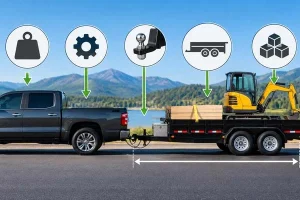
Gooseneck Tilt Deck Trailer Explained for Heavy Equipment and Vehicle Hauling
A gooseneck tilt deck trailer is one of the smartest choices when you need stable towing, easier loading, and better control over heavy cargo. If you regularly move cars, tractors, skid steers, compact equipment, or building materials, this trailer style solves several problems at once. It gives you the weight-distribution advantage of a gooseneck connection and the loading convenience of a tilt deck, which means you can load faster and with less hassle than a standard ramp trailer. That combination matters in the real world. It saves time on every job, reduces the risk of scraping low-clearance vehicles, and helps operators work more safely, especially when loading alone. For buyers comparing trailer types, the real question is not just what a gooseneck tilt deck trailer is, but why it has become such a practical solution for farms, transport companies, equipment dealers, and contractors who want a trailer that works hard without making every loading job feel like a balancing act.

What Is a Gooseneck Tilt Deck Trailer
A gooseneck tilt deck trailer is a non-powered trailer designed to be pulled by a towing vehicle, usually a pickup truck equipped with an in-bed gooseneck hitch. The trailer deck can tilt backward to create a loading angle, allowing vehicles or equipment to roll onto the platform without relying on separate loose ramps. That sounds simple, but in actual use it makes a big difference. A standard trailer with ramps often requires extra labor, more setup time, and more attention to approach angle. A tilt deck trailer removes much of that friction. The gooseneck structure also changes how the trailer behaves on the road. Because the hitch point sits over the rear axle area of the tow vehicle rather than behind it, the trailer tracks more steadily and handles heavy loads with better balance. For businesses that haul valuable cars, dense machinery, or awkward cargo, that extra control is not just a nice feature. It is often the reason they move away from lighter bumper-pull trailers and step into a more professional hauling setup.
Why Buyers Choose This Trailer Type
Most buyers do not start by saying they want a gooseneck tilt deck trailer. They start with a problem. Maybe they are tired of carrying ramps. Maybe they need to haul a low car without scraping the bumper. Maybe they want more confidence when towing a heavy load at highway speed. This trailer type answers those pain points directly. The tilt deck reduces loading stress, while the gooseneck layout improves towing stability and turning performance. It is especially attractive for operators who load frequently and do not want loading and unloading to become the slowest part of the job. When people search for the best gooseneck tilt deck trailer for heavy equipment, low-profile car hauling, or commercial transport, they are really searching for reliability, safety, and speed in one package. That is why this design continues to stand out across multiple industries.
How the Gooseneck Connection Improves Towing
The biggest towing advantage of a gooseneck trailer is how it manages weight. Instead of pulling from the very back of the tow vehicle like a bumper-pull trailer, a gooseneck hitch places the connection point in the truck bed, generally above or near the rear axle. This changes everything about how the trailer behaves. The load feels more planted, sway is reduced, and the trailer responds more predictably when turning, braking, or changing lanes. If you have ever towed a long heavy trailer behind a rear hitch and felt the load start to push the vehicle around, you already understand why gooseneck designs are so respected. They are built to carry heavier loads with more confidence. For contractors, transporters, and farm operators who tow often, that extra stability can reduce fatigue and make long trips feel much more manageable. It is one of those upgrades that seems technical on paper but becomes very obvious the moment you tow a fully loaded trailer.
Gooseneck vs Bumper Pull
A bumper pull trailer is easier to match with more vehicles, and for light jobs it can absolutely make sense. But once cargo gets heavier, longer, or more valuable, a gooseneck setup usually pulls ahead. It typically offers better turning radius, improved highway stability, and stronger load distribution. That matters when hauling a compact loader, a heavy vehicle, or stacked materials that put serious pressure on the trailer frame and towing setup. A gooseneck tilt deck trailer also feels more serious in commercial use. It is designed for buyers who need performance, not just a trailer that can move something once in a while. If you are looking at a tilt deck trailer for daily hauling, jobsite work, farm use, or dealership transfer, a gooseneck version is often the smarter long-term investment because it is better suited to repeated heavy-duty towing.
| Feature | Gooseneck Tilt Deck Trailer | Bumper Pull Tilt Trailer |
|---|---|---|
| Hitch Position | Mounted in truck bed near rear axle | Mounted behind vehicle on rear hitch |
| Stability | Higher stability with heavy loads | Good for lighter and shorter loads |
| Turning Control | Better in tight spaces | More limited with long loads |
| Load Capacity Potential | Typically higher | Typically lower |
| Best Use | Commercial hauling, equipment, heavy vehicles | General light to medium-duty transport |
How the Tilt Deck Makes Loading Easier
The tilt deck is the feature most people fall in love with first because it changes the loading process immediately. Instead of stopping, unloading ramps, setting them in place, checking alignment, and worrying about whether the angle is too steep, the deck tilts to form the loading path itself. That makes loading feel simpler and cleaner. For low-clearance cars, this can reduce the chance of scraping the front lip, side skirts, or underbody. For equipment with wheels or tracks, it creates a more natural transition onto the deck. For one-person operators, it cuts down the number of steps and the physical effort involved. In real working conditions, convenience is not a luxury. It affects speed, safety, and consistency. A trailer that loads easily is a trailer that gets used more efficiently. That is why a gooseneck tilt deck trailer is often favored by buyers who move cargo regularly and do not want every loading job to feel like a workaround.
Hydraulic Tilt vs Gravity Tilt
There are two common approaches to tilt function, and each serves a different buyer profile. A gravity tilt trailer uses the balance of the deck and load to create the tilt action. It is simpler, usually lighter in complexity, and can be a good fit for buyers who want fewer powered components. A hydraulic tilt deck trailer uses cylinders and a hydraulic system to control lifting and lowering. This gives the operator smoother action, more control, and less physical effort, especially when handling heavier or more frequent loads. If you haul every week, or every day, hydraulic tilt often feels like the more professional answer. It can make loading more predictable on uneven ground and more comfortable for solo operation. If you want the best gooseneck hydraulic tilt deck trailer for car hauling or equipment transport, you are usually prioritizing speed, ease of use, and controlled operation over the lower complexity of a purely gravity-based system.
Common Uses for a Gooseneck Tilt Deck Trailer
One of the biggest strengths of this trailer style is versatility. It can serve multiple industries without feeling like a compromise. In automotive transport, it is a great fit for hauling sedans, SUVs, project cars, and even low sports cars that do not love steep ramps. In equipment transport, it works well for small excavators, skid steers, scissor lifts, and other compact machinery that needs a solid, easy-loading platform. On farms, it can move tractors, implements, feed, or utility vehicles. In commercial environments, it is useful for rental fleets, contractors, and logistics operators who need a dependable trailer that can adapt to different cargo from one week to the next. This wide use range is why searches such as gooseneck tilt deck trailer for skid steer transport, best tilt deck trailer for farm equipment, and heavy-duty gooseneck trailer for vehicle hauling keep growing in relevance. Buyers want one trailer that can support several kinds of work without becoming overly specialized or difficult to use.
Best Applications by Industry
For car dealers and transport services, the smooth loading angle is a clear advantage because it protects vehicles and speeds up turnaround. For construction and landscaping companies, the benefit is quick loading of compact equipment without extra ramp handling. For farms and ranches, the appeal is a trailer that can move machinery one day and supplies the next. For wholesalers and exporters, the gooseneck tilt deck trailer also offers strong customization potential, including changes in deck size, axle configuration, coupler style, lighting, braking, and surface finish. That flexibility matters because buyers in different countries and industries often need different standards and preferences. A trailer is not just a product. It is a working tool, so the best version is usually the one matched closely to the cargo, road conditions, tow vehicle, and legal requirements of the target market.
Key Features to Look for Before Buying
Not all gooseneck tilt deck trailers are built to the same standard, so the specification sheet deserves real attention. Start with frame structure because that is the backbone of the trailer. For lighter applications, square tube or channel steel may be suitable. For heavier-duty use, many buyers look for stronger beam structures and reinforced load-bearing areas. Then move to capacity. Check payload, GVWR, axle rating, and suspension design, because these numbers tell you whether the trailer is properly matched to your cargo rather than just looking good in a brochure. Coupler type, jack system, D-rings, winch options, and braking system also matter because they affect day-to-day usability. Surface treatment should not be overlooked either. Buyers in wet, coastal, snowy, or high-humidity areas need stronger corrosion protection than buyers in dry climates. A trailer that looks affordable at the start can become expensive if the finish, hardware, or weld quality does not match the environment in which it will work.
Important Spec Items
If you are comparing multiple suppliers, focus on the details that directly affect long-term use. Ask about body material, deck size, overall dimensions, empty weight, load capacity, axle quantity, brake type, suspension, coupler style, jack type, and whether the trailer includes or supports optional accessories like a winch, toolbox, spare tire mount, reflective tape, and breakaway system. Many serious buyers also ask whether the trailer can be customized for specific market standards, such as different plugs, couplers, brake systems, or dimensions. These questions may sound basic, but they reveal whether a supplier is just selling units or actually understands the demands of trailer export and heavy-duty application. The best gooseneck tilt deck trailer for your business is the one that fits your load profile, your country’s compliance expectations, and your operator’s daily habits.
Steel, Structure, and Surface Treatment Matter More Than Most Buyers Think
A trailer’s service life is heavily influenced by what it is made from and how the surface is protected. Steel is a popular choice because it offers excellent strength per dollar and is widely trusted for heavy-duty work. Many professional trailer buyers prefer steel for demanding jobs because it handles structural stress well and is practical to repair when needed. But steel alone is not enough. The quality of the material, the thickness of the main structural members, and the finishing process all affect durability. Surface treatment becomes especially important if the trailer will be used in wet conditions, near the coast, on salted roads, or in agricultural environments where corrosive materials are common. Common treatment choices include paint spraying, powder coating, electrophoresis with baking paint, and hot-dip galvanizing. Each option has its place. Hot-dip galvanizing is often chosen when maximum corrosion resistance matters, while painted or powder-coated finishes may appeal to buyers balancing appearance, cost, and environment.
Choosing the Right Finish for the Job
If the trailer will see regular outdoor exposure, a stronger anti-corrosion strategy is usually worth the cost. A buyer in a dry inland region may be comfortable with a painted finish if the trailer is stored under cover and maintained properly. A buyer operating near seawater or in a rainy climate may be much better served by hot-dip galvanizing or another more robust corrosion-resistant treatment. This is one of those areas where the cheapest choice upfront can become the most expensive choice later. Rust does not just affect appearance. Over time, it can lead to more repairs, more downtime, and reduced resale value. When buyers ask how to choose a gooseneck tilt deck trailer that lasts longer, the answer often starts with frame design and surface treatment, not just payload numbers.
Why Manufacturing Quality Is a Big Deal
A gooseneck tilt deck trailer is asked to do serious work, so manufacturing quality has to be more than marketing language. Design accuracy, material control, cutting precision, weld consistency, polishing, finishing, assembly, and inspection all influence how the trailer performs after months and years of real use. A trailer with poor weld quality may look fine when new but start showing fatigue or cracking in high-stress areas later. A trailer built from inconsistent material may flex in ways it should not. A poorly finished trailer may trap corrosion around weld seams or exposed edges. On the other hand, a well-made trailer feels solid from day one and stays dependable longer. Buyers who are comparing suppliers should pay attention to whether the factory uses mechanized cutting, professional welding processes, and clear inspection steps. A supplier with design support, drawing confirmation, and quality control throughout production is usually far more dependable than one focused only on price.
What Professional Buyers Ask Suppliers
Experienced B2B buyers usually want more than a price list. They ask for drawings, frame details, material information, surface treatment options, photos of production, and confirmation of key components like axles, brakes, plugs, and couplers. They also want to know whether the factory can support OEM customization, whether the trailer can be adjusted for specific market preferences, and whether the supplier has experience exporting to the destination country. These questions matter because a trailer order is not only about specifications on paper. It is about whether the product arrives matched to the end user’s needs and is built consistently from one order to the next. That is how professional buyers reduce risk and avoid the frustration of receiving a trailer that looks right in a catalog but creates problems in daily use.
How to Choose the Right Gooseneck Tilt Deck Trailer for Your Needs
The smartest way to choose a trailer is to start with the load, not the trailer model name. Think about the heaviest item you expect to haul, the size of that cargo, how often you will transport it, and the kind of road or jobsite conditions involved. Then match the trailer to those realities. If you haul low-clearance vehicles, loading angle matters a lot. If you move compact equipment, deck strength and tie-down points matter more. If you are towing long distances, braking system, suspension, and towing stability move higher on the list. Your tow vehicle also matters. A gooseneck trailer requires the right hitch setup and enough towing capacity to handle the full loaded weight safely. Buyers sometimes focus on trailer payload and forget that the tow vehicle must be part of the equation. The best gooseneck tilt deck trailer for commercial hauling is not automatically the biggest or the most expensive one. It is the one that fits your cargo, your truck, your route, and your operating style without wasting capacity or creating strain.
A Simple Buying Checklist
Before placing an order, confirm the deck length and width, overall size, empty weight, payload, axle rating, brake type, suspension, coupler style, jack, tire specification, and surface treatment. Then review options such as winch installation, D-rings, toolbox, spare tire carrier, lighting type, plug standard, and support legs. Ask whether customization is available for dimensions, color, accessories, or branding. If you are buying for export, confirm that the design aligns with your destination market’s rules and towing habits. That last part is easy to miss, but it matters a lot. Different markets prefer different plug standards, coupler types, braking methods, and operating layouts. A good supplier should be able to guide you through those details rather than leaving you to guess.
Maintenance Tips That Extend Trailer Life
A good gooseneck tilt deck trailer can serve for many years, but long life does not happen by accident. Regular maintenance is what protects performance, safety, and resale value. Start with the basics: inspect tires often, keep them at proper pressure, and watch for uneven wear or damage. Check lights, wiring, plugs, and reflective elements before road use. Inspect the brake system and make sure the trailer is stopping as it should, especially if it is used with heavy loads. Lubricate moving parts and pay special attention to the tilt mechanism, jack, suspension points, and axles where applicable. Clean the trailer after use, especially if it has been exposed to mud, fertilizer, road salt, or coastal moisture. Dry it properly and touch up coating damage before rust spreads. None of this is glamorous, but this is the routine that separates a trailer that keeps working from one that starts becoming a repair project far too early.
What Maintenance Has the Biggest Impact
If you want the short version, the biggest maintenance wins come from tires, brakes, lubrication, and corrosion prevention. These four areas affect both safety and lifespan more than most buyers realize. A trailer can have a strong frame, quality axles, and a smart design, but if neglected tires fail or rust is allowed to spread unchecked, daily performance will drop quickly. For buyers who ask how to make a steel gooseneck tilt deck trailer last longer, the answer is very practical: keep it clean, keep it greased, keep it dry when possible, and do not ignore small issues until they become large ones. Maintenance is not complicated. It is just consistent.
Who Should Buy a Gooseneck Tilt Deck Trailer
This trailer is a particularly good fit for buyers who load often, tow heavy, and want a more professional hauling setup. That includes vehicle transporters, equipment rental companies, contractors, farms, ranches, machinery dealers, and distributors who need a trailer that can handle demanding work without slowing down operations. It also suits buyers who value solo loading and controlled loading angles because those benefits save time on every job. A casual user with only occasional light-duty hauling might be fine with a simpler trailer type. But for buyers who treat the trailer as a core working asset, a gooseneck tilt deck trailer offers a balance of loading efficiency, towing stability, and structural capability that is hard to beat. That is why it continues to attract serious B2B interest in markets where durability, customization, and practical performance matter more than entry-level pricing.
Conclusion
If your work involves moving vehicles or equipment regularly, a gooseneck tilt deck trailer is one of the most useful upgrades you can make. It solves two of the biggest hauling challenges at the same time: how to tow more steadily and how to load more easily. The gooseneck connection improves balance and control, while the tilt deck cuts down on loading effort, setup time, and risk. That makes it a strong choice for commercial operators, farms, contractors, and serious transport users who need more than just a basic trailer. The key is to choose carefully. Look beyond appearance and focus on structure, capacity, finish, braking, and real customization support. When those pieces are matched correctly, a gooseneck tilt deck trailer becomes more than transportation equipment. It becomes a dependable tool that helps the whole job run smoother.
FAQs About Gooseneck Tilt Deck Trailers
1. What is the main advantage of a gooseneck tilt deck trailer compared with a standard trailer with ramps?
The biggest advantage is that it combines better towing stability with easier loading. A gooseneck hitch places the load in a better position relative to the tow vehicle, which improves control and reduces sway. The tilt deck removes the need for separate ramps, which makes loading faster and usually safer. For buyers moving vehicles or compact equipment regularly, that combination saves time and reduces daily frustration.
2. Is a gooseneck tilt deck trailer good for hauling low-clearance cars?
Yes, it is often a very good choice for low-clearance vehicles because the tilt deck creates a smoother loading angle than many ramp trailers. That helps reduce the risk of scraping front bumpers, spoilers, or underbody parts. Buyers hauling sports cars, modified cars, or show vehicles often prefer tilt deck trailers for exactly this reason. It gives them more confidence during loading and unloading.
3. Should I choose hydraulic tilt or gravity tilt for my trailer?
That depends on how often you use the trailer and how much control you want during loading. Gravity tilt can be a practical option for simpler applications and buyers who prefer fewer powered systems. Hydraulic tilt is usually better for frequent loading, heavier cargo, and smoother operation because it gives you more controlled deck movement. If efficiency and convenience matter a lot in your daily work, hydraulic tilt is often worth the extra investment.
4. What size gooseneck tilt deck trailer do I need for heavy equipment?
You should choose based on the actual dimensions and operating weight of the equipment, not just a general trailer category. Check the full loaded weight, including attachments, fluids, and anything else carried on the deck. Then make sure the trailer payload, GVWR, axle rating, and deck size all match that requirement with a safe margin. It is also important to confirm that your tow vehicle is rated to handle the loaded trailer safely.
5. Are gooseneck tilt deck trailers customizable for export or special applications?
Yes, many manufacturers can customize deck size, color, coupler type, brake system, plug standard, jacks, lighting, tie-down points, and accessories such as winches or toolboxes. This is especially useful for distributors, project buyers, and importers serving different markets. A customized trailer can better match local regulations, customer habits, and towing vehicle preferences. That flexibility is one reason this trailer type works so well in B2B sales.
6. What kind of maintenance does a gooseneck tilt deck trailer need?
Routine maintenance should include checking tires, inspecting brakes and lights, lubricating moving parts, and watching for coating damage or rust. The tilt mechanism and suspension should also be reviewed regularly, especially on trailers used in demanding conditions. After exposure to mud, salt, or corrosive materials, the trailer should be cleaned and dried thoroughly. Good maintenance habits protect both safety and long-term value.
7. Is steel or aluminum better for a gooseneck tilt deck trailer?
Steel is often preferred for heavy-duty work because it offers strong load-bearing performance and good value. Aluminum is lighter and naturally more resistant to corrosion, which can be attractive in certain environments. For many commercial and equipment-hauling applications, steel remains the more common choice because of its strength and practical durability. The better material depends on how the trailer will be used, what it will carry, and what environment it will operate in.
8. Can one person operate a gooseneck tilt deck trailer alone?
In many cases, yes. That is one of the reasons tilt deck trailers are so popular. Because the deck itself provides the loading angle, a single operator can often handle loading more easily than with a separate-ramp trailer. Hydraulic systems make solo operation even more convenient by reducing effort and giving better control over the deck movement.