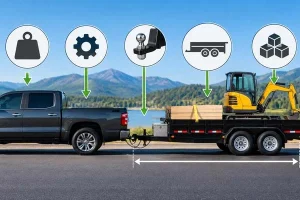
An equipment tilt trailer is often the better choice when buyers need easier loading, safer equipment movement, and fewer delays on the jobsite. Instead of setting up heavy ramps every time you move a skid steer, mini excavator, compact tractor, mower, UTV, scissor lift, or small machine, the trailer deck tilts down and becomes the loading surface. That sounds simple, but for a contractor, landscaper, farmer, rental company, or equipment dealer, it can make the whole hauling process feel more controlled. If your current ramp trailer slows the crew down, scrapes low-clearance machines, or makes loading feel stressful, a tilt trailer may solve a real daily problem rather than just add another feature.

Buyers should not choose an equipment tilt trailer only because it looks stronger or more convenient in photos. The right trailer depends on payload capacity, deck length, deck width, tilt angle, axle rating, brake setup, tie-down layout, frame strength, tire rating, and the towing vehicle. A trailer that works well for a zero-turn mower may not be the right trailer for a compact track loader. A trailer that can carry a machine on paper may still be awkward if the deck is too short, the loading angle is too steep, or the tie-down points are poorly placed. This guide is written for buyers who want practical answers before spending money, not vague sales talk.
An equipment tilt trailer is a flatbed-style trailer with a deck that tilts toward the ground for loading and unloading equipment. The main benefit is that the deck itself replaces traditional loading ramps. When the rear of the deck lowers, the operator can drive or winch the machine onto the trailer more smoothly. After the load moves forward and the deck returns to travel position, the operator secures the machine with properly rated chains, straps, or binders. For buyers moving equipment several times a week, this design can save time and reduce the small frustrations that come with loose ramps.
The most common users include contractors, landscapers, farmers, rental yards, property maintenance teams, equipment dealers, auto repair shops, and small fleet owners. These buyers usually care about the same things: how fast the trailer loads, how stable it feels, whether the machine fits, how easy it is to secure the load, and whether the trailer can stand up to daily use. A good equipment tilt trailer should not feel like a risky shortcut. It should feel like a working tool that makes loading more predictable, especially when the operator is dealing with heavy equipment, tight schedules, uneven ground, or low-clearance machines.
Many buyers choose an equipment tilt trailer because ramp loading becomes annoying after enough trips. Ramps can be heavy, muddy, bent, misplaced, or hard to align with different equipment widths. If one person handles loading alone, ramps can become the slowest part of the job. A tilt deck removes much of that setup work. The operator does not need to pull ramps out, space them correctly, pin them in place, and store them again after loading. For businesses where time matters, that cleaner loading process is a serious advantage.
Another reason is loading angle. A standard ramp trailer can work well for machines with good ground clearance, but it can cause trouble for scissor lifts, low mowers, compact cars, small rollers, and equipment with attachments close to the ground. A tilt trailer usually offers a smoother approach, especially when the deck length and tilt angle are properly matched to the machine. The goal is not only to get the equipment onto the trailer. The goal is to load without scraping, bouncing, spinning tires, or making the operator feel like one small mistake could damage the machine.
Low-clearance equipment is one of the strongest reasons to buy an equipment tilt trailer. A mower deck, scissor lift frame, compact car bumper, or small machine attachment can hit the ramp or trailer edge if the loading angle is too steep. That is not just inconvenient. It can damage the equipment, slow the crew down, and make operators nervous the next time they need to load. A tilt trailer gives the load a more direct path onto the deck, which can be helpful when the machine sits low or has a long wheelbase.
Still, buyers should check the actual tilt angle before making a decision. Not every tilt trailer loads the same way. Deck height, trailer length, tire size, hydraulic cushioning, and ground conditions all affect the loading experience. A trailer that works beautifully on flat concrete may feel different on gravel, grass, or a sloped jobsite. If you often move low-clearance equipment, ask the supplier for the deck height, loading angle, and real loading examples. A reliable seller should be able to explain which machines the trailer is designed to handle and where the limits are.
A good equipment tilt trailer reduces the number of loose parts the crew has to manage. That may sound like a small thing, but anyone who has used a trailer every day knows how quickly small steps become real delays. Ramps get buried under mud. Pins disappear. Slide-in ramps jam when dirt builds up. Fold-up ramps can be awkward in tight spaces. When the deck tilts, the trailer becomes easier to use because the loading surface is already built into the trailer.
This advantage becomes even more valuable when different employees use the same trailer. A tilt trailer creates a more repeatable loading process. Operators still need training, and the load still needs to be secured properly, but there are fewer chances to set the ramps at the wrong width or forget to lock them back in place. For a company trying to reduce downtime, equipment damage, and field mistakes, that kind of simple consistency can be worth more than it looks on a price sheet.
The best equipment tilt trailer for your work is not always the biggest or the most expensive one. It is the trailer that fits your heaviest realistic load, your towing vehicle, your loading conditions, and your daily workflow. Before comparing prices, buyers should understand the trailer’s GVWR, empty weight, payload capacity, axle rating, tire rating, brake system, deck size, tilt angle, coupler rating, jack rating, suspension, frame design, and tie-down layout. These details decide whether the trailer will work smoothly after delivery.
A serious buyer should also think about how the trailer will be used six months from now. Will you haul only one machine, or will the trailer carry different equipment every week? Will it travel on highways, farms, construction sites, residential streets, or rough yards? Will one trained operator use it, or will several crew members share it? The answers affect the trailer choice. If the trailer is used commercially, it may be smarter to buy more payload margin, stronger tie-down points, better brakes, and a smoother tilt system instead of choosing the cheapest model that barely meets today’s needs.
| Specification | Why It Matters | Buyer Advice |
|---|---|---|
| GVWR | Shows the maximum rated trailer weight when loaded. | Do not confuse GVWR with usable payload. |
| Payload Capacity | Shows how much weight the trailer can legally carry. | Compare this with your heaviest machine plus attachments. |
| Empty Weight | The trailer weight before cargo is added. | A heavier trailer leaves less room for payload. |
| Deck Length | Affects machine fit, balance, and attachment space. | Leave space for buckets, blades, ramps, toolboxes, and tie-down angles. |
| Deck Width | Decides whether the machine fits comfortably. | Measure the widest point, not just the tire width. |
| Tilt Angle | Affects loading clearance and operator confidence. | Lower angles are better for low-clearance equipment. |
| Brake System | Helps control heavier loads during towing. | For heavy equipment, brakes on both axles are often preferred. |
| Tie-Down Points | Help secure equipment during transport. | Check rating, placement, and ease of access before buying. |
GVWR, payload capacity, and empty weight are the three numbers every equipment tilt trailer buyer should understand before comparing models. GVWR means Gross Vehicle Weight Rating. It includes the trailer and the cargo together. Empty weight is the trailer weight before loading. Payload capacity is what remains after subtracting the empty weight from the GVWR. For example, if a trailer has a 14,000 lb GVWR and weighs about 3,500 lb empty, the usable payload is around 10,500 lb before added accessories are considered.
The mistake many buyers make is thinking a 14,000 lb trailer can carry 14,000 lb of equipment. It cannot. The trailer itself uses part of that rating. A toolbox, winch, spare tire, hydraulic system, heavier deck, side rails, chains, binders, fuel, and attachments can all reduce the remaining payload. If your skid steer weighs 9,800 lb and your trailer payload is about 10,200 lb, the numbers may look close enough, but the real margin is too thin for regular work. A better choice would give more breathing room so the trailer is not pushed to its limit every time it leaves the yard.
Deck size matters because equipment rarely behaves like a neat box on a spec sheet. A mini excavator may need extra room for the boom, bucket, and blade. A compact tractor may become much longer once an implement is attached. A skid steer may fit by length but still need better tie-down angles. An equipment tilt trailer should have enough deck length to position the load correctly, not just enough room to squeeze the machine onto the trailer. If the deck is too short, the operator may be forced to place the load in a poor balance position.
Deck width is just as important. Many equipment trailers are limited by the space between the fenders, while deckover trailers offer a wider platform. A lower deck between the fenders may be easier to load because the loading angle is gentler. A deckover trailer may carry wider machines but often sits higher, which can increase the loading angle. Before buying, measure the widest part of your equipment, including tires, tracks, attachments, guards, mirrors, mower decks, blades, or buckets. A trailer that technically fits with almost no side clearance may become stressful on muddy ground or in low light.
Tilt angle is one of the most important details for buyers moving low-clearance machines. A lower loading angle makes the trailer easier to use for scissor lifts, small rollers, low cars, compact mowers, and equipment with long overhangs. If the angle is too steep, the machine may scrape, lose traction, or shift weight too suddenly during loading. When buyers ask whether an equipment tilt trailer is suitable for their machine, tilt angle should be part of the first conversation.
Loading clearance also depends on ground conditions. Flat concrete gives the cleanest loading experience, while gravel, dirt, grass, mud, and jobsite slopes can change the way the trailer behaves. A deck that tilts smoothly on a dealer lot may feel different when a compact track loader climbs onto it after rain. Buyers should ask whether the tilt system is cushioned, whether the deck drops suddenly, and whether the deck surface offers enough traction. A trailer used in real work should be judged by real work conditions, not only by a clean showroom demonstration.
A gravity tilt equipment trailer uses the weight of the load and the balance of the deck to tilt and return. A hydraulic tilt trailer uses a hydraulic cylinder or hydraulic cushioning to control deck movement. Both designs can work, but they feel different during loading. Gravity tilt designs are often simpler, with fewer powered parts. Hydraulic or cushioned systems usually offer smoother movement, especially when the trailer handles heavier machines or different types of equipment throughout the week.
For daily use, control is the big difference. When the machine moves forward on the deck, the deck eventually reaches a balance point and begins to return to travel position. If that movement is sudden, the operator may feel a jolt. That can be uncomfortable when loading heavy equipment or machines with a high center of gravity. A hydraulic cushion can make the motion slower and easier to predict. For businesses that value operator confidence and equipment protection, a smoother tilt action can be a strong reason to choose a better-built model.
| Type | Best For | Main Advantage | Buyer Concern |
|---|---|---|---|
| Gravity Tilt Trailer | Simple, repeatable hauling with predictable loads. | Simple structure and fewer powered components. | Deck movement may feel less controlled with some loads. |
| Hydraulic Tilt Trailer | Daily commercial hauling, heavier machines, and mixed equipment. | Smoother deck movement and better loading control. | Hydraulic parts need inspection and maintenance. |
A bumper pull equipment tilt trailer connects to a receiver hitch at the rear of the towing vehicle. A gooseneck equipment tilt trailer connects inside the bed of a pickup truck, usually closer to the rear axle. Both styles can be useful, but they serve different buyers. Bumper pull trailers are often easier to share across different trucks and are popular for moderate equipment hauling. Gooseneck trailers are often preferred for longer decks, heavier loads, and buyers who want better towing stability with a dedicated truck.
The choice should start with the tow vehicle and the load. A gooseneck trailer can feel more stable because the tongue weight sits closer to the truck’s rear axle, and it can also turn tightly in many work areas. However, it requires a truck with the correct gooseneck hitch. A bumper pull trailer may be more flexible for small fleets, but it can feel less stable as trailer length and loaded weight increase. Buyers should check towing capacity, payload capacity, hitch rating, brake controller setup, tire rating, and local rules before choosing either style.
A bumper pull equipment tilt trailer makes sense when the loads are moderate, the tow vehicles vary, and the buyer wants a practical setup that can move between trucks. Landscapers, small contractors, property maintenance teams, and farm users often like bumper pull trailers because they are familiar and easier to manage. If the trailer is not extremely long or heavily loaded, a properly matched bumper pull setup can be a good choice for daily work.
The main point is that the truck must be matched to the loaded trailer, not just the empty trailer. The trailer tongue weight counts against the truck’s payload capacity. Passengers, tools, fuel, bed equipment, and accessories also add weight. If the numbers are tight, the combination may feel poor on the road even if it seems acceptable on paper. Buyers should not assume that a truck can safely tow a loaded equipment tilt trailer just because it has done light trailer work before.
A gooseneck equipment tilt trailer is often a better match for heavier equipment, longer hauls, and buyers who use one dedicated truck for serious towing. The connection point helps distribute weight more effectively, and many drivers prefer the stable feel of a gooseneck under heavier loads. Contractors moving compact track loaders, larger skid steers, small excavators, multiple attachments, or mixed jobsite loads may find the gooseneck setup more comfortable for frequent use.
The tradeoff is flexibility. Not every truck can pull a gooseneck trailer. The truck needs the correct hitch installed in the bed, and the driver needs enough experience to handle the trailer in tight yards and on busy roads. A gooseneck trailer can turn well, but it still requires attention to clearance, bed rails, tailgate position, and trailer length. For a business that already has the right truck, the gooseneck style can be a strong long-term choice. For a smaller operation using different trucks, a bumper pull model may still be more practical.
The best way to choose an equipment tilt trailer is to start with your real load, not the trailer catalog. Write down the heaviest machine you plan to haul, then add attachments, fuel, tools, chains, binders, spare parts, and anything else that may ride on the trailer. Measure the equipment at its longest and widest points. Include buckets, blades, mower decks, guards, tracks, mirrors, and implements. Many buyers only check the base machine dimensions, then discover later that an attachment creates the real fit problem.
Once the machine size and weight are clear, compare them with trailer payload, deck length, deck width, tilt angle, and tie-down layout. Think about the loading location as well. Loading on a flat yard is easier than loading on a narrow roadside or uneven farm entrance. If your equipment changes often, choose more flexibility than you need today. A trailer that only fits one machine perfectly may become frustrating when your business adds a different machine next season.
| Load Type | Trailer Feature to Prioritize | Why It Matters |
|---|---|---|
| Skid Steer | High payload, strong deck, quality brakes, strong tie-down points. | Skid steers are compact but very heavy for their size. |
| Mini Excavator | Deck length, payload margin, flexible tie-down placement. | Boom, blade, and bucket position affect balance. |
| Zero-Turn Mower | Low loading angle, deck traction, easy tilt movement. | Mower decks can scrape on steep approaches. |
| Scissor Lift | Smooth tilt control, low angle, stable deck surface. | Low clearance and traction are very important. |
| UTV or ATV | Comfortable deck width and quick loading design. | These machines are often loaded and unloaded frequently. |
| Compact Car | Low approach angle, winch option, full-width deck. | Low bumpers and disabled vehicles need careful loading. |
Load securement should be treated as part of the buying decision, not something to figure out after the trailer arrives. An equipment tilt trailer needs strong, well-placed tie-down points that match the machines you actually haul. Heavy equipment should be secured with properly rated chains, binders, straps, or other approved devices. If the tie-down points are hard to reach or placed at poor angles, operators may take shortcuts. That is exactly what a buyer should avoid.
Weight distribution is just as important as securement. The machine should be positioned so the trailer has proper tongue weight and stable balance. Too much weight behind the axles can cause sway. Too much weight forward can overload the tow vehicle or hitch. Side-to-side imbalance can also create handling problems. When you look at a trailer, imagine where your machine will sit and where each chain will go. If that plan is not clear, the trailer may not be the right fit for your work.
Good loading habits protect the trailer, the equipment, and the people around it. Park on firm, level ground when possible. Check that the coupler is locked, safety chains are connected, the breakaway cable is attached, and the trailer wheels are stable before loading. Move slowly and keep the machine straight on the deck. After the deck returns to travel position, confirm that the latch is locked before securing the load. These steps may feel basic, but they prevent many avoidable problems.
After securing the equipment, inspect the tie-downs from more than one angle. Chains or straps should not rub against sharp edges unless protected. Attachments should be lowered or secured so they cannot move during transport. After driving a short distance, stop and recheck everything. Loads can settle, straps can loosen, and chains can shift. A few minutes of checking is much cheaper than repairing damaged equipment or dealing with a roadside problem.
The most common mistake is buying an equipment tilt trailer that is too close to the limit. A trailer that barely handles your heaviest machine leaves little room for attachments, fuel, tools, chains, or future equipment. It may also wear faster because it is constantly working near its maximum rating. Buyers often focus on the listed GVWR and forget to check the actual payload. That shortcut can lead to disappointment once the trailer is put to work.
The second mistake is ignoring the loading angle. If you move low-clearance equipment, the tilt design matters as much as the weight rating. A heavy-duty trailer with a steep deck angle may still be the wrong choice for certain machines. The third mistake is overlooking the tow vehicle. Your truck must be able to handle the loaded trailer, not only pull it around the yard when empty. Before placing an order, check towing capacity, payload capacity, hitch rating, brake controller compatibility, and tire condition. A strong trailer still needs a proper truck behind it.
A well-built equipment tilt trailer still needs regular maintenance. Tires should be checked for pressure, uneven wear, cracking, and age. Wheel bearings need inspection and lubrication. Brakes should be tested, adjusted, and repaired when needed. Lights, wiring, breakaway battery, coupler, safety chains, jack, and latches should be inspected before trips. The tilt mechanism also needs attention. Check the pivot points, hydraulic cylinder, hoses, latch, and deck movement so small problems do not become expensive failures.
The deck and frame need care as well. Wood decking can loosen, crack, rot, or wear down under tracked equipment. Steel decking can rust if the coating is damaged. Mud, road salt, fertilizer, chemicals, and standing water can shorten the life of a trailer if they are not cleaned away. If the trailer works near coastal areas, farms, winter roads, or muddy jobsites, corrosion protection becomes more important. A trailer is a working asset. Treat it like equipment, and it will usually pay back that care with longer service life and fewer surprises.
Before ordering an equipment tilt trailer, ask questions that connect directly to your daily work. What is the real payload capacity after options are added? What is the deck width between the usable edges? What is the deck height? What is the tilt angle? Does the deck movement use hydraulic cushioning? Are the brakes installed on one axle or both axles? What tire rating does the trailer use? Where are the tie-down points, and what are they rated for? These questions help you avoid buying a trailer that only looks right from a distance.
You should also ask about customization if your work has special needs. Some buyers need a winch, toolbox, spare tire mount, adjustable coupler, heavier jack, treated deck, steel deck, extra D-rings, side steps, stake pockets, or a different deck length. Others need a specific color, branding, axle setup, or export configuration. If the trailer will be used by a business, it is worth discussing these details before production or purchase. A small change made before delivery can be far easier than modifying the trailer later.
An equipment tilt trailer is a practical choice for buyers who need easier loading, better control, and less ramp-related hassle. It is especially useful for skid steers, mini excavators, compact tractors, mowers, UTVs, scissor lifts, small machines, and low-clearance vehicles. The tilt deck can save time, reduce loading frustration, and make the hauling process more repeatable for different operators. But the trailer still needs to be chosen carefully. Payload, deck size, tilt angle, brakes, tie-downs, frame strength, and tow vehicle capacity all matter.
The best trailer is the one that fits your real workload, not just the one with the strongest-looking photos or the lowest price. Before buying, measure your equipment, check the weight with attachments, think about where you load, and plan how the machine will be secured. A good equipment tilt trailer should make the hard part of hauling feel more manageable. It should help your crew load with confidence, move equipment safely, and get back to work without wasting time on preventable problems.
An equipment tilt trailer is used to haul machines and vehicles that need a smoother loading surface than standard ramps can provide. Common loads include skid steers, mini excavators, compact tractors, zero-turn mowers, UTVs, scissor lifts, generators, small rollers, and compact cars. The tilting deck lowers toward the ground, allowing the operator to load without pulling out separate ramps. This makes it useful for businesses that load and unload equipment often, especially when time, clearance, and operator confidence matter.
An equipment tilt trailer is often better when loading speed, low clearance, and fewer loose parts are important. A ramp trailer can still work well for simple hauling, especially when the equipment has enough clearance and the operator does not mind handling ramps. The better choice depends on your load and how often you haul. If your crew loads equipment every day or often struggles with ramps, a tilt trailer can be a more practical long-term choice.
The right size depends on your equipment weight, equipment length, equipment width, attachments, and towing vehicle. Start with the heaviest machine you expect to haul, then add the weight of buckets, blades, fuel, chains, binders, tools, and any cargo that may ride with it. Compare that total to the trailer’s payload capacity, not only the GVWR. For deck size, measure the widest and longest points of the machine, including attachments and guards. A trailer that barely fits may be frustrating in real jobsite conditions.
A gravity tilt trailer uses the weight and balance of the load to move the deck. A hydraulic tilt trailer uses hydraulic control or hydraulic cushioning to make the tilt movement smoother. Gravity tilt designs are usually simpler, while hydraulic systems often feel more controlled when loading heavier or more expensive equipment. For occasional use with predictable loads, gravity tilt may be enough. For daily commercial hauling, many buyers prefer hydraulic cushioning because it can make loading feel steadier and less sudden.
Yes, an equipment tilt trailer can haul a skid steer if the trailer has enough payload capacity, deck strength, brake capacity, tire rating, and proper tie-down points. Skid steers are compact but heavy, so buyers should not judge by size alone. Check the skid steer weight with attachments and compare it with the trailer’s real payload capacity. You also need enough deck length to place the machine correctly for proper tongue weight. If the trailer is too close to its limit, choose a heavier-rated model.
Yes, many equipment tilt trailers can haul mini excavators, but the trailer must be matched carefully. A mini excavator needs enough payload capacity and deck length for the machine, boom, blade, and bucket. The operator must position the excavator so the trailer has safe weight distribution. Tie-down points should be placed where chains can secure the machine properly. If you haul different buckets or attachments with the excavator, include those in your weight and space calculations before choosing the trailer.
For heavier equipment hauling, trailer brakes are very important and may also be legally required depending on local rules and loaded weight. Brakes help the towing vehicle control the trailer during stops, downhill travel, and emergency situations. Many buyers prefer brakes on both axles for heavier equipment trailers because the load can be demanding. Before buying, check the brake type, brake controller compatibility, axle setup, and local towing requirements. A trailer that carries heavy equipment should not rely only on the tow vehicle to stop the full combination.
Load on firm, level ground when possible. Make sure the trailer is properly connected to the tow vehicle before loading. Unlock the tilt deck, line up the machine straight, and move slowly onto the deck. After the deck returns to travel position, lock the deck and secure the equipment with properly rated chains, straps, or binders. Check the tie-downs, lights, brakes, tires, hitch, safety chains, and breakaway cable before leaving. After driving a short distance, stop and inspect the load again because chains and straps can settle.
Before buying, check GVWR, payload capacity, empty weight, deck length, deck width, tilt angle, axle rating, tire rating, brake setup, coupler rating, jack rating, suspension, tie-down placement, frame design, and warranty terms. You should also confirm whether the trailer fits your towing vehicle and your loading environment. Ask how the deck tilts, whether the tilt action is cushioned, and how the trailer handles the equipment you plan to move. A good buying decision should be based on real loads and real working conditions.
A gooseneck equipment tilt trailer can be worth it if you haul heavier loads, use a dedicated truck, or need better towing stability for frequent work. The gooseneck connection places weight closer to the truck’s rear axle, which can improve handling compared with some bumper pull setups. However, it requires a truck with the correct hitch installed in the bed. For small fleets that share trailers across different trucks, a bumper pull model may be more flexible. The better choice depends on load weight, truck setup, driver experience, and jobsite space.