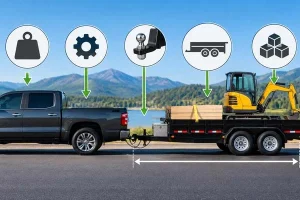
Choosing between different car trailer types is not just about picking a trailer that looks strong or has the right price tag. The real question is simple: what are you hauling, how often will you haul it, and what problems do you want to avoid on the road? A buyer moving standard sedans for local delivery does not need the same setup as a race team hauling a low-clearance car, and a farm owner moving equipment will look at trailers very differently from a classic car collector. When you understand the main types of car trailers, you can match the trailer to the job instead of forcing one trailer to handle every task. That makes loading safer, reduces wear on the tow vehicle, protects the cargo, and helps you avoid paying for features you may never use.

The most important thing to know before comparing car trailer types is that each trailer design solves a different hauling problem. An open car trailer is built for practical transport and easy access. An enclosed car trailer is built for protection. A tilt trailer is built to make loading easier, especially when ramp angle matters. A gooseneck trailer is built for heavier loads and better towing stability. If you only compare trailers by length, axle count, or price, you may miss the bigger picture. The right trailer should match your cargo weight, vehicle height, loading method, route conditions, weather exposure, and daily operating habits. For commercial buyers, this decision also affects labor time, maintenance cost, and customer trust.
Think of a car trailer like a work tool. A hammer, wrench, and drill are all useful, but each one has its place. The same logic applies here. A steel open trailer may be perfect for a repair shop moving cars across town, but it may not satisfy a luxury vehicle transporter who needs weather protection and a cleaner customer experience. A hydraulic tilt trailer may cost more at the beginning, but if your team loads low-profile cars every day, that added convenience can save time and reduce damage risk. Buyers who look beyond the surface usually make better decisions because they are not buying a trailer in isolation. They are buying smoother loading, safer transport, and fewer surprises after delivery.
An open car trailer is one of the most common choices for vehicle transport because it is practical, flexible, and usually more affordable than enclosed options. This type of trailer has an open deck with no full walls or roof, which makes the vehicle easy to inspect, load, strap down, and unload. For many buyers, especially repair shops, car dealers, auction buyers, and small transport businesses, an open car trailer provides the best balance between cost and function. It does not hide the vehicle from weather or road debris, but it gives you fast access and a lower operating weight. If your main goal is moving standard cars, small SUVs, or light equipment without paying for a fully enclosed body, this is often the first trailer type worth considering.
Open car trailers work well when the cargo does not require full weather protection and when easy loading access matters more than appearance control. For example, a used car dealer may use an open trailer to move vehicles from auction lots to the dealership. A mechanic may use one to pick up non-running cars from nearby customers. A farm owner may use the same trailer for a compact tractor one week and an ATV the next. The open deck makes this kind of mixed use easier because workers can reach tie-down points from different angles. This matters more than many new buyers realize, because proper cargo securement is not just a small detail. It is part of safe hauling and professional operation.
The biggest advantage of an open car trailer is that it keeps the buying and ownership process simple. It usually costs less, weighs less, and has fewer enclosed-body parts to maintain. Lower trailer weight can also help preserve more of your towing capacity for the vehicle itself, which matters when your tow vehicle has a strict limit. The trade-off is exposure. Rain, dust, gravel, snow, road salt, and sunlight can all affect the vehicle during transport. If you haul high-value cars, freshly restored vehicles, or customer cars over long distances, those risks may become unacceptable. In that case, the lower price of an open trailer may not be enough to offset the protection gap.
An enclosed car trailer is designed for buyers who care about protection, privacy, and presentation. Unlike an open trailer, an enclosed trailer surrounds the vehicle with walls and a roof, shielding it from weather, road debris, and casual visibility. This makes it a strong choice for race teams, classic car owners, luxury vehicle transporters, custom car shops, and professional haulers who want a cleaner delivery experience. The enclosed body also gives businesses space for branding, tool storage, spare parts, and organized equipment. If your customer expects the vehicle to arrive clean and protected, an enclosed trailer can support that expectation in a way an open deck cannot.
An enclosed car trailer makes the most sense when the cargo value is high or when the vehicle condition must be protected during the full trip. A classic car owner may not want paint exposed to gravel and road spray. A race team may need room for tools, tires, and parts along with the car. A luxury transport company may use enclosed trailers because customers are paying for confidence, not just movement from one place to another. In these situations, the enclosed trailer becomes part of the service quality. It says that the vehicle is being handled with care, and that can matter when customers compare transport providers.
The main drawback of an enclosed car trailer is that protection adds weight, cost, and wind resistance. You may need a stronger tow vehicle, better fuel planning, and more space for storage and maneuvering. Enclosed trailers can also feel less forgiving for new drivers because side wind has a larger surface to push against. Maintenance may include doors, hinges, panels, roof seals, interior flooring, and lighting. That does not mean enclosed trailers are a poor choice. It simply means they should be purchased for the right reason. If you do not need weather protection, privacy, or tool storage, an enclosed trailer may be more trailer than your job requires.
A tilt car trailer is built to make loading easier by allowing the deck to tilt toward the ground. This design reduces the need for long ramps and helps create a smoother loading angle. If you have ever watched a low-clearance car scrape its front bumper on a steep ramp, you already understand why tilt trailers exist. They are popular with buyers who move sports cars, lowered cars, small equipment, forklifts, golf carts, and vehicles that do not handle steep loading angles well. Instead of fighting the ramp every time, the trailer itself becomes part of the loading system. For buyers who load often, that convenience can quickly become a major advantage.
A gravity tilt trailer uses weight and balance to tilt the deck, while a hydraulic tilt trailer uses a hydraulic system to control deck movement. Gravity tilt designs are usually simpler and may cost less, which can work well for lighter-duty or occasional use. Hydraulic tilt trailers give the operator more control, especially when loading heavier vehicles or working alone. That control matters when the cargo is expensive, low to the ground, or difficult to reposition once it starts moving. A hydraulic tilt trailer may require more maintenance because hydraulic parts need attention, but many buyers accept that trade-off because the loading process feels safer, smoother, and more predictable.
A flatbed car trailer is a strong choice for buyers who want more than simple vehicle transport. The open, flat platform allows the trailer to carry cars, machinery, pallets, farm tools, building materials, and oversized items that may not fit well inside a closed trailer. This makes flatbed trailers popular with contractors, farmers, equipment dealers, rental companies, and mixed-use commercial fleets. If your work changes from week to week, a flatbed gives you room to adapt. You are not locked into one narrow use case, and that flexibility can make a big difference for small businesses that need one trailer to handle several jobs.
Buyers often choose flatbed trailers when cargo access is just as important as cargo space. Loading from the side can be helpful when using a forklift or when the cargo does not roll onto the trailer like a car. A flatbed also gives more freedom when hauling irregular equipment or materials that would be awkward inside an enclosed trailer. The main thing to watch is cargo securement. Because the load is exposed and often varied, tie-down points, deck strength, axle rating, and balance become critical. A flatbed is extremely useful, but it rewards careful loading habits. If your team treats it casually, the same flexibility that makes it useful can also create risk.
A gooseneck car trailer connects to a hitch mounted in the bed of a pickup truck, usually over or near the rear axle. This design gives the trailer better weight distribution and more stable towing behavior than many bumper-pull setups, especially with heavier loads. Commercial haulers often like gooseneck trailers because they can handle more serious work, longer decks, and heavier vehicles. If you move multiple cars, larger trucks, or equipment, a gooseneck trailer may give you the capacity and control that a smaller bumper-pull trailer cannot provide. It is not the right choice for every buyer, but for heavy-duty transport, it deserves serious attention.
Gooseneck trailers are common in professional transport because stability matters more as weight increases. A loaded trailer can push, pull, and sway differently depending on road speed, wind, braking, and cargo position. By placing the connection point in the truck bed, a gooseneck setup often feels more planted and controlled. This is useful for auto dealers, auction haulers, farm operators, and equipment transport businesses. The trade-off is that you need the right truck and hitch setup. A gooseneck trailer is not something to buy casually if your tow vehicle is not prepared for it. Before choosing one, check towing capacity, payload rating, braking system compatibility, and local regulations.
Drop deck and lowboy trailers are designed for loads that need a lower deck height. This is especially useful when hauling taller equipment, heavy machinery, or vehicles where overall height could become a problem. By lowering the deck, these trailers can improve clearance and help keep the center of gravity lower. That can make transport safer and more stable for certain heavy loads. While these trailers are not usually the first choice for ordinary passenger cars, they are important in construction, agriculture, industrial transport, and equipment rental operations. If the load is tall, heavy, or awkward, deck height becomes one of the most important details in the buying decision.
A low deck design is valuable when the cargo height affects route planning or road safety. For example, a contractor moving equipment may need to pass under bridges, power lines, or facility entrances. A lower deck can reduce the total loaded height and make the trailer easier to use with certain machines. It can also improve loading angle, depending on the trailer structure. However, these trailers are usually more specialized than standard open car trailers. Buyers should consider whether they truly need the lower deck or whether a standard flatbed, tilt trailer, or equipment trailer can handle the job more efficiently. Specialization is useful, but only when the workload justifies it.
Material choice can change the trailer ownership experience just as much as trailer type. Aluminum trailers are often lighter and more resistant to corrosion, while steel trailers are usually more affordable upfront and widely used in heavy-duty work. Neither material is automatically better for every buyer. If you operate near coastal air, winter road salt, or wet conditions, corrosion resistance may matter more than purchase price. If your work is rough, local, and budget-sensitive, steel may still be the practical choice. Many buyers make the mistake of choosing material based only on reputation. A better approach is to look at your working environment, maintenance habits, repair access, and long-term cost.
| Comparison Point | Aluminum Car Trailer | Steel Car Trailer |
|---|---|---|
| Weight | Lighter, which may help with payload efficiency and towing comfort. | Heavier, which can reduce available payload depending on the tow vehicle. |
| Corrosion Resistance | Better natural corrosion resistance, useful in coastal or wet environments. | Needs paint, coating, galvanizing, or regular maintenance to fight corrosion. |
| Upfront Cost | Usually higher at purchase. | Usually lower at purchase. |
| Repair Access | May require more specialized repair skills. | Often easier to repair through common welding and fabrication shops. |
| Best Fit | Long-distance hauling, corrosion-prone regions, and buyers focused on weight savings. | Budget-sensitive buyers, rugged work, and operations with reliable maintenance routines. |
The easiest way to choose the right car trailer type is to start with your real workload, not with a product photo. Ask yourself what you haul most often, how heavy the load is, how low the vehicle sits, how far you travel, and whether the cargo needs protection from weather or theft. A buyer hauling standard vehicles locally may do well with an open car trailer. A buyer moving high-value cars across states may need an enclosed trailer. A buyer loading sports cars every day may benefit from a hydraulic tilt trailer. A buyer hauling several vehicles or heavier equipment may need a gooseneck setup. The right answer becomes much clearer when you describe the job first.
You should also think carefully about your tow vehicle. A strong trailer does not help if the truck cannot safely pull it when loaded. Check towing capacity, payload rating, hitch type, trailer brakes, tire rating, and gross vehicle weight rating before you commit. This is where many buyers get into trouble. They look at the empty trailer weight but forget the loaded weight. A trailer may look manageable on paper until the car, fuel, tools, winch, spare tires, and accessories are added. A smart purchase leaves enough margin for real-world use because roads are not always flat, weather is not always calm, and emergency braking does not wait for ideal conditions.
One common mistake is buying the cheapest trailer that seems large enough. Size matters, but structure, axle rating, deck height, ramp design, tie-down layout, braking system, and material quality matter too. Another mistake is copying another buyer's choice without considering the job. Your neighbor's open steel trailer may work perfectly for weekend hauling, but it may not work for your low-clearance vehicle or commercial route. Some buyers also ignore storage and maintenance. An enclosed trailer may protect the cargo, but it also needs space and care. A steel trailer may save money upfront, but it needs corrosion control. The goal is not to avoid every cost. The goal is to spend money in the areas that protect your actual operation.
Car trailer types are easier to understand when you connect each design to a real hauling problem. Open car trailers are practical and cost-effective for everyday vehicle transport. Enclosed trailers protect valuable cargo and improve presentation. Tilt trailers make loading easier when ramp angle matters. Flatbed trailers give mixed-use buyers more flexibility. Gooseneck trailers offer better stability for heavier commercial work. Drop deck and lowboy trailers solve height and heavy-equipment challenges. Once you know what each trailer does best, the buying decision becomes less confusing. You are no longer asking which trailer is popular. You are asking which trailer will help you load faster, tow safer, protect cargo better, and reduce ownership headaches over time.
For general vehicle hauling, an open car trailer is often the most practical choice because it is affordable, easy to load, and simple to maintain. It works well for repair shops, dealers, auction buyers, and private owners who move standard cars over short or medium distances. However, it is not always the best option for expensive vehicles or harsh weather routes. If the vehicle needs protection from rain, road debris, or theft exposure, an enclosed trailer may be a better fit. The best choice depends on how valuable the cargo is and how much protection the transport job requires.
An enclosed car trailer is worth the higher price when the cargo value, customer expectation, or transport conditions justify the investment. If you haul classic cars, race cars, luxury vehicles, show cars, or high-value customer vehicles, the added protection can be very useful. It helps shield the vehicle from weather, dust, gravel, and casual visibility. It can also create a more professional delivery experience for paid transport services. If you only haul standard vehicles locally and weather exposure is not a concern, the extra cost and weight may not be necessary.
A tilt car trailer is usually the better choice for low-clearance cars because it reduces the loading angle compared with many standard ramp setups. Hydraulic tilt trailers are especially helpful because they give the operator more control during loading and unloading. This can reduce scraping risk for sports cars, lowered vehicles, and custom cars with long front overhangs. Long ramps can also help, but they may be harder to store and handle. If low-clearance loading is part of your regular work, a tilt trailer is often worth serious consideration.
Choose aluminum if weight savings and corrosion resistance are high priorities. This can be helpful for long-distance hauling, wet climates, coastal regions, or buyers who want to preserve more towing capacity for the cargo. Choose steel if upfront cost, rugged use, and easier local repair matter more. Steel trailers are common for heavy-duty work, but they need better corrosion maintenance, especially if exposed to salt or moisture. The right material depends on your environment, budget, maintenance habits, and how long you plan to keep the trailer.
A gooseneck car trailer makes sense when you need more stability, higher capacity, or a longer trailer for commercial hauling. It is commonly used by auto transporters, equipment haulers, farm operators, and businesses that move heavier loads. The hitch position in the truck bed can improve towing control compared with many bumper-pull trailers. However, you need a compatible truck and proper hitch setup. Before buying a gooseneck trailer, check your truck's towing capacity, payload rating, brake controller setup, and whether your drivers are comfortable with this style of trailer.
Yes, but you need to choose the trailer carefully. A flatbed trailer or heavy-duty open trailer is often the best fit for mixed-use hauling because it can carry vehicles, equipment, pallets, and materials. The key is making sure the trailer has the right axle rating, deck strength, tie-down points, ramp system, and braking setup. A trailer that works for a compact car may not be suitable for a skid steer or tractor. If mixed-use hauling is your main goal, buy for the heaviest and most difficult load, not just the easiest one.