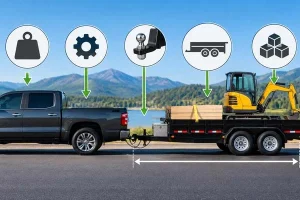
A hydraulic car hauler trailer is built for one thing: making vehicle loading feel controlled, predictable, and low-stress, even when you are dealing with a heavy SUV, a low-clearance sports car, or a non-running vehicle that needs a winch. If you have ever wrestled with loose ramps on uneven ground, you already know why people search for an electric hydraulic tilt car hauler trailer or a hydraulic tilt deck car hauler trailer in the first place. With hydraulics, the trailer deck tilts or lowers using cylinders and a pump, so you get a smoother approach angle and a safer loading path. That means less scraping, less wheel spin, fewer awkward moments, and fewer “one more inch” guesses when you are trying to line up a vehicle perfectly. In real-world transport work, the time you save adds up fast, but the bigger win is safety: fewer accidents during loading, fewer damaged bumpers, and fewer close calls when you are working alone. If you haul cars for a living, run a dealership, move cars for auctions, or transport race cars and classics, a hydraulic car hauler trailer is not just a nice upgrade, it is often the difference between a smooth routine and a stressful job.

A hydraulic car hauler trailer is a vehicle transport trailer that uses a hydraulic system to tilt the deck, lift the deck, or lower the deck toward the ground so a car can be driven or pulled on with minimal effort. Think of it like turning the trailer bed into a controlled “bridge” between the ground and the deck, instead of relying on two separate ramps that can slip, bounce, or change angle depending on where you park. The hydraulic system typically includes a pump, hydraulic fluid, hoses, and one or two hydraulic cylinders that move the deck. When you activate the system, the deck transitions smoothly, giving you a long, gentle loading angle that is far more forgiving for low vehicles. This is why hydraulic tilt car hauler trailers are popular for low-profile cars, performance builds, and vehicles with front lips that scrape easily. The definition matters because it helps you buy the right configuration: some buyers want a simple tilt deck, some want a drop deck hydraulic car trailer that can lower closer to the ground, and some want a hybrid setup designed for specific vehicle types. The main point is simple: hydraulics replace physical struggle with controlled motion, and controlled motion is what prevents damage and reduces loading risk.
The working principle is straightforward, but the impact is huge. A hydraulic pump pushes pressurized fluid into a cylinder, and that pressure creates force that moves the deck. If you have a hydraulic tilt deck car hauler trailer, the cylinder raises one end of the deck so the back tilts down to the ground, forming a ramp-like approach that is integrated into the trailer itself. If you have a hydraulic drop deck car hauler trailer, the cylinders lower the entire deck closer to ground level, which can be even better for ultra-low vehicles. The reason this feels so stable is that hydraulics move with steady force rather than sudden jumps, so the deck does not slam or bounce the way ramps can. Many premium designs use a dual hydraulic cylinder setup, which balances the lift so the deck stays level left-to-right, especially on uneven loading surfaces. That matters if you load on job sites, gravel lots, or driveways where one side of the trailer might sit slightly lower. In daily use, the “magic” is not magic at all, it is controlled force and consistent motion, and that consistency is what helps one person load safely without needing a team.
Hydraulics are used because they deliver high force with fine control, and that combination is exactly what you want when you are handling valuable vehicles. A car trailer is not just carrying weight, it is carrying weight that rolls, shifts, and sometimes does not brake well if the vehicle is dead. When you load with a hydraulic tilt car hauler trailer, you can stop the deck at the angle you want, adjust gradually, and keep the vehicle centered. That matters when you are trying to avoid scraping a splitter on a sports car or when you need a low approach angle for a lowered sedan. Hydraulics also reduce operator fatigue, which is a real safety issue in transport work. The less you fight the equipment, the more attention you can put on straps, wheel positioning, tongue weight, and load balance. Another reason is speed and repeatability: if you load vehicles multiple times per day, a remote-controlled hydraulic car hauler trailer turns a slow, physical workflow into a consistent routine. And if you care about professionalism, hydraulic loading looks cleaner and safer to customers, which can be a quiet advantage when you are trying to win repeat business in car hauling or dealership logistics.
Not all hydraulic car hauler trailers are the same, and choosing the wrong type can feel like buying the right shoes in the wrong size. The best fit depends on how often you load, what you load, and where you load. Some buyers want the convenience of an electric hydraulic tilt deck car hauler trailer with one-button operation. Others prefer a manual hydraulic tilt trailer because it is simpler, less dependent on battery condition, and often easier to maintain in basic fleets. If you frequently haul low-clearance vehicles, then a hydraulic drop deck car hauler trailer can be the most confidence-inspiring option because it reduces the approach angle even further. What matters is matching the trailer design to your reality: are you loading daily or occasionally, on flat concrete or uneven ground, moving standard sedans or modified cars with wide tires and low front ends. When you pick the right type, loading starts to feel like a controlled process, not a risky moment you have to “get through” every time.
An electric hydraulic tilt car hauler trailer is the go-to choice for buyers who want speed, consistency, and easy solo operation. The electric pump does the work, and you control the deck tilt with a switch or remote, which means you can stand where you have the best view of the wheels, the tie-down points, and the winch line if you are pulling a vehicle up. In practical terms, this is the best style for frequent loading because it reduces the small delays that add up in a busy workday. Many modern designs also place the hydraulic system and battery under the deck to keep the front area clear for a toolbox and better storage, which is a simple detail that makes the trailer feel more usable on the road. If you transport high-value vehicles, dual hydraulic cylinders are worth attention because they help the deck lift smoothly and reduce side-to-side tilt, especially when the ground is not perfectly level. Another advantage is flexibility: if you are loading a running car, you can drive it up gently; if the car is dead, you can winch it without changing your setup. This kind of trailer is a great fit for car dealerships, auction logistics, roadside recovery, and anyone who wants a professional loading workflow without relying on separate ramps.
A manual hydraulic tilt trailer is the practical option for buyers who want hydraulic loading benefits without depending on an electric motor, wiring, or battery charging habits. You still get the key advantage of hydraulics, which is controlled deck movement and a gentler loading angle compared to fixed ramp setups. With a hand pump, you raise or lower the deck using physical effort, but the hydraulic leverage means you are not muscling the deck directly, you are using pressurized fluid to multiply your force. This type is popular in budget-sensitive fleets, remote environments, or situations where simplicity is the top priority. Fewer electronic components can mean fewer troubleshooting moments, especially if the trailer is stored outdoors or used in rough conditions. Manual hydraulic tilt car hauler trailers also fit buyers who haul occasionally and do not want to maintain an electric system year-round. The main trade-off is speed: if you load cars daily, electric hydraulics usually pay for themselves through time saved and reduced fatigue. If you load cars weekly or monthly, manual hydraulic tilt can be a smart, reliable choice that still feels much safer than juggling loose ramps.
A hydraulic drop deck car hauler trailer is built for the people who hate steep angles, and that is a long list once you start hauling low cars. Instead of only tilting the deck, this design lowers the deck closer to the ground, sometimes to a near ground-touch position depending on the configuration. The benefit is a very shallow approach angle, which is exactly what you want for low-clearance sports cars, show cars, and vehicles with front splitters that scrape if you look at them the wrong way. If your customer base includes performance enthusiasts or luxury vehicles, this type can reduce loading drama and increase confidence. It also helps if you winch a lot of non-running vehicles because the lower angle reduces strain and improves traction as the vehicle rolls upward. Some advanced builds combine suspension features and hydraulic movement for even more control, which can be useful when loading on uneven surfaces. The downside is complexity and cost, but for specialized hauling, it can be the right tool because it protects the vehicle and reduces risk during the most sensitive part of the job: getting the car on and off the trailer.
If you want to buy the right hydraulic car hauler trailer, you need to look beyond the shiny photos and pay attention to the components that decide performance and safety. The hydraulic system matters, but the frame structure matters just as much because the deck is only as stable as the chassis underneath it. The axle setup, suspension style, brakes, and tire rating all determine how the trailer behaves on the highway, especially when you are carrying a heavy load at speed. This is also where EEAT really shows up in trailer selection: experienced buyers do not just ask, “Does it tilt,” they ask, “How is it built,” “What steel grade is used,” “How are the welds done,” and “What braking system matches the load.” When you understand the components, you stop shopping by guesswork and start shopping by fit. And when you do that, the trailer becomes a tool you can trust, not a risk you manage.
The hydraulic system is the engine of deck movement, and it deserves careful attention because it affects stability, speed, and long-term reliability. A typical electric hydraulic car hauler trailer uses a hydraulic pump, reservoir, hoses, and cylinders, powered by a battery so the deck can be controlled without relying on the tow vehicle. The number and layout of cylinders matters a lot: a dual hydraulic cylinder design generally provides better balance and smoother lifting because force is distributed more evenly across the deck. That smoothness is not just comfort, it is safety, especially when you load a vehicle slowly and need the deck to remain steady. It is also smart to check where the hydraulic components are positioned. Under-deck placement protects the system and keeps the front deck area open for storage and a toolbox, which many operators appreciate on long hauling routes. From a maintenance perspective, you want accessible fittings, well-protected hoses, and a clean layout that makes inspection easy. A hydraulic system should feel like a calm, controlled motion, not a jerky lift, and the best trailers are designed to deliver that consistent movement every time.
The frame is where real durability lives, and it is also where many low-cost trailers cut corners. A hydraulic car hauler trailer needs a strong chassis because the deck movement creates changing loads as the angle shifts, especially during loading and unloading. High-strength rectangular steel tubing is commonly used for reinforced trailer frames because it provides good resistance to twisting and compression while keeping the structure efficient. Material selection usually depends on load class: lighter trailers may use standard structural steel tubing, while heavier car hauler builds may use stronger steel and reinforced beams in key stress areas. Welding quality matters just as much as steel choice, because poor welds become fatigue points over time. A strong trailer should feel solid underfoot, with minimal flex, and it should keep alignment over years of use. In practical terms, the frame strength shows up when you load a vehicle and the deck stays stable, when you strap down a heavy SUV and the tie-down points feel anchored, and when you tow at highway speeds and the trailer tracks straight without wandering. If you want a trailer that lasts, look at how the frame is built, not just how it looks.
Axles, suspension, brakes, and tires are the “highway safety package” of a hydraulic car hauler trailer. Most serious car haulers use tandem axles because they distribute weight better, improve stability, and support higher GVWR ratings. Suspension style matters too: leaf spring setups are common for durability and load handling, while torsion or swing arm axles can improve ride smoothness depending on the build. Brakes are not a detail you can treat lightly, especially on a heavy load. Many car hauler trailers use electric brakes on both axles, and the right brake controller setup on the tow vehicle is essential for stable stopping. Tires must match load ratings and usage conditions, and the wrong tires can turn a good trailer into a constant maintenance headache. The smartest way to think about this is simple: a hydraulic tilt deck makes loading safer, but axles, brakes, and tires make towing safer. If your work includes long-distance highway hauling, these components are the difference between confident control and constant worry.
The biggest benefit is not just convenience, it is control. A hydraulic car hauler trailer gives you a controlled loading angle and controlled deck movement, which reduces the two most common risks in car transport: scraping the vehicle and losing stability during loading. It also reduces the physical strain of handling ramps, which sounds minor until you do it repeatedly in heat, rain, or at the end of a long day. For professional operators, time is money, but mistakes cost more, and hydraulic loading reduces mistakes. It also looks more professional to customers, because loading feels deliberate and safe instead of improvised. The long-tail keyword version of this is what buyers really mean: “best hydraulic car hauler trailer for low cars” is usually about avoiding damage and making loading predictable. If your business depends on safe vehicle handling, a hydraulic trailer can quickly become a core advantage.
Hydraulic tilt loading makes the approach angle gentler, and that is the practical detail that changes everything. A long, smooth loading angle helps prevent front bumper scrapes, undercarriage hits, and tire slip, especially on low-clearance vehicles. It also helps when you load in less-than-perfect conditions, such as uneven gravel, sloped driveways, or crowded lots where you cannot position ramps perfectly. With a hydraulic tilt deck, the deck itself becomes the ramp, so there is less setup and fewer loose parts to manage. If you are loading a non-running car with a winch, the lower angle reduces strain and gives the vehicle a more stable pull path. If you are loading a running car, you can creep onto the deck smoothly without the sudden “bump” that ramps sometimes create. The result is a workflow that feels repeatable and safe, and that is exactly what you want when you are hauling vehicles frequently.
Safety shows up in two places: during loading and on the road. During loading, a hydraulic system provides controlled movement, which reduces the chance of sudden deck shifts or ramp kick-outs that can cause accidents. A dual hydraulic cylinder design can add extra stability by keeping the deck balanced, which is important when one side of the trailer is slightly lower due to ground conditions. On the road, the safety comes from better load placement and easier securement. When loading is easier, you can position the vehicle correctly, which improves tongue weight and reduces sway. That leads to a trailer that tracks straighter and feels more stable behind the tow vehicle. This also supports better strap angles and cleaner tie-down geometry, which reduces the risk of straps loosening over time. If you are hauling high-value cars, safety is not a nice-to-have, it is a requirement, and hydraulic loading helps you achieve a safer process from start to finish.
If you do multiple loads per day, hydraulic loading is like switching from a manual tool to a power tool. The time saved is obvious, but the bigger value is reduced fatigue and fewer “risky moments” when you are tired. Instead of dragging ramps, aligning ramps, checking ramp pins, and adjusting because the ground is uneven, you tilt the deck and load. That speed matters for transport companies, auction logistics, dealership moves, and anyone running a small fleet. It also matters for one-person operations because hydraulic loading makes solo loading more realistic without compromising safety. Over months of operation, reduced physical strain can also reduce injuries and downtime, which is an operational advantage that experienced operators understand immediately. A hydraulic car hauler trailer is not just equipment, it becomes part of your workflow, and a smoother workflow usually means higher capacity and better customer service.
Specifications can feel overwhelming, but you can simplify them by focusing on what changes safety and compatibility. Start with load capacity and GVWR, because those numbers decide what you can carry legally and safely. Then look at deck size, overall width, and the deck style because those decide what vehicles fit and how easy loading feels. Surface treatment matters more than many buyers expect, especially if you operate in humid, rainy, snowy, or coastal environments where corrosion starts quickly. Finally, pay attention to functional details like tie-down points, D-rings, brake type, plug style, and coupler type, because those decide how smoothly the trailer integrates with your tow vehicle and daily routine. If you are buying for export or multi-region use, it is also smart to confirm that the configuration matches local compliance requirements for lighting, wiring connectors, and braking systems. A good specification sheet should feel like a clear checklist, not a confusing puzzle.
A common hydraulic tilt car hauler trailer load capacity range is around 2,000 kg to 3,000 kg for many standard passenger vehicle applications, while heavier builds can be configured for more demanding loads depending on axle rating and frame design. Deck length often falls around 5.0 m to 5.5 m in many popular configurations, which fits most sedans, SUVs, and many light trucks. Deck width and overall width should be checked carefully, especially if you haul wider vehicles or vehicles with wider tire setups. The best way to choose is to match your heaviest vehicle weight and wheelbase, then leave margin for safety and for future vehicle types you might haul. It is also smart to think about loading angle: a longer deck and the right tilt geometry can reduce the approach angle, which helps low cars. If you are hauling high-value vehicles, a stable deck surface like diamond plate with anti-slip features can improve traction during loading. In daily use, these “numbers” turn into real comfort: vehicles fit properly, straps align better, and you feel less stress every time you load.
Steel trailers live or die by corrosion protection, and this is where experienced buyers ask better questions. Paint is common and cost-effective, but it requires good prep and ongoing touch-ups if the trailer gets chips or abrasions. Powder coating can provide a more durable finish and a cleaner appearance, which many buyers prefer for professional fleets. Epoxy primer plus polyurethane topcoat is a strong protective system used in many industrial applications because it combines adhesion and weather resistance. Hot-dip galvanizing is often chosen when corrosion resistance is the top priority, especially in coastal regions or harsh weather conditions. The practical question is not “which is best,” it is “which matches my environment and maintenance habits.” If your trailer is stored outside, used in winter road salt, or exposed to moisture regularly, corrosion protection becomes a major factor in long-term cost. A trailer that looks fine in year one can become a headache by year five if the finish is not appropriate for the climate.
Choosing the right trailer is about matching your real use case, not the “average buyer” use case. Start by listing the vehicles you haul most often, including weight, wheelbase, width, and ground clearance. Then decide how often you load and whether you need one-person operation, because that choice pushes you toward electric hydraulic tilt versus manual hydraulic tilt. After that, check whether your towing vehicle setup is ready for the trailer, including tow rating, hitch type, brake controller, and wiring connector. If you work in mixed environments, such as job sites and paved lots, prioritize stability features like dual hydraulic cylinders and strong frame reinforcement. If you haul low cars, prioritize low approach angle geometry or consider a hydraulic drop deck option. When buyers make a mistake here, it is usually because they buy based on a single feature like “hydraulic tilt” without confirming compatibility, braking, and daily workflow details. The right trailer should make your job easier every time, not just look good on a spec sheet.
Capacity is not just about whether the trailer can hold the vehicle, it is about safe margin, braking performance, and stable handling. If your heaviest vehicle is close to the trailer’s rated capacity, you have less margin for real-world variables like fuel, tools, spare wheels, or unexpected load shift. Matching the trailer’s deck width and fender design to your vehicle’s track width matters too, because a vehicle that barely fits is harder to load and harder to secure. If you haul a mix of sedans and SUVs, choose a deck that comfortably fits the wider vehicles, not just the average car. If you haul performance cars, pay attention to approach angle and deck surface, because low cars and steep angles are a bad combination. The best practice is to plan for the heaviest and most difficult vehicle you expect to haul, then choose a trailer that makes that scenario feel easy. When the hardest job feels easy, the normal jobs feel effortless, and that is how you know you chose well.
A hydraulic car hauler trailer is only as safe as the towing setup behind it. Your tow vehicle must have enough tow rating for the loaded trailer weight, and you need to account for the trailer itself, the vehicle being hauled, and any gear. Hitch type matters because couplers vary by region and load class, and you want a properly matched coupler size and rating. Braking setup is a big deal: if your trailer uses electric brakes, you need a brake controller that is tuned correctly so braking feels smooth and stable. Wiring connectors also matter because mismatched plugs create lighting issues, and lighting is a safety requirement, not a preference. You also want to think about tongue weight and load placement because a vehicle positioned too far forward or too far back can cause sway or poor handling. The best towing experience comes from a setup that feels balanced, predictable, and easy to control at highway speeds, especially in crosswinds or during sudden braking.
Hydraulic trailers are reliable, but they reward basic maintenance. The goal is not complicated, it is consistency: check what matters before each trip, maintain the system on a schedule, and address small issues before they become big problems. For hydraulics, that means checking fluid levels, inspecting hoses, watching for leaks, and keeping connections clean and protected. For the trailer overall, it means checking tires, bearings, brakes, lights, safety chains, and tie-down points. If you treat maintenance like a routine, the trailer stays predictable, and predictability is what keeps you safe. It also protects your business reputation if you haul professionally, because customers notice when equipment is clean, stable, and reliable. A well-maintained hydraulic car hauler trailer is not just safer, it also holds value better and causes fewer operational delays.
Hydraulic maintenance is mostly about catching problems early. Start by checking hydraulic fluid level and condition, because low or contaminated fluid can reduce performance and damage the pump over time. Inspect hoses and fittings for cracks, wear points, and seepage, especially near moving joints where hoses flex. If you use an electric hydraulic system, keep the battery charged and check the charging port and wiring connections, because voltage issues can make the pump feel weak or inconsistent. Cleanliness matters too: dirt around fittings can hide leaks, and debris can work into moving components over time. If you notice slow lifting, uneven movement, or unusual noises, treat those as early warning signs rather than “normal.” A hydraulic car hauler trailer should move smoothly, and when it stops moving smoothly, it is telling you to inspect before the problem becomes a breakdown.
A pre-trip inspection is the easiest way to prevent the most common roadside problems. Check tire pressure and look for uneven wear, because underinflated tires run hot and fail faster under load. Confirm that lights work properly, including brake lights and turn signals, because a trailer with lighting issues is unsafe and often illegal. Inspect the coupler connection, hitch pin, and safety chains because a secure connection is non-negotiable. Test the brake system and confirm your brake controller settings if you are using electric brakes, especially when hauling different vehicle weights. Then check tie-down points, D-rings, straps, and winch condition, because your securement system is what keeps the vehicle stable when the road gets rough. This routine does not take long, but it dramatically reduces risk, and it makes your hauling work feel calmer and more professional.
A hydraulic car hauler trailer is the kind of equipment upgrade that you feel every single day you use it. It makes loading safer by giving you a controlled tilt or lowering motion, which reduces damage risk for low-clearance vehicles and makes winch loading easier for non-running cars. It makes operations faster by removing ramp setup and reducing manual labor, which matters whether you are hauling professionally or moving vehicles as part of your business. It also supports better load positioning and securement because the loading process is smoother and more predictable, and that improves handling on the road. The key is choosing the right type, electric hydraulic tilt, manual hydraulic tilt, or hydraulic drop deck, based on your vehicles, your frequency of loading, and your towing setup. If you match the trailer to your reality and maintain it well, it becomes a reliable tool that protects vehicles, saves time, and supports safer transport in real conditions.
A hydraulic tilt car hauler trailer uses hydraulic cylinders to create the loading angle by tilting the deck, while a ramp car trailer relies on separate ramps that you position manually. The hydraulic option typically feels safer and more controlled because the deck movement is smooth and consistent. It also reduces setup time because you are not carrying, aligning, and pinning ramps. For low-clearance vehicles, the hydraulic tilt deck often creates a gentler approach angle, which helps prevent scraping. If you load frequently or load alone, the hydraulic tilt style can feel like a big step up in daily efficiency.
Yes, one-person operation is one of the main reasons buyers choose an electric hydraulic tilt deck car hauler trailer. The hydraulic system provides controlled movement, so you can tilt the deck gradually and stop exactly where you need. Many operators prefer using a remote control so they can stand in a safer position and watch wheel alignment while loading. The key safety steps are still required: keep the trailer on stable ground, load slowly, and secure the vehicle with proper tie-down techniques. When used correctly, hydraulic loading is often safer for solo operators than handling loose ramps.
Choose a load capacity based on the heaviest vehicle you expect to haul, then add margin for safety and real-world variables like tools, spare tires, and fuel weight. If your heaviest vehicle is close to the trailer’s rating, towing and braking performance can suffer, especially on hills and highways. A safer approach is to choose a trailer with enough GVWR and axle rating so your typical loads are comfortably within range. Also consider future needs, because many buyers start with sedans and later need to haul heavier SUVs or trucks. A trailer that fits today but cannot handle tomorrow can become an expensive limitation.
A winch is not mandatory if you only haul running vehicles that can drive onto the tilted deck, but it is strongly recommended if you ever load non-running vehicles or low-traction vehicles. A winch provides controlled pulling power and helps you load slowly and safely without relying on the vehicle’s engine. It also reduces the chance of sudden acceleration while driving onto the deck, which can happen when people try to “give it a little gas” to climb ramps. For professional hauling, a winch can be the difference between turning down a job and completing it confidently. If you want maximum flexibility, pairing a hydraulic tilt deck with a properly rated winch is a smart combination.
Start with regular hydraulic fluid checks, because proper fluid level and clean fluid help the pump and cylinders work smoothly. Inspect hoses, fittings, and seals for leaks and wear, especially around moving parts where hoses flex. Keep the battery charged on electric hydraulic models and check wiring connections to avoid weak pump performance. Clean the hydraulic components and surrounding areas so you can spot leaks early instead of discovering them after performance drops. If deck movement becomes slow, uneven, or noisy, inspect immediately rather than waiting, because small hydraulic issues are usually cheaper to fix early.
For low clearance sports cars, the best option is usually a hydraulic setup that offers the lowest approach angle, which can be a well-designed hydraulic tilt deck or a hydraulic drop deck car hauler trailer depending on your needs. The priority is avoiding scraping, so you want a long, gentle loading path and a deck geometry that reduces angle at the rear. Some operators also use additional low-profile extensions or carefully selected deck surfaces to improve traction and control during loading. If you haul exotic, modified, or show cars regularly, it is worth prioritizing this feature set because damage prevention is the entire point. In practice, the best trailer is the one that lets you load slowly and smoothly without guessing.
You need a tow vehicle with sufficient tow rating for the combined loaded trailer weight, plus a properly rated hitch and coupler match. If the trailer uses electric brakes, you should install a brake controller and adjust it to match the actual load so braking is smooth and stable. You also need the correct wiring connector for lights and brakes, and it is smart to test the full lighting system before every long trip. Load positioning matters too, because correct tongue weight reduces sway and improves towing stability. A good towing setup should feel balanced, predictable, and easy to control at highway speeds.
With good maintenance, a quality hydraulic car hauler trailer can last well over a decade, and many operators get 10 to 15 years or more depending on usage, climate, and corrosion protection. Longevity improves when you keep up with tire, bearing, and brake service, and when you protect the frame finish from rust. Hydraulic system longevity improves when fluid is maintained and leaks are addressed early. Storage matters too, because trailers stored under cover typically age more slowly than trailers stored outdoors year-round. A trailer’s lifespan is not only about materials, it is also about habits, and consistent maintenance habits can protect value for many years.