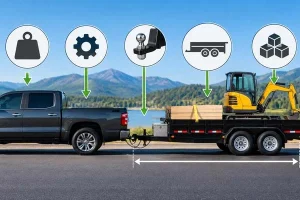
If you are comparing a galvanized tilt deck trailer for cars, construction equipment, farm machinery, landscaping machines, or general commercial transport, the most important point is simple: do not judge the trailer by its galvanized finish alone. A good tilt trailer must first match the weight, dimensions, ground clearance, loading frequency, and operating environment of the equipment you actually move. The galvanized frame then adds another practical benefit by helping protect the steel structure against rain, mud, road spray, winter salt, humid storage conditions, and repeated outdoor exposure. For buyers who expect a trailer to work several days a week rather than sit in a garage, these details have a direct effect on maintenance and long-term ownership cost.

Many buyers start by searching for phrases such as "best galvanized tilt deck trailer for skid steer", "galvanized tilt trailer for excavator", "tilt bed equipment trailer without ramps", or "galvanized car hauler tilt trailer". Those searches usually come from the same concern: you want a trailer that is easier to load, strong enough for the intended machine, and less troublesome to maintain after years of outdoor use. That is why the useful buying process starts with your heaviest load and your real loading conditions, then moves to GVWR, payload, deck length, deck width, loading angle, axle capacity, brakes, tires, tie-down points, tilt mechanism, and corrosion protection. When these factors are considered together, it becomes much easier to tell whether a trailer will genuinely suit your work.
A galvanized tilt deck trailer is a steel trailer designed with a deck that tilts toward the ground so vehicles or machinery can be loaded with fewer separate ramps, while the steel frame receives a zinc-based protective treatment intended to reduce corrosion. In practical terms, the tilting deck solves a loading problem and galvanizing solves a durability problem. If you load a skid steer several times a day, carrying steel ramps back and forth quickly becomes inconvenient. If that same trailer also spends its life in rain, mud, snow, road salt, or coastal air, exposed painted steel can require regular inspection and repair. A galvanized tilt deck trailer combines these two needs in one design.
However, not every tilt deck trailer uses the same layout. Some designs have a full tilting deck, while others use a fixed front section and a tilting rear section. A full tilt deck can be convenient when the complete platform is needed for the machine, while a fixed front deck may provide room for attachments, buckets, toolboxes, spare tires, or other equipment. The right choice depends on what you haul. For example, a compact excavator with a long boom or a skid steer with a bucket may need different usable deck space than a passenger vehicle. This is why overall trailer length and usable tilt length should always be checked separately.
You should also ask what the manufacturer means by "galvanized". In many cases, the most durable option is hot-dip galvanizing, where fabricated steel components are immersed in molten zinc after suitable preparation. Other trailers may use galvanized sheet, zinc-coated components, electro-galvanizing, or zinc-rich coatings on selected areas. These treatments can all have value, but they are not identical. If corrosion resistance is one of your main reasons for choosing a galvanized tilt trailer, ask which structural parts are treated, whether the frame is galvanized before or after welding, and how any post-galvanizing modifications are repaired.
The strongest reason to choose a galvanized tilt deck trailer is reduced concern about corrosion in demanding outdoor conditions. A trailer frame sits close to the road, where water, mud, gravel, salt, fertilizer residue, and dirt repeatedly strike the steel. Painted or powder-coated trailers can perform well when the coating remains intact, but commercial use makes scratches and chips difficult to avoid. Chains rub against the frame, buckets contact the deck, stones hit the underside, and machinery tracks carry abrasive material onto the trailer. Once ordinary coating damage exposes bare steel, rust can begin unless the area is cleaned and repaired.
Hot-dip galvanizing protects steel differently because the zinc coating forms a physical barrier and also provides sacrificial protection. When a small area becomes damaged, zinc around the exposed spot can help protect the steel beneath it. For a trailer used in wet climates or on salted roads, that characteristic can reduce the amount of coating repair required over time. This does not mean a galvanized trailer can be neglected, but it can make corrosion management easier when compared with a finish that relies only on an intact painted surface.
The benefit becomes more noticeable if you operate near the coast, in northern regions that use deicing salt, on farms where the trailer is exposed to moisture and chemicals, or on construction sites where mud and standing water are common. Ask yourself how the trailer will look and perform after five winters, not just how attractive it appears on delivery day. For a private owner who uses a trailer occasionally and stores it indoors, the extra cost of galvanizing may be less important. For a commercial fleet that leaves trailers outside year-round, lower corrosion maintenance may justify the higher initial price.
Hot-dip galvanizing starts with properly prepared steel. After cleaning and surface preparation, fabricated steel is immersed in molten zinc so a bonded zinc coating forms over the exposed surfaces. The result is different from simply spraying paint on top of the frame because the coating becomes metallurgically bonded to the steel. This is particularly useful on trailer frames because crossmembers, corners, weld areas, structural channels, and underside surfaces can all be difficult to maintain once the trailer is assembled and working regularly.
As galvanized steel is exposed to air and moisture, its surface naturally changes. A protective zinc patina develops over time, and the bright silver appearance may gradually become duller or more matte. Buyers sometimes assume a less shiny galvanized surface means the coating is deteriorating, but appearance alone is not a reliable indicator of performance. What matters more is coating continuity, suitable thickness, correct preparation, and proper repair of any areas affected by cutting, drilling, or welding after galvanizing.
This is why a serious galvanized trailer manufacturer should be able to explain its process clearly. Ask whether the completed chassis is galvanized after fabrication or whether individually galvanized materials are welded afterward. Ask how hollow sections are vented and drained during processing. Ask how distorted components are controlled and inspected. Also ask how damaged galvanized areas should be repaired in service. These questions reveal far more about expected durability than simply asking whether the trailer is "rust resistant".
A tilt deck trailer works by allowing the loading platform to rotate around a pivot point until the rear of the deck moves closer to the ground. Instead of creating a loading path with separate ramps, the deck itself becomes the inclined surface. Once a vehicle or machine begins moving onto the trailer, its weight gradually shifts across the pivot. Depending on the design, the deck then returns toward the horizontal transport position through gravity, hydraulic control, or powered hydraulic movement. Once fully lowered, the deck must be locked and secured before the trailer travels on the road.
The practical advantage becomes clear if you load machinery often. Imagine unloading a skid steer at three different sites in one day. With a traditional ramp trailer, you may need to remove two heavy ramps, position them accurately, load the machine, retrieve the ramps, store them, and secure them every time. A tilt deck removes much of this repetitive handling. For landscapers, rental fleets, contractors, and equipment dealers, the time saved during each loading cycle can become significant over months of regular work.
The tilt design also provides a continuous loading surface. This can be useful for machines with smaller wheels, low ground clearance, or awkward wheelbases because there is no separate ramp-to-deck joint to cross. However, the actual loading angle still matters. A tilt trailer can still be too steep for a low car, scissor lift, or long-wheelbase machine if the geometry is not suitable. Before buying, measure your equipment and compare its clearance with the manufacturer's published deck angle or request a real loading demonstration.
A gravity tilt trailer uses the weight and position of the cargo to move the deck. When the deck is released, the rear drops toward the ground. As the machine moves forward, its center of mass eventually passes the pivot point and the deck begins returning to the transport position. Many modern gravity tilt designs add hydraulic dampening so the platform does not move suddenly. This arrangement remains relatively simple because the hydraulic system controls movement rather than actively powering the entire tilt cycle.
A powered hydraulic tilt trailer uses hydraulic pressure to raise or lower the platform. This gives the operator more control over deck position and can be particularly useful when loading broken vehicles with a winch, handling machines with unusual weight distribution, or working where the cargo cannot naturally move the deck through gravity alone. It can also make loading more predictable when you frequently transport different types of equipment.
The tradeoff is maintenance. A powered system generally includes more components such as a battery, pump, switches, cylinders, hoses, wiring, and charging system. If your daily work involves one predictable machine and flat loading areas, a dampened gravity tilt design may be sufficient. If you often recover vehicles, load equipment by winch, or need precise control over deck position, powered hydraulic tilt may be easier to justify. The best system is the one that reduces work without adding complexity you do not actually need.
A galvanized tilt deck trailer can be used for many types of vehicles and equipment, but the correct application always depends on payload, deck dimensions, and load distribution. Common cargo includes skid steers, compact track loaders, mini excavators, scissor lifts, compact tractors, zero-turn mowers, forklifts, utility vehicles, small construction machines, cars, and other wheeled or tracked equipment. Larger heavy-duty tilt deck trailers may also carry substantial excavators, telehandlers, larger tractors, and industrial machinery when the frame, axle system, tires, brakes, and hitch are rated accordingly.
If you are searching for a galvanized tilt deck trailer for a skid steer, do not use the machine's base weight alone. Add the weight of the bucket, forks, trencher, grapple, sweeper, or other attachment that normally travels with it. The same rule applies when choosing a galvanized tilt trailer for a compact excavator. A machine with a quick coupler, hydraulic thumb, larger bucket, blade, fuel, and attachments can weigh considerably more than the simplest factory configuration. Your trailer needs to accommodate the real transport weight, not the lightest number in a brochure.
Dimensions can become a problem even before weight does. A machine may technically fit within the payload but still be too wide for the deck or too long to achieve correct load distribution. Low-clearance vehicles can scrape at the breakover point. Wide tracks may interfere with fenders. Long attachments may extend beyond usable deck space. If you regularly haul several different machines, make a simple list showing each machine's transport weight, overall width, overall length, wheelbase, track width, and ground clearance. Then choose the trailer around the largest practical combination rather than around one average machine.
Payload is one of the most misunderstood specifications when buyers compare equipment trailers. GVWR, or Gross Vehicle Weight Rating, refers to the maximum rated total weight of the trailer and its cargo. It is not the same as cargo capacity. If a trailer has a GVWR of 14,000 lb and the empty trailer itself weighs 4,500 lb, the theoretical remaining capacity is around 9,500 lb before considering any manufacturer-specific limitations, configuration details, or legal requirements. That difference is why you should always ask for both GVWR and empty weight.
A common search such as "what size tilt trailer do I need for a 10,000 lb excavator" can easily lead to the wrong purchase if you focus only on a 14,000 lb GVWR label. If the trailer itself weighs several thousand pounds, its remaining payload may not be enough for a 10,000 lb machine. Add buckets, attachments, fuel, tools, chains, and accessories, and the margin becomes even smaller. For commercial equipment transport, capacity planning should always leave sensible room rather than placing every normal load directly at the trailer's limit.
You also need to check the towing vehicle. A trailer that can legally carry your machine may still exceed your truck's permitted towing capacity, hitch rating, axle rating, tire capacity, or combined vehicle rating. The loaded trailer, tow vehicle, hitch system, brakes, and local regulations need to work as one system. Never assume that buying a stronger trailer automatically makes a heavy load acceptable behind the existing truck.
The simplest way to think about these numbers is to treat GVWR as the total size of the weight envelope. The trailer itself occupies part of that envelope, and cargo uses the rest. For example, if two trailers both have the same GVWR but one uses a heavier frame, larger deck, hydraulic system, toolbox, winch, and additional steel components, the heavier trailer may provide less available payload. That does not necessarily make it a worse trailer, because the heavier structure may provide other benefits, but it changes what you can legally and practically carry.
Payload should therefore be compared using the exact trailer configuration you plan to buy. Options can change empty weight. A spare tire, winch, heavy toolbox, hydraulic power pack, steel deck, additional tie-down rails, larger jack, or upgraded fenders all add mass. If you order a custom galvanized tilt deck trailer, ask for an estimated finished empty weight instead of relying on the weight of the base model.
When your load is close to the trailer's stated capacity, discuss it directly with the supplier. Give them the machine make, model, actual transport weight, attachment weight, and dimensions. This approach gives the manufacturer enough information to determine whether axle location, tongue weight, deck length, and structural configuration are appropriate. It also creates a clearer purchasing record than simply asking for a trailer that can "carry a skid steer".
Deck size should match the machine you haul most often, while still allowing enough flexibility for future equipment. For compact construction equipment, a common mistake is choosing a trailer that technically fits the machine from front to rear but leaves little room to adjust the machine's position for correct tongue weight. If the machine can only sit in one exact spot, achieving good load balance may become difficult. A little additional deck length can make loading easier, especially when buckets, attachments, or booms extend beyond the machine body.
Width matters in a different way. Measure the outside of the tires or tracks at the widest point. Then check whether the trailer's published width refers to usable deck width, inside width between fenders, or total overall width. These numbers are often confused. A 102-inch-wide trailer does not always mean you have a completely unobstructed 102-inch loading surface. Fender position, side rails, stake pockets, and deck construction may reduce the space your machine can actually use.
Buyers looking for a galvanized tilt deck trailer for cars should pay particular attention to fender design and door clearance. If the car is wide and low, the driver may struggle to open the door after loading. Removable fenders, drive-over fenders, or a deck-over layout can solve this problem depending on the trailer. For tracked equipment, the priority is different: you need a strong deck, sufficient track clearance, and secure tie-down locations that are easy to reach after the machine is positioned.
Loading angle is one of the most important specifications for buyers moving low-clearance vehicles, scissor lifts, compact industrial machines, or long-wheelbase cars. The lower the approach angle, the easier it is for equipment to transition from the ground onto the trailer without scraping. Ground clearance alone does not determine whether a machine will load successfully. Wheelbase, front overhang, rear overhang, track shape, and the location of low components also affect the result.
If you are buying a tilt trailer for sports cars or lowered vehicles, ask for the actual loading angle and deck breakover geometry rather than accepting general phrases such as "low profile". Two trailers can look similar in photographs but behave differently when a long vehicle moves across the pivot area. For industrial equipment, a steep angle can create another problem: small wheels or low battery trays may contact the deck even if the machine's overall height seems suitable.
A practical test is better than assumptions. If possible, provide the supplier with the machine's wheelbase and ground clearance, or send a side-view drawing. For repeat fleet purchases, loading a representative machine onto a sample trailer before placing a large order can prevent expensive mistakes. A trailer is only convenient if your equipment can actually get onto it without improvised boards, extra ramps, or repeated repositioning.
Axles, brakes, tires, and suspension do not attract as much attention as a shiny galvanized chassis or hydraulic tilt system, but they determine how the trailer behaves once it is loaded and moving. Start by checking axle capacity and configuration. A tandem axle trailer usually provides better load sharing and stability for heavy equipment than a single axle design, while larger commercial trailers may use higher-rated tandem or triple axle setups. The axle rating should be considered together with frame rating, tire capacity, hitch limits, and the manufacturer's stated GVWR.
Brakes are equally important. Depending on trailer size and regional requirements, electric drum brakes, hydraulic disc brakes, or electric-over-hydraulic systems may be used. If your trailer works in wet or salty conditions, ask how brake components are protected and what service intervals are recommended. Galvanizing the frame does not protect brake drums, rotors, calipers, wiring connections, or bearings from normal wear and environmental exposure.
Tires should be checked by actual load rating, not simply by tire diameter or a vague description such as "heavy duty". Look at the capacity per tire, recommended inflation pressure, speed rating, and availability of replacements in the regions where the trailer will operate. A commercial trailer may travel far from the original dealer, so using unusual wheel or tire specifications can create unnecessary downtime if a replacement is difficult to source.
A trailer can have enough payload and deck space but still be awkward to use if the tie-down points are badly positioned. For construction equipment, you need securement locations that let chains or straps reach the machine's approved attachment points without crossing sharp edges, rubbing tires, interfering with hydraulic lines, or forcing unsafe angles. A good design should make it possible to secure both the front and rear of the machine without crawling into difficult spaces.
When comparing galvanized tilt deck trailers for skid steers, mini excavators, or tractors, ask how many D-rings, stake pockets, rub rails, or other rated anchor points are included. Then look at where they are located. Four strong tie-down points placed correctly can be more useful than eight points that do not line up with your equipment. If you carry several different machines, continuous tie-down rails or additional attachment locations may offer more flexibility.
The tie-down system should also suit the type of cargo. Cars often use axle straps, wheel nets, or dedicated track systems, while construction equipment commonly uses chains and binders. If the trailer manufacturer offers custom anchor placement, decide where you need the points before galvanizing and final assembly. Adding welded brackets afterward may damage the protective coating and create extra repair work.
| Comparison Point | Galvanized Tilt Deck Trailer | Painted or Powder-Coated Tilt Trailer |
|---|---|---|
| Corrosion protection | Zinc coating protects the underlying steel and can provide sacrificial protection at small damaged areas. | Relies mainly on the coating remaining intact and protecting the steel from moisture. |
| Stone chips and scratches | Small damaged areas may receive some protection from nearby zinc. | Deep chips can expose bare steel and normally require touch-up. |
| Appearance | Usually develops a duller gray finish as it ages. | Available in many colors and usually offers a more uniform decorative finish. |
| Routine coating maintenance | Often lower in demanding outdoor environments, although inspection is still required. | May require cleaning, rust treatment, touch-up, or recoating where damage occurs. |
| Best suited to | Outdoor storage, wet climates, farms, coastal regions, salted roads, and intensive commercial use. | Dry climates, indoor storage, occasional use, or buyers who prioritize a particular painted appearance. |
If your main question is whether a galvanized trailer needs less coating maintenance than a painted trailer, the answer is generally yes in environments where scratches, road salt, and moisture are common. That does not mean painted trailers are unsuitable. A high-quality painted or powder-coated trailer can perform very well when properly prepared, coated, cleaned, and repaired. The difference is that paint protection depends heavily on the barrier remaining intact, while galvanized steel has another protective mechanism through the zinc coating.
Commercial users often notice the difference first around the underside, crossmembers, tongue, fender supports, and areas exposed to repeated stone impact. These sections can be inconvenient to sand and repaint after the trailer is assembled. Galvanizing can reduce the frequency of this work, which matters if downtime costs more than the coating itself. For a fleet, reduced maintenance across ten or twenty trailers can be more important than saving money on the initial purchase of each unit.
Still, do not treat galvanizing as permission to ignore the trailer. Wash road salt and chemicals away. Inspect deep mechanical damage. Check the deck, suspension, brakes, bearings, lights, hydraulic hoses, cylinders, wiring, coupler, jack, safety chains, and breakaway system. Galvanizing protects the steel frame, but it does not maintain every moving or electrical component on the trailer.
Before asking for a quotation, make a short equipment list. Record the heaviest machine you currently transport, the machine you may buy within the next few years, and any attachments that normally travel with them. Include transport weight, length, width, wheelbase, ground clearance, and the position of approved tie-down points. This information gives the trailer manufacturer a far better starting point than a general request such as "I need a 20-foot equipment trailer".
Next, decide how the trailer will work. Do you load ten times per day or twice per month? Will equipment be driven onto the deck, pulled by winch, or both? Will the trailer operate mainly on highways, farms, construction sites, gravel roads, or coastal areas? Will it remain outside throughout winter? These questions help determine whether you need a basic gravity tilt, hydraulic dampening, powered hydraulic tilt, winch preparation, extra tie-down points, heavier fenders, additional deck length, or stronger corrosion protection.
- Confirm the exact GVWR.
- Confirm finished empty trailer weight.
- Calculate real usable payload.
- Check deck length and usable tilt length.
- Check deck width and clearance between fenders.
- Ask for the loading angle.
- Verify axle ratings and suspension type.
- Check tire load ratings and availability.
- Confirm braking system and breakaway equipment.
- Check the coupler and jack ratings.
- Review tie-down quantity, location, and rating.
- Ask which parts are hot-dip galvanized.
- Confirm how post-galvanizing welding or drilling is repaired.
- Check hydraulic components and replacement parts.
- Read the warranty and maintenance requirements.
Finally, compare the complete configuration rather than the lowest quotation. One supplier may include a spare tire, heavy jack, winch plate, battery box, extra D-rings, upgraded tires, LED lighting, and full hot-dip galvanizing, while another quotation includes only the basic trailer. Ask for an itemized specification so you can compare like for like. This is particularly important for imported galvanized tilt trailers because shipping cost, spare parts, axle standards, lighting requirements, coupler specifications, brake compatibility, and local registration rules may differ by market.
A reliable manufacturer should be able to discuss the trailer as an engineered transport product rather than simply quoting deck size and price. Ask for the frame material, main beam dimensions, crossmember spacing, axle brand or specification, suspension type, brake system, tire load rating, coupler rating, jack rating, tilt mechanism, hydraulic components, wiring layout, lighting system, deck material, tie-down design, and galvanizing method. The more complete the specification, the easier it is to understand what you are actually buying.
For hot-dip galvanized trailers, manufacturing sequence matters. Welding should normally be completed before final galvanizing where the design allows, because welding galvanized components afterward can damage the coating and require repair. Proper vent and drain holes are also needed for closed or hollow steel sections during galvanizing. Experienced manufacturers should understand how fabrication decisions affect coating quality, drainage, distortion, and final assembly.
If you are purchasing trailers for resale, rental, or a fleet, ask for production photographs and videos rather than relying only on polished catalog images. Look at the underside of the chassis, weld consistency, crossmember arrangement, hydraulic routing, electrical protection, axle mounting, tie-down reinforcement, and how the tilt mechanism operates under load. A trailer spends most of its working life doing things that are not visible in a front three-quarter product photo, so your evaluation should go deeper than appearance.
A galvanized tilt deck trailer is often a sensible choice for coastal areas and regions with long winters because both environments accelerate corrosion. Coastal air contains salts that can settle on exposed steel, while winter road treatment sprays chloride-rich moisture onto the trailer frame, suspension, brake components, wheels, coupler, wiring, and underside. A zinc-coated chassis offers stronger corrosion protection than bare steel and can reduce dependence on frequent paint repairs.
That said, galvanizing does not make road salt harmless. Chlorides should still be washed from the trailer regularly, especially after winter journeys. Pay attention to areas where mud and debris collect because retained moisture can prolong exposure. The same advice applies to coastal use. If a trailer operates near salt water, rinse it with clean fresh water instead of allowing salt deposits to remain on the chassis and mechanical components.
For buyers in harsh climates, corrosion protection should extend beyond the main frame discussion. Ask about galvanized or stainless fasteners where appropriate, sealed electrical connectors, protected wiring, brake component maintenance, hydraulic hose routing, coated wheels, and easily replaceable hardware. The frame may remain structurally sound for many years while small electrical or mechanical parts cause repeated downtime if they were not chosen for the same operating environment.
The answer depends on how often you use the trailer, where you store it, and how long you plan to keep it. If the trailer works commercially, stays outdoors, travels through winter salt, or operates in wet and coastal conditions, paying more for hot-dip galvanizing can make sense because ownership cost includes more than the purchase invoice. Rust repair, surface preparation, repainting, lost working time, resale condition, and shortened component life all have financial consequences.
A cheaper painted trailer may still be the right choice for an owner who uses it ten times per year, stores it indoors, and lives in a dry climate. The cost difference becomes harder to justify when exposure is limited. A landscaping contractor, equipment rental company, farm, or construction business that uses the trailer five days a week faces a different calculation. For that buyer, maintenance saved over several years can matter more than a modest difference in upfront cost.
Think in terms of cost per working year rather than purchase price alone. If a galvanized trailer costs more at the beginning but avoids repeated repainting, remains easier to inspect, and retains a cleaner frame condition after years outdoors, the initial difference may become relatively small. This is particularly relevant to fleets, where maintenance work repeated across many trailers can consume considerable labor.
The most common mistake is choosing capacity too close to the machine's weight. A buyer sees a 14,000 lb trailer and assumes it can carry a 14,000 lb machine, forgetting that the trailer itself may weigh several thousand pounds. Another mistake is ignoring attachments. A skid steer with a heavy grapple, a tractor with loader and mower, or an excavator carrying multiple buckets can exceed the expected transport weight quickly.
Another frequent problem is buying by overall deck size without considering usable loading space. Fixed front decks, fenders, toolboxes, winches, hydraulic components, side rails, and deck transitions can reduce the area available for a particular machine. Buyers transporting cars sometimes discover that the vehicle fits on the deck but the doors cannot open because of the fenders. Equipment users may find that the machine can be loaded but the tie-down points become inaccessible once it is positioned correctly.
A third mistake is treating all galvanizing as equal. A silver-colored finish does not tell you exactly how the frame was protected. Ask what process is used and which components are included. If the trailer is fabricated from pre-galvanized material and then heavily welded, the weld zones require suitable treatment. If the completed frame is hot-dip galvanized, fabrication needs to account for venting, drainage, and dimensional control. Understanding the process prevents you from paying a premium for a vague "galvanized" claim without knowing what it means.
Maintenance begins with cleaning. Mud, road salt, fertilizer, chemicals, and other contaminants should not remain packed around crossmembers, suspension mounts, brake components, or hydraulic hardware. Washing is particularly important after winter travel or coastal exposure. Clean water removes deposits that otherwise hold moisture against the surface for extended periods. Avoid assuming the zinc coating eliminates the need for basic care.
Inspect the galvanized surfaces for major abrasion or impact damage. Normal differences in color or a dull gray appearance are not necessarily problems, but deeply damaged areas where the zinc layer has been removed may require repair. If you weld new brackets, tie-down points, toolboxes, or accessories to the trailer after purchase, treat the affected areas with an appropriate repair system rather than leaving exposed steel around the weld.
Mechanical maintenance should follow the trailer manufacturer's schedule. Check wheel bearings, lug nuts, tires, brake adjustment, breakaway battery, safety chains, coupler, jack, suspension hardware, hydraulic fluid, hoses, cylinders, pivots, deck latch, lights, and wiring. If the tilt deck uses a hydraulic dampening system, inspect it for leaks and smooth operation. A durable galvanized chassis is valuable only when the rest of the trailer remains safe and serviceable.
It can be a very practical choice for skid steer transport because skid steers are frequently used in environments that are hard on trailers. Construction sites, landscaping projects, farms, and muddy access roads expose the chassis to dirt, moisture, stones, and road spray. A tilt deck also reduces the need to handle ramps each time the skid steer is loaded. The key is to choose enough payload for the machine plus bucket, forks, grapple, or any other attachment normally transported with it.
Yes, galvanizing reduces corrosion rather than making the trailer permanently immune to it. Zinc protects the steel and generally corrodes much more slowly than unprotected steel, but harsh chemicals, abrasion, standing moisture, and long-term chloride exposure can eventually consume or damage the coating. Regular washing and inspection remain important. Mechanical parts such as brakes, hubs, springs, wiring, couplers, and hydraulic components may also corrode even when the main chassis is galvanized.
For heavy outdoor use, hot-dip galvanizing often requires less coating maintenance because the zinc coating offers both barrier and sacrificial protection. Paint can also perform well, especially when properly prepared and maintained, and it offers greater control over final color and appearance. The better choice depends on climate, storage, annual mileage, loading conditions, and how long you expect to own the trailer. Buyers who regularly encounter salt, rain, mud, or coastal conditions usually have a stronger reason to consider galvanizing.
There is no single best size because mini excavators vary widely in operating weight and dimensions. Start with the actual transport weight of the excavator, including bucket, thumb, quick coupler, fuel, and additional attachments. Then choose a trailer whose real payload exceeds that transport weight and whose deck provides enough room to position the excavator for correct load distribution. Measure blade width, track width, boom overhang, and attachment length before ordering.
Yes, provided the trailer is designed for the vehicle's weight, width, wheelbase, and ground clearance. For cars, loading angle becomes especially important because low bumpers, exhaust systems, side skirts, and underbody components can scrape. Fender design also matters because wide cars may leave little room to open the driver's door. Buyers transporting performance or lowered cars should ask for the actual approach angle and usable deck width rather than relying only on overall trailer dimensions.
For frequent loading, many operators find a tilt trailer more convenient because they do not need to remove, position, and store ramps every time. The deck itself forms the loading surface, which can make the process faster and reduce manual handling. Ramp trailers still work very well and may be simpler for certain applications, so the decision should depend on how often you load, what type of machine you transport, and whether the tilt system offers a suitable loading angle.
Gravity tilt is well suited to predictable loads that can move the deck through their own weight. A hydraulically dampened gravity system can keep movement controlled without requiring a powered pump for every loading cycle. Powered hydraulic tilt is more useful when you load damaged vehicles with a winch, carry equipment with unusual weight distribution, or want precise deck control. The powered system adds convenience, but it also introduces batteries, pumps, hoses, wiring, and other parts that need maintenance.
Avoid selecting a trailer that places your normal working load directly at the published maximum. The exact margin depends on the trailer, load, regulations, and manufacturer guidance, but you should account for attachments, tools, spare components, chains, fuel, and future equipment changes. A reasonable operating margin gives you more flexibility and reduces the chance that an unexpected attachment pushes the trailer over its allowable load.
A properly galvanized steel frame normally does not require routine repainting in the same way a damaged painted finish might. The zinc coating is intended to provide long-term corrosion protection on its own. However, heavily damaged or modified areas may need repair. If you later weld or grind the frame, restore corrosion protection on the affected section using a suitable zinc repair method recommended for galvanized steel.
Ask for the exact GVWR, estimated finished empty weight, payload, deck dimensions, loading angle, axle ratings, suspension type, tire ratings, brake system, tie-down arrangement, coupler rating, jack rating, deck material, tilt mechanism, hydraulic components, and warranty. For the finish, ask which components are galvanized, what galvanizing process is used, whether galvanizing takes place before or after main fabrication, and how damaged coating is repaired. If the trailer will be imported, also confirm lighting, braking, coupler, registration, and axle requirements for your destination market.
There is no fixed lifespan because trailer life depends on load history, road conditions, climate, storage, maintenance, accidents, fabrication quality, and the condition of mechanical components. Hot-dip galvanizing can protect structural steel for many years, but a trailer experiences more abrasion, vibration, impact, and road contamination than a stationary steel structure. Regular maintenance of bearings, brakes, tires, hydraulics, suspension, wiring, and the tilt mechanism remains necessary even when the frame itself has strong corrosion protection.
A galvanized tilt deck trailer is most valuable when you need both easier loading and stronger protection against outdoor corrosion. The tilt deck can remove much of the repeated work associated with traditional ramps, while galvanizing helps protect the steel chassis from rain, road spray, mud, winter salt, and long-term outdoor exposure. For contractors, landscapers, farmers, rental fleets, vehicle transporters, and equipment owners who use trailers frequently, these two features can make day-to-day operation easier and reduce one of the most common maintenance concerns on steel trailers.
The purchasing decision should still begin with your load rather than the finish. Work out the real transport weight of your heaviest machine, including attachments, then compare trailer payload, deck dimensions, loading angle, axle capacity, tire rating, brakes, tie-down points, hitch requirements, and tow vehicle limits. After those fundamentals are correct, decide whether gravity tilt, hydraulic dampening, powered tilt, winch preparation, custom tie-downs, and hot-dip galvanizing match your working conditions.
If you plan to keep the trailer for years, especially in a wet, salty, coastal, agricultural, or commercial environment, ask detailed questions about the galvanizing process instead of accepting a simple "galvanized trailer" description. A well-built galvanized tilt deck trailer should be selected as a complete transport system: suitable capacity, practical loading geometry, dependable running gear, accessible securement points, and corrosion protection that matches the conditions in which the trailer will actually work.