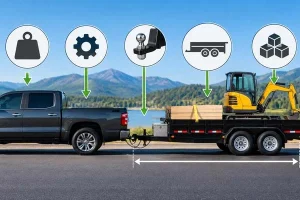
5 Tips for Choosing the Right Car Trailer Axle

A car trailer axle plays a critical role in determining how safely and efficiently a trailer performs on the road. It directly affects load capacity, braking performance, towing stability, and the overall lifespan of the trailer. Yet many buyers focus primarily on deck size or purchase price while overlooking axle configuration, which often leads to poor handling, excessive wear, or safety risks over time. For buyers in the United States, where long-distance highway towing, strict GVWR limits, and higher safety expectations are common, choosing the right axle setup is not optional but essential. This article breaks down five practical tips to help you select a car trailer axle that matches real-world use, legal requirements, and long-term performance needs, rather than marketing claims or short-term cost considerations.

5 Tips for Choosing the Right Car Trailer Axle

Tip 1: Match the Axle Rating to Your Real Load, Not Just the Trailer Size

Choosing a car trailer axle based only on trailer dimensions is one of the most common mistakes buyers make, especially first-time owners. Axle rating refers to the maximum weight an axle can safely support under normal operating conditions. GVWR, on the other hand, represents the total allowable weight of the fully loaded trailer, including the trailer itself, the vehicle being hauled, and all permanently or temporarily installed equipment. These two values are closely related, but they are not interchangeable, and confusing them often leads to under-rated axle selection.
car trailer

Many buyers assume that the only weight that matters is the vehicle being transported. In practice, the trailer structure itself can account for a surprisingly large portion of the total load. The frame, crossmembers, deck material, ramps, winches, spare tires, toolboxes, tie-down systems, and even small accessories such as jacks or fuel containers all contribute to axle load. A steel deck, for example, can add several hundred pounds compared to an aluminum deck, which significantly alters the stress placed on the axle system.

Consider a real-world example that occurs frequently in the car hauling market. A car weighing approximately 4,000 pounds may appear to fit comfortably within the limits of a 5,200-pound axle. Once the trailer frame, steel deck, ramps, winch, recovery gear, and safety equipment are added, the actual load placed on the axle can exceed its rated capacity. When this happens, the axle, suspension, bearings, and tires operate under constant overload, increasing the likelihood of premature wear, heat buildup, and mechanical failure.
Experienced trailer engineers recommend maintaining a safety buffer of at least fifteen to twenty percent above the calculated real-world load. This margin is not arbitrary. It accounts for dynamic forces such as emergency braking, sharp turns, uneven pavement, potholes, and wind loads at highway speeds. Educating buyers to think in terms of real load rather than brochure specifications leads to safer trailers, fewer warranty issues, and longer service life.

Tip 2: Single Axle vs Tandem Axle — Choose Based on Use Frequency and Risk Tolerance

The debate between single axle and tandem axle configurations is common, but the correct choice depends far more on how the trailer will be used than on price alone. A single-axle trailer offers a simple, lightweight design with a lower upfront cost. It is easier to maneuver in tight spaces and may be perfectly adequate for short, occasional hauls involving lighter vehicles.
aluminium car trailer

However, single-axle trailers come with inherent limitations that become more noticeable as load weight and towing distance increase. With only two tires supporting the entire load, stability is reduced, particularly at highway speeds. Braking redundancy is minimal, and a tire or bearing failure can quickly escalate into a serious safety situation, especially when towing on busy interstates or mountainous terrain.
Tandem axle trailers distribute weight across four tires, which significantly improves balance, stability, and overall control. This configuration reduces stress on individual components and improves braking response by allowing braking forces to be shared across multiple wheels. Tandem axles also provide a critical safety advantage in the event of a tire failure, allowing the trailer to remain controllable long enough for the driver to slow down safely.
For long-distance transport, repeated commercial use, or hauling heavier vehicles such as SUVs, trucks, or modified cars, tandem axle configurations are strongly preferred. In these scenarios, choosing a tandem axle is not simply an upgrade. It is a risk-management decision that prioritizes control, predictability, and safety over minimal initial cost.

Tip 3: Understand Axle Type — Leaf Spring vs Torsion Axles

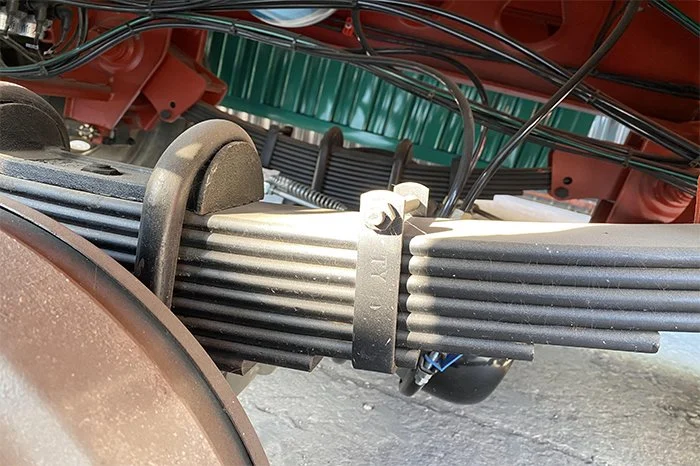
Beyond axle count, the type of axle suspension has a major influence on how a car trailer axle performs over time. Leaf spring axles remain the most widely used option in the United States due to their proven durability, mechanical simplicity, and ease of repair. They are especially well-suited for rough roads, construction environments, and applications where trailers are subjected to repeated heavy loads.
leaf-spring-suspension

Leaf spring systems are straightforward to service, and replacement parts are widely available across the US market. This makes them an attractive option for operators who prioritize reliability, repairability, and long-term serviceability over ride comfort. In demanding conditions, leaf spring axles tend to tolerate abuse better than more complex systems.

Torsion axles function differently by allowing each wheel to move independently through internal rubber cords housed within the axle tube. This design delivers a smoother ride and significantly reduces vibration transferred to the trailer frame and cargo. Torsion axles generally require less routine maintenance, but they can be more expensive to replace if damaged.
These axles are particularly well-suited for enclosed trailers, high-value vehicles, and buyers who prioritize ride quality and cargo protection. The decision between leaf spring and torsion axles should be guided by cargo value, road conditions, maintenance expectations, and ownership horizon rather than popularity or marketing trends.

Tip 4: Don't Ignore Brakes — Axles and Brake Systems Work as One

A car trailer axle cannot be evaluated in isolation from the braking system attached to it. Axle count and brake configuration work together to determine stopping distance, stability under braking, and overall towing safety. In the United States, braking requirements vary by state, but industry best practices often exceed minimum legal thresholds.
Hydraulic Brakes

Electric brakes are the most commonly used braking solution for car trailers due to their reliability, responsiveness, and compatibility with modern brake controllers. Surge brakes are more common in marine applications and are less frequently used for vehicle transport. Electric-over-hydraulic systems offer superior braking performance for heavier loads, though at a higher cost and complexity level.

Tandem axle trailers equipped with brakes on both axles offer significantly shorter stopping distances and better control during emergency braking situations. Brake controllers allow the driver to fine-tune braking response, while breakaway kits ensure the trailer can stop independently if it becomes disconnected from the tow vehicle. Understanding how braking systems integrate with axle configurations reinforces safe towing practices and reflects a professional approach to compliance, risk reduction, and operational control.

Tip 5: Consider Long-Term Use, Maintenance, and Resale Value

Selecting a car trailer axle should never be viewed as a short-term decision. Bearings, tires, suspension components, and braking systems all experience wear over time, and axle configuration plays a major role in determining maintenance frequency and long-term cost.
car trailer axle position

Tandem axle trailers distribute wear more evenly, which can extend the service life of tires and bearings while reducing downtime. Although they require more components to maintain, they often deliver better durability under frequent or heavy use.
From a resale perspective, tandem axle trailers typically retain higher market value due to buyer preference and perceived reliability.

Branded axles and standardized sizes further increase confidence in the used trailer market. Viewing axle selection through the lens of total cost of ownership helps buyers make decisions that deliver long-term value rather than short-term savings.

Common Mistakes Buyers Make When Choosing Trailer Axles

Many axle-related issues stem from choosing the minimum axle rating to save money, underestimating future vehicle upgrades, ignoring braking compatibility, or assuming all axles are manufactured to the same quality standards. These mistakes often result in uneven weight distribution, reduced braking efficiency, accelerated wear, and higher long-term costs.

How Professional Trailer Manufacturers Approach Axle Selection

Professional trailer manufacturers treat axle selection as part of an integrated engineering system that includes frame design, suspension geometry, braking systems, and intended operating environments. Engineering validation and quality control ensure that axle configurations perform reliably under real-world conditions rather than ideal laboratory scenarios.

Quick Axle Selection Checklist

Choosing the right car trailer axle requires evaluating total vehicle weight, including accessories, frequency of use, towing distance, road conditions, braking requirements, and future scalability. This structured assessment helps align axle configuration with real operational needs rather than assumptions.

Conclusion

A car trailer axle determines far more than load capacity alone. It influences safety, braking performance, stability, and long-term durability. Buyers who understand axle fundamentals and evaluate real-world usage are better positioned to make informed decisions. Thinking like an operator rather than a shopper leads to safer towing, lower long-term ownership costs, and more reliable performance over time.

According to the National Highway Traffic Safety Administration (NHTSA), proper trailer configuration, including axle capacity and braking systems, plays a critical role in maintaining towing stability and reducing accident risk.

FAQ

Axle capacity should exceed the fully loaded trailer weight by at least fifteen to twenty percent to maintain safe operating margins.
For heavier loads and long-distance towing, tandem axles generally offer better stability and braking control.
Upgrades are possible but require structural evaluation and are not always cost-effective.
Heavier axles may slightly reduce fuel efficiency, but the safety benefits usually outweigh the impact.
For high-value vehicles and smooth highway towing, torsion axles often provide improved ride quality and cargo protection.

Share This Post

7fb5089b2bed43458a0dd47da3133cc412838ad1d99256acf731c276c5571f58?s=96&d=mm&r=g

Lalune Teng

Lalune Teng is a seasoned expert in the trailer field with a passion for the trailer manufacturing industry, Lalune specializes in making the connection between innovative trailer solutions and the needs of the customer to help them find the perfect trailer to meet their needs, with over 5 years of professional experience. Lalune is responsible for creating educational and promotional content on car trailers, utility trailers, dump trailers and more. Her work highlights the company's dedication to quality and customization,. Contact Lalune through our latest articles where she shares knowledge, tips and updates on modern trailer solutions!

Table of Contents
Custom Your Trailers

Don’t hesitate to get in touch with us to explore our trailer and discuss how we can meet your unique requirements.

Find Your Trailer

Whether you've purchased a trailer before or are learning about trailers for the first time, we can help you find the right trailer for you.

Recently Posts

Leave a Comment

Your email address will not be published. Required fields are marked *

Scroll to Top
Three Horses Trailer

Find Your Trailer

Whether you've purchased a trailer before or are learning about trailers for the first time, we can help you find the right trailer for you.